This is about figs, because the opening of “The Sixth Elegy” of the Duino Elegies of Rainer Maria Rilke is about them, and I turn out to live among them.
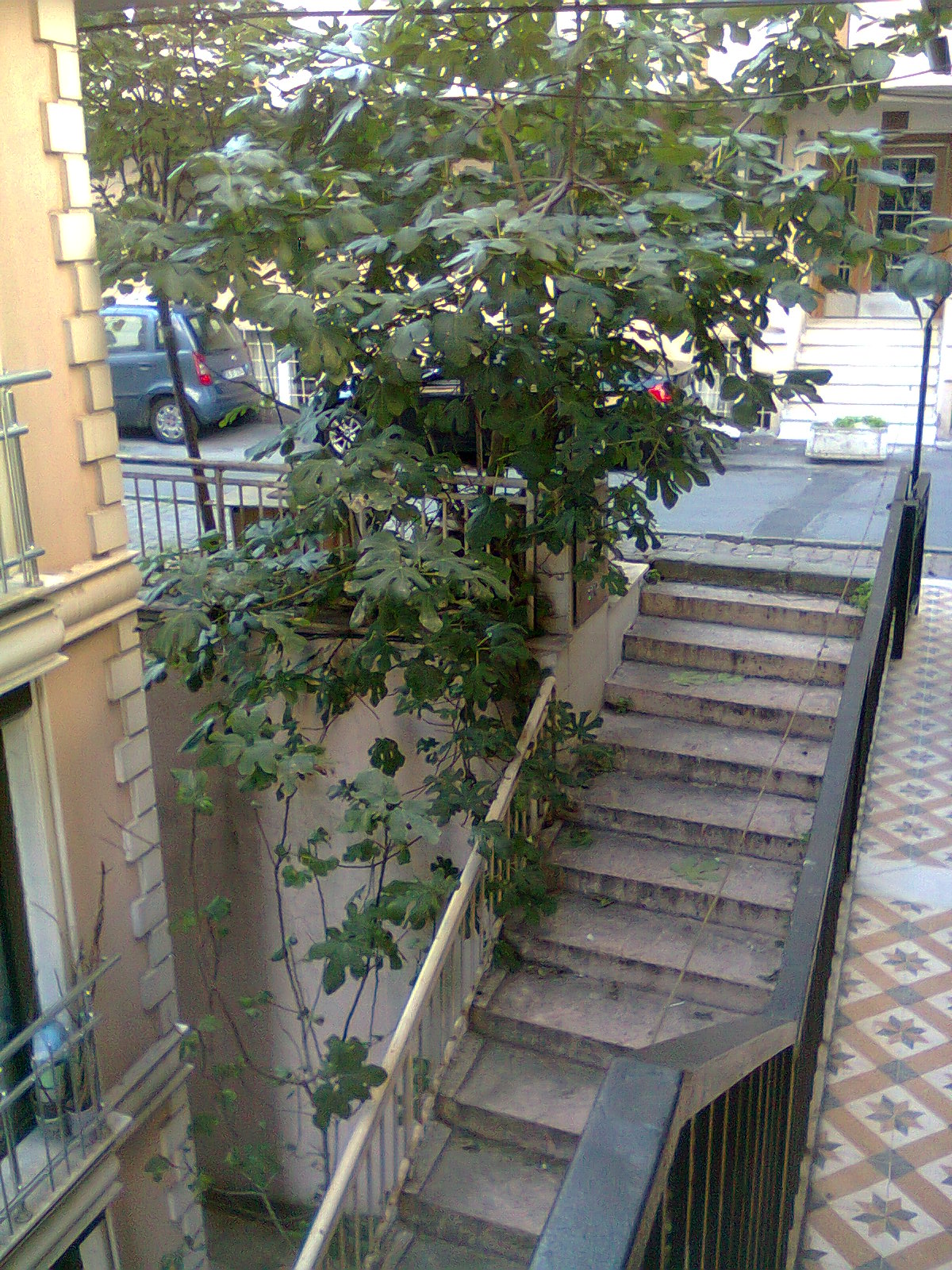
Fulya, Şişli
November 15, 2021
This is about figs, because the opening of “The Sixth Elegy” of the Duino Elegies of Rainer Maria Rilke is about them, and I turn out to live among them.
Fulya, Şişli
November 15, 2021
In the fair city of Callipolis (527c), students who pass their exams will become philosophers at the age of fifty (540a).
Callipolis itself will come to be, once philosophers seize power in an existing city and throw out everybody over the age of ten (540e).
This is all said in play (536c), and play is what children must be allowed to do, since (536e)
the free man ought not to learn any study slavishly. Forced labors performed by the body don’t make the body any worse, but no forced study abides in a soul.
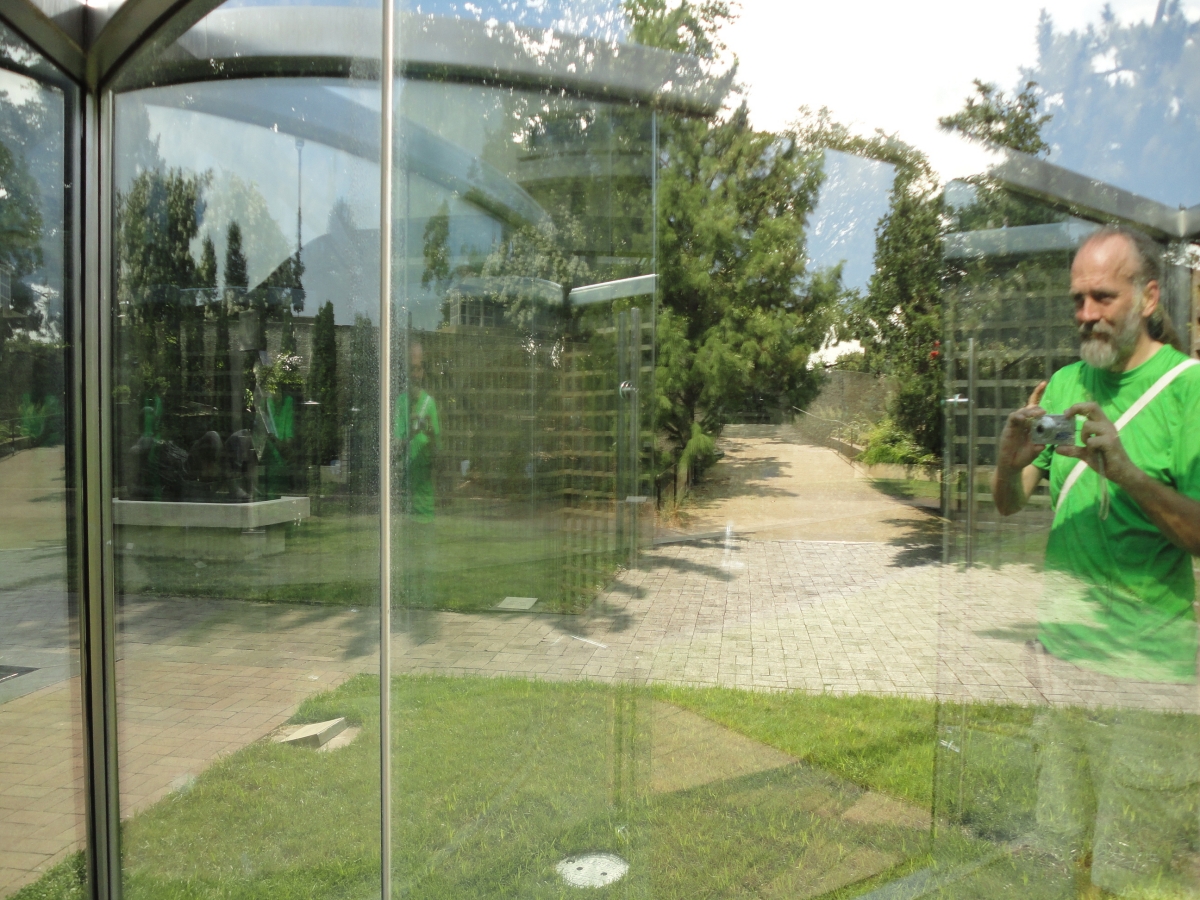
Dan Graham (b. 1942)
For Gordon Bunshaft
Hirshhorn Museum and Sculpture Garden
Washington DC
July 17, 2013
We are still in the latter part of Book VI of Plato’s Republic, where Socrates undertakes to explain the education of the philosopher-kings (502c–d). They are not literally so called, as we noted last time. They are going to need to “be able to bear the greatest studies” (503e), and “the idea of the good is the greatest study” (505a). People are confused about what the good is:
It rather the case that
We looked at that much last time.

Dünya Barış Parkı 2021.10.30
Plato is somehow quite challenging in the present reading, which is the first part (Stephanus 484–502d) of Book VI of the Republic. Socrates tries to work out the third wave from the previous reading. Significant features are several analogies or figures:
I concurrently discuss the Republic readings in a group formed through the Catherine Project, which now has the website just linked to. The same was true for Pascal in the winter and Chaucer in the summer.

Ayşecik Sokağı, Fulya, Şişli, İstanbul, October 14, 2021.
The order of the books on the shelves of the cases being like that of words on the lines of pages of an individual book, the ordering is chronological, by birth date of author, editor, or personal subject. The youngest author for now is Sally Rooney, and Zena Hitz is on the same shelf. Plato is on the opposite wall.
Can Socrates really “find a natural support for justice,” as Allan Bloom says he must? It is strictly impossible, as I say in “Bloom, Badiou, Ryle, Shorey.” Inevitably there is more that can be said, and I shall try to say some of it here.

Anatolian sand, Aegean sea, Lesbian mountains
Uranus over all
Profesörler Sitesi, Altınova, Balıkesir, Turkey
September 24, 2021
Book V of Plato’s Republic features three of what Socrates calls waves or breakers:
Such outlandish injunctions will have Socrates swept away, though he does not say by whom or what.
Our sixth scheduled reading covers the first two of the three waves, in Stephanus pages 449a–71e. Socrates is induced to spell out details adumbrated in the last reading, Book IV, concerning the sharing of women and children among the guardians.

Wisdom, courage, moderation, and justice
Profesörler Sitesi, Altınova, Balıkesir, Turkey
September 20, 2021
Our fifth scheduled reading in the Republic is Book IV (Stephanus pages 419–45). Socrates speaks
Intellect, spirit, and appetite
Profesörler Sitesi, Altınova, Balıkesir, Turkey
September 13, 2021
This is mostly about avoiding things. An early theme of Plato’s Republic is avoiding the deprivations of solitary life through politics. Some of us would rather just avoid politics. Such persons include Henry David Thoreau, Gilbert Ryle, and the inventor of the h-index (he is a physicist called Jorge E. Hirsch, but I know nothing else about him). I mentioned these persons in my last Plato post, “Badiou, Bloom, Ryle, Shorey.” I have some more to say about them here. In “Civil Disobedience” (1848), for example, Thoreau writes, “it is, after all, with men and not with parchment that I quarrel”; but measures like the h-index are used to hide the human factor in the equations used to judge us.
All photos are from Profesörler Sitesi, Altınova, Balıkesir, Turkey
September 21–3, 2021
Constituting the latter part of Book I, the second of the Republic readings features the only sustained contribution of Thrasymachus, who argues that, if it can be pursued perfectly, injustice is superior to justice.
According to my electronic search of Jowett’s translation, confirmed with a search of Bloom’s, Socrates will mention Thrasymachus and his argument in Books II, VI, VIII, and IX, but the man himself will speak again only near the beginning of Book V, to agree with the demand of Polemarchus, Adeimantus, and Glaucon that Socrates explain the community of women and children in the imaginary city that Socrates will have been describing.
After seventeen weekly posts of readings with my annotations, the Pensées of Pascal join two other works that I have blogged about systematically, chapter by chapter or book by book:
R. G. Collingwood, The New Leviathan, or Man, Society, Civilization, and Barbarism (1942);
Homer, the Iliad, in George Chapman’s translation.
Do three authors belong together, for any other reason than that I have spent time with each of them?
For Pascal, the Torah is history, but the Iliad was written too late to be that, and is just a novel (S 688 / L 436 / B 628). It has no concept of law, he says (S 691 / L 451 / B 620), but later Greeks took this and other things from the Jews. I discussed this in “Judaism for Pascal.” For example, Philo Judaeus thinks that when Heraclitus says, “We live their death and we die their life,” this is the death wrought by eating of the tree of the knowledge of good and evil in Genesis.
Pascal and Collingwood both come to terms with a world of contrariety. Collingwood calls it “a Heraclitean world,” alluding to how Plato has Socrates tell Hermogenes in the Cratylus (402a, Loeb translation by Harold North Fowler),
Heracleitus says, you know, that all things move and nothing remains still, and he likens the universe to the current of a river, saying that you cannot step twice into the same stream.
 Polytropy