Tag Archives: 2024

Occultation 2006

Since there was a total solar eclipse over North America recently, I am posting here what I wrote in 2006 about an eclipse over Turkey. I did not have a camera then, so now I am adding a recent photo of a sun occluded or occulted by cloud. Along with doing a bit of editing, including the updating or adding of links, I am correcting the date of the 2006 eclipse; I don’t know why I had set it a week too late.

Sun through clouds of many shades; below a strip of dark hills, the sea reflects the light of the sky
View over Asia from the European side of the Bosphorus (Kireçburnu in particular), Sunday, April 7, 2024

Continue reading

Family

In the Nicomachean Ethics, this third of eight readings on friendship (φιλία) is the first of three on the connection with the just (τὸ δίκαιον). A lot of the reading might be summarized in a table:

Polity | Analogue | Perversion | Analogues
kingdom | fatherhood | tyranny |
|
Persian fatherhood
slave-owning
aristocracy | marriage | oligarchy |
|
man does all
woman rules
timocracy | brotherhood | democracy |
|
no master
weak master

We are reading chapters ix–xi of Book VIII. The table is based on chapter x and is elaborated on in chapter xi. Chapter ix introduces the idea that friendship and justice go together in communities, and all communities are formed within political communities, or polities, which they somehow reflect.

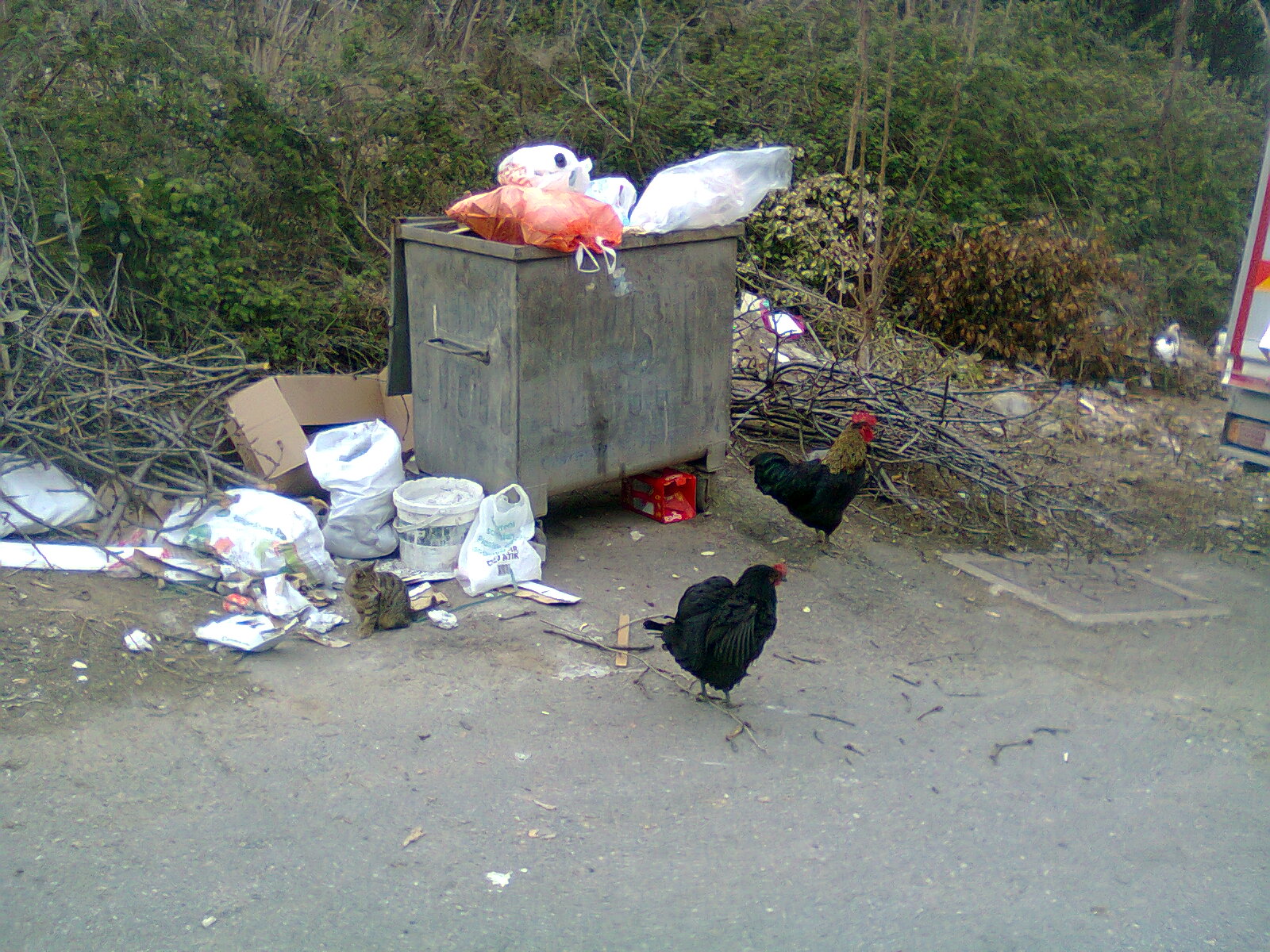
Animals around an overflowing dumpster
Animal friends in the neighborhood
Cat, hen, and rooster, all attracted to a trash bin by the road
Tarabya, Sunday, March 24, 2024

Continue reading

Sourdough Einkorn Bread

This is about the bread that I baked on Sunday, March 17, 2024. It’s in the photo below. You can see that the rising was a bit uneven; otherwise, I don’t know how the bread can be any better than I am able to make it now. That is why I am writing things up.

Two baked loaves, sitting on top of their pans
Two loaves, just out of the oven. Ingredients: whole einkorn flour, sourdough starter, water, rolled oats, and salt. Pans greased with coconut oil

Continue reading

Equality

Amity is equality, as Rackham translates it:

ΦΙΛΟΤΗΣ ΙΣΟΤΗΣ.

That’s what they say, anyway (§ v.5). Aristotle only refines it (§ viii.5):

ἡ δ᾽ ἰσότης καὶ ὁμοιότης φιλότης.
equality and similarity is amity.

Of eight readings on amity, or friendship, or love, or philia, we are in our second, comprising chapters v–viii of Book VIII of the Nicomachean Ethics.

Sun through mist above, reflection in water below, boats in between
Tarabya Marina
Sunday, March 10, 2024

Continue reading

Affiliation

Friendship is natural to most animals, especially human beings, and that’s why we praise the philanthropist. You will see, if you travel, that all of us are family and even friends.

Something like that is what Aristotle says, in this first of eight readings on friendship. I have trouble imagining where the Philosopher is going to go with his subject; or perhaps I am troubled to imagine what may be in store.

Blurry white disk in a gray sky above black, bird-shaped dots in the highest branches of the foremost of a line of bare trees; several human silouettes below
Crows in a tree
in the morning mist by the Bosphorus
Kireçburnu, Sarıyer, İstanbul
Sunday, March 10, 2024

Continue reading

Sweetness

Our subject is pleasure as such. The Greek word is ἡδονή, which is both

  • the source of hedonism and
  • the cousin of sweetness.

The shared Indo-European root of the adjectives ἡδύς and sweet is *su̯ād-, and its existence is a symbol for a lot of what Aristotle has to say, here in the final chapters, xi–xiv, of Book VII of the Nicomachean Ethics.

Birds over a marina, above them clouds lit by a rising sun
Somebody was feeding the gulls
Thursday morning, February 1, 2024
Tarabya

Things taste good because they are good. At least sweet things can be good, if used properly; but this qualification causes a lot of difficulty.

Continue reading

Discipline

With this third reading (of chapters vii–x) in Book VII of the Nicomachean Ethics, we complete the discussion of continence and incontinence, hardness and softness. An explicit notice at the end of chapter x tells us so.

Three gulls on a green cable running across the water to the side of a boat
Gulls are not perching birds, but evidently are able to balance on a cable, if it is thick enough and still enough.
Kireçburnu, Wednesday, January 17, 2024

Continue reading

Tulips of Istanbul

This post about flowers on the Bosphorus originated in 2015, when I created it as a webpage on my part of my department’s website. A follow-up the next year did become a blog post, “Early Tulips.” Since we moved to Sarıyer in 2022, it turns out we can walk to the Emirgan Korusu in an hour. This is

  • what I have done a couple of times in the last week,
  • why I put this old post here, below the following new photos, from Saturday, February 24, 2024 (made with my old mobile, unlike the old photos!).


I started out in Atatürk City Forest, following the trails down to the lake


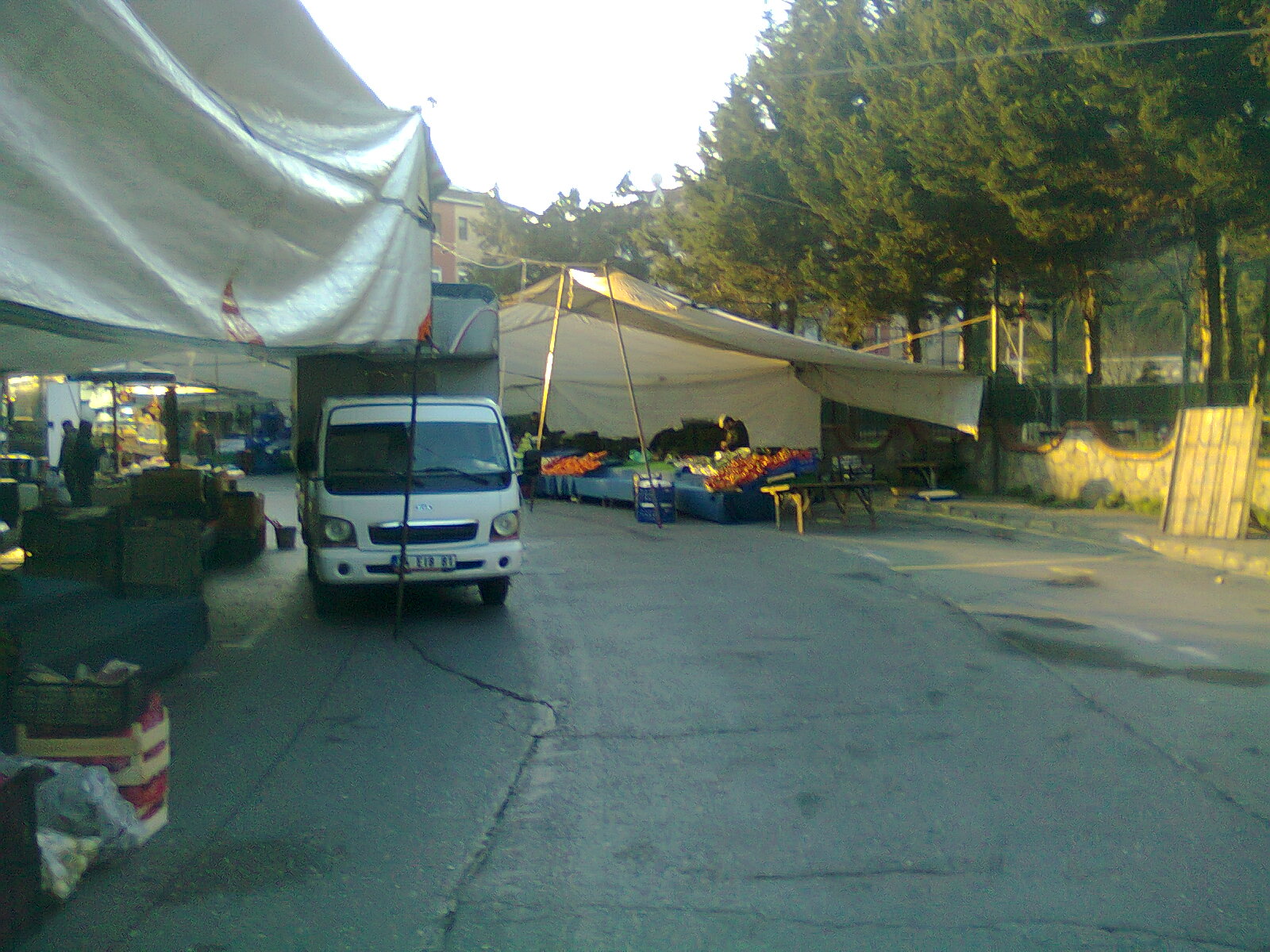
On Saturdays, the old road through the stream valley below the lake hosts a bazaar

Continue reading

Necessity

I quoted, last time, a writer I admire, who was in turn quoting a Nobelist in literature on how a certain devotee of Aristotle “had nothing useful to offer on the conduct of life.” I don’t admire that comment. A life spent in devotion to the Philosopher may itself  be well conducted. I don’t know whether it was, in the case of Mortimer Adler.

The sentence by Saul Bellow was,

Mortimer Adler had much to tell us about Aristotle’s Ethics, but I had only to look at him to see that he had nothing useful to offer on the conduct of life.

I don’t know how this is not rank prejudice. It does recall the two exchanges that are all I remember from A Passage to India of E. M. Forster (my father once gave me a copy, but I don’t seem to have kept it):

“You understand me, you know what others feel. Oh, if others resembled you!”

Rather surprised, she replied: “I don’t think I understand people very well. I only know whether I like or dislike them.”

“Then you are an Oriental.”


“Don’t you think me unkind any more?”

“No.”

“How can you tell, you strange fellow?”

“Not difficult, the one thing I always know.”

“Can you always tell whether a stranger is your friend?”

“Yes.”

“Then you are an Oriental.”

In “A Note on This Book” – namely Strunk and White, The Elements of Style (New York: Macmillan, 1959; paperback edition, 1962) – E. B. White says that the final chapter, “An Approach to Style,” written by himself alone,

is addressed particularly those who feel that English prose composition is not only a necessary skill but a sensible pursuit as well – a way to spend one’s days.

I am glad to have lived in a time when this could be believed.

A novel or movie might portray an admirable or sympathetic figure as sacrificing everything else for painting, writing, or music. In Good Will Hunting, the title character does set his art aside for love; however, this “art” is mathematics. I heard a complaint about this from a fellow postdoc at the Mathematical Sciences Research Institute in Berkeley in 1998.

Perhaps Carl Friedrich Gauss had nothing useful to offer on the conduct of life, at least to the likes of Saul Bellow, or for that matter William Deresiewicz. Nonetheless, by the age of 24, he had solved a problem that (as far as I know) had stumped mathematicians for two thousand years, even since the time of Aristotle.

Regular 17-gon, bisected by a straight line through one vertex, with perpendiculars dropped from the other vertices

Continue reading

Anarchy

Some distinctions are important, some are not. Telling which is which is important for life – and for reading Aristotle, who opens Book VII of the Nicomachean Ethics by recalling that κακία

  • is something to be avoided,
  • is opposed to ἀρετή.

Presently, in § i.4, what is paired with ἀρετή is not κακία, but μοχθηρία. Is there a difference?

Four billboards, by a road, obscure the trees behind
Four advertisements, all for margarine, a different proud baker in each. One person differs from the others in wearing a headscarf; none differs in sex.
Tarabya Bayırı, Sarıyer, Istanbul, Friday, January 26, 2024

Continue reading