Tag Archives: Allan Bloom

Rethinking

Last week, a student wrote me, “Is there going to be a proof question on the number theory exam?”

I answered,

As far as I’m concerned, the answer to every mathematical question is a proof, because everybody can check whether the answer is right.

I meant that the answer should provide the means for the reader to re-enact the answerer’s thought.

A bay seen from a hill across trees and houses, with green hills beyond (and heavier development at the top)
View from Büyükdere, Sarıyer, Istanbul
We live near the big building at Hacıosman
just over the horizon on the right
Sunday, June 30, 2024

Continue reading

The Ideal

The noun “idea” came to English in the sixteenth century, via Latin, from Plato’s ἰδέα: so the dictionaries tell me. An older version, “idee,” came from the French idée. The adjective “ideal” came via the French idéal from the Latin ideālis, but this seems to have been a native coinage, derived from no Greek term. Leo Strauss corroborates this in a passage that I quoted in “Nature”: “ ‘ideal’ is not a Platonic term.” Nonetheless, in translations of the Republic that are still in print, Benjamin Jowett and Paul Shorey use the word “ideal.” This may blur the distinction between two activities:

  • Making something, such as a meal or a bookshelf, according to a recipe or plan.
  • Creating something brand-new.

I looked at the first creation myth of Genesis in my previous post, whose title quoted the Bible on God’s judgment of what he had created: “It Was Good.” The goodness of the world, I suggested, did not lie in its fitting a plan, since a plan would have had to be spoken into existence, and this is just how the world itself came to be.

I don’t know about God, but if we have a basis for calling something good, we might call this basis an ideal. However, I also don’t know whether this is what Plato actually has in mind when his translators use the term “ideal.”

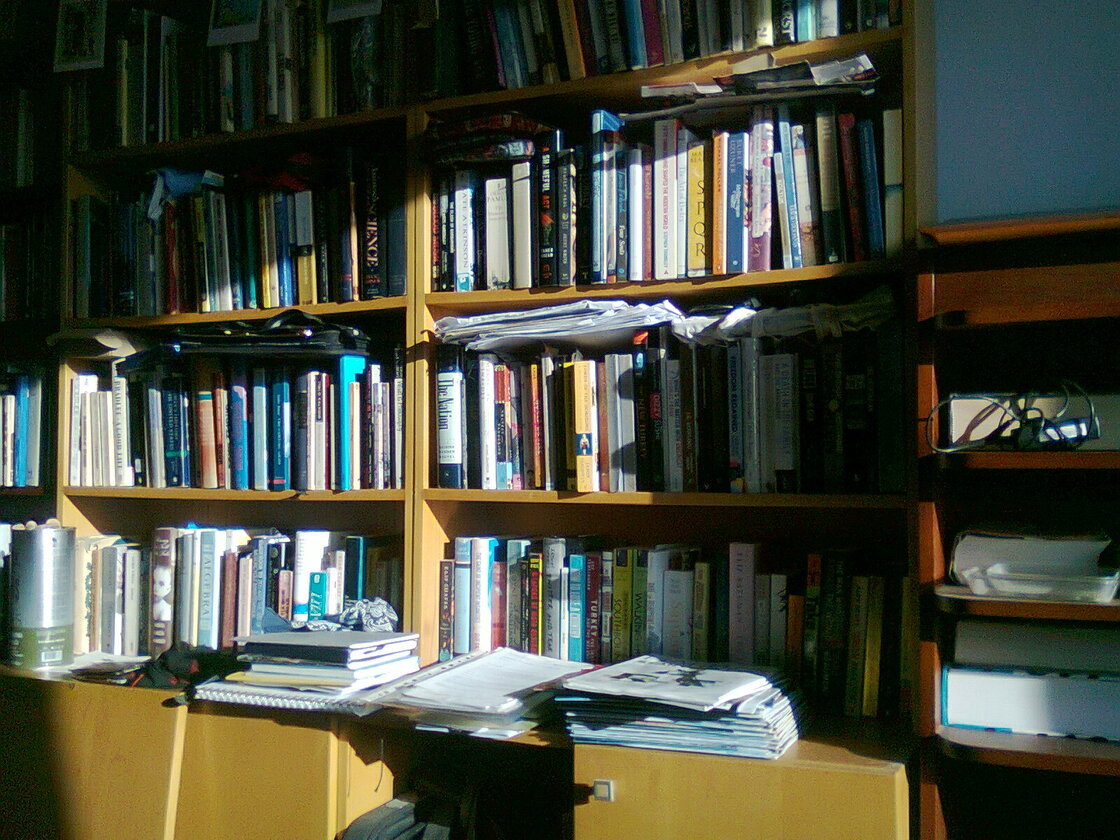
Bookshelves on one wall, window on another
Hacıosman, Tarabya, Sarıyer, İstanbul
November 12, 2022

Continue reading

On Plato’s Republic, 8

Index to this series

Plato is somehow quite challenging in the present reading, which is the first part (Stephanus 484–502d) of Book VI of the Republic. Socrates tries to work out the third wave from the previous reading. Significant features are several analogies or figures:

  • city as ship whose sailors neither know how to sail nor want to know;
  • people and sophist as beast and zoologist or zookeeper;
  • ruler as painter who compares a canvas with what the mind’s eye sees;
  • philosopher as seed that needs good soil, lest it become a noxious weed.

I concurrently discuss the Republic readings in a group formed through the Catherine Project, which now has the website just linked to. The same was true for Pascal in the winter and Chaucer in the summer.

Bookshelves in morning sun
Ayşecik Sokağı, Fulya, Şişli, İstanbul, October 14, 2021.
The order of the books on the shelves of the cases being like that of words on the lines of pages of an individual book, the ordering is chronological, by birth date of author, editor, or personal subject. The youngest author for now is Sally Rooney, and Zena Hitz is on the same shelf. Plato is on the opposite wall.

Continue reading

Nature

Index to this series

Can Socrates really “find a natural support for justice,” as Allan Bloom says he must? It is strictly impossible, as I say in “Bloom, Badiou, Ryle, Shorey.” Inevitably there is more that can be said, and I shall try to say some of it here.

Sand, sea, mountains, sky
Anatolian sand, Aegean sea, Lesbian mountains
Uranus over all
Profesörler Sitesi, Altınova, Balıkesir, Turkey
September 24, 2021

Continue reading

On Plato’s Republic, 5

Index to this series

Our fifth scheduled reading in the Republic is Book IV (Stephanus pages 419–45). Socrates speaks

  • with Adeimantus, through the completion of the construction of the city in speech;
  • with Glaucon, after he insists (427d) that Socrates join in the search for justice in the city; they find it and map it back to the individual.

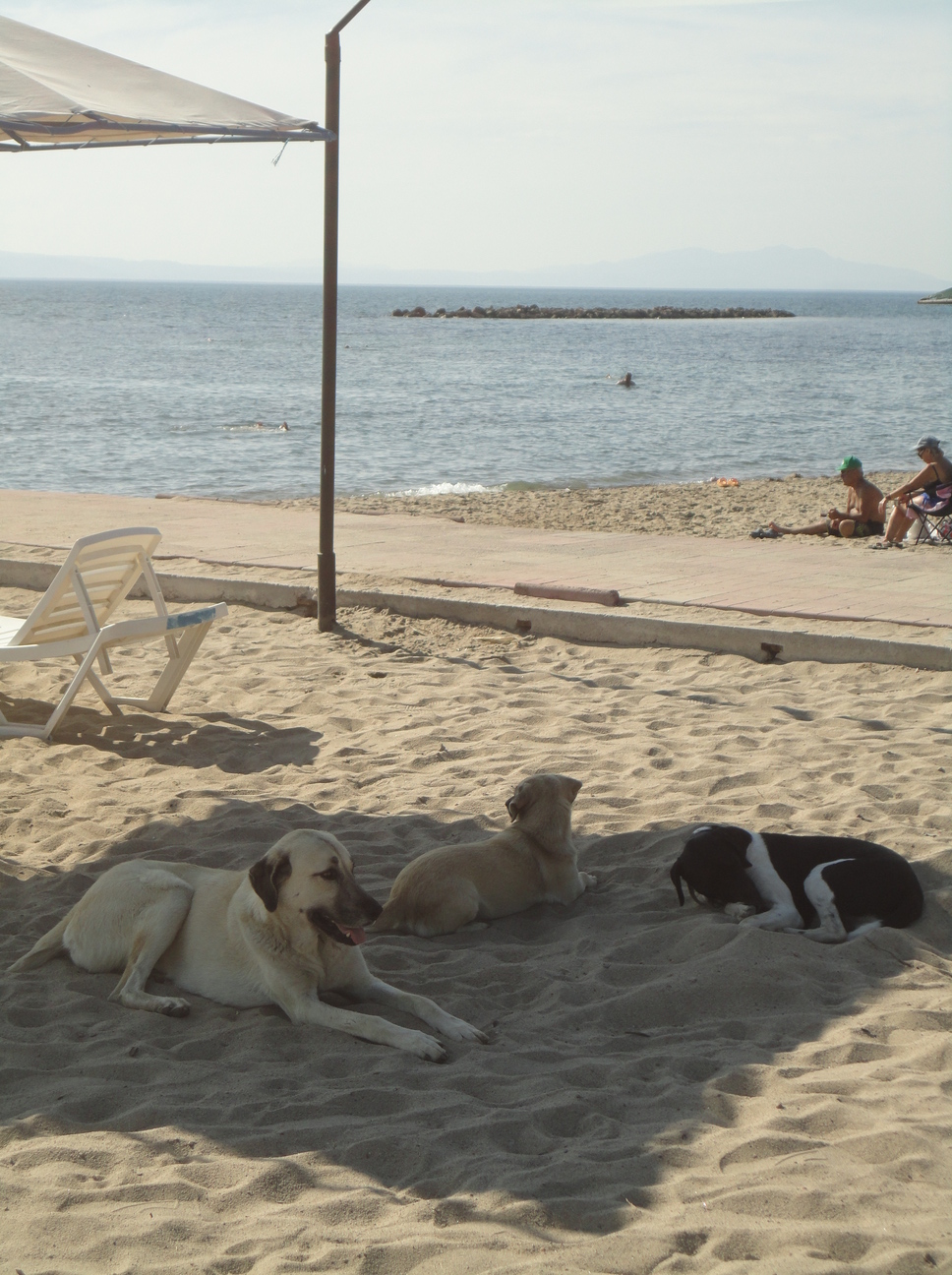
Three dogs sit in the shade of a beach umbrella
Intellect, spirit, and appetite
Profesörler Sitesi, Altınova, Balıkesir, Turkey
September 13, 2021

Continue reading

Politics

Index to this series

This is mostly about avoiding things. An early theme of Plato’s Republic is avoiding the deprivations of solitary life through politics. Some of us would rather just avoid politics. Such persons include Henry David Thoreau, Gilbert Ryle, and the inventor of the h-index (he is a physicist called Jorge E. Hirsch, but I know nothing else about him). I mentioned these persons in my last Plato post, “Badiou, Bloom, Ryle, Shorey.” I have some more to say about them here. In “Civil Disobedience” (1848), for example, Thoreau writes, “it is, after all, with men and not with parchment that I quarrel”; but measures like the h-index are used to hide the human factor in the equations used to judge us.

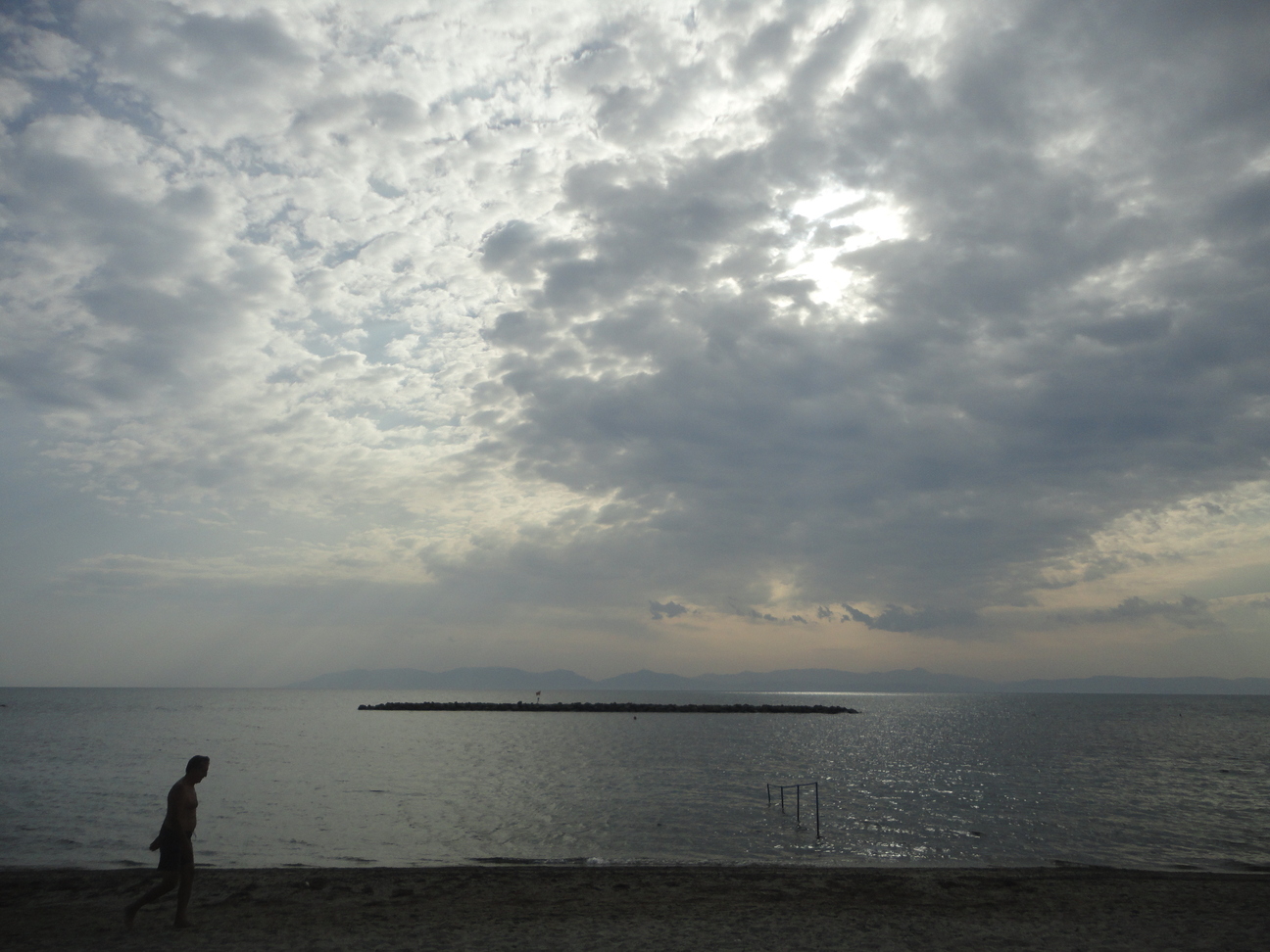
Lone man walks by sea with mountains beyond and under a cloudy sky
All photos are from Profesörler Sitesi, Altınova, Balıkesir, Turkey
September 21–3, 2021

Continue reading

Badiou, Bloom, Ryle, Shorey

Index to this series

The discussion having been postponed for our fifth reading in the Republic, I give here some remarks that started out as part of my commentary on Book IV. The remarks concern

  • the translations of the Republic that I have been reading, mainly those of
    • Alain Badiou (b. 1937), translated in turn from the French by Susan Spitzer;
    • Allan Bloom (1930–92);
    • Paul Shorey (1857–1934);
  • the “Interpretive Essay” that accompanies Bloom’s translation;
  • a 1969 review of Bloom’s translation and essay by Gilbert Ryle (1900–76), who embarrasses the profession of philosophy (if it be a profession).

I quote also Christopher Hitchens; A Guide to Plato’s Rupublic, by Daryl H. Rice; Agnes Callard; Martha Nussbaum; and Henry David Thoreau.


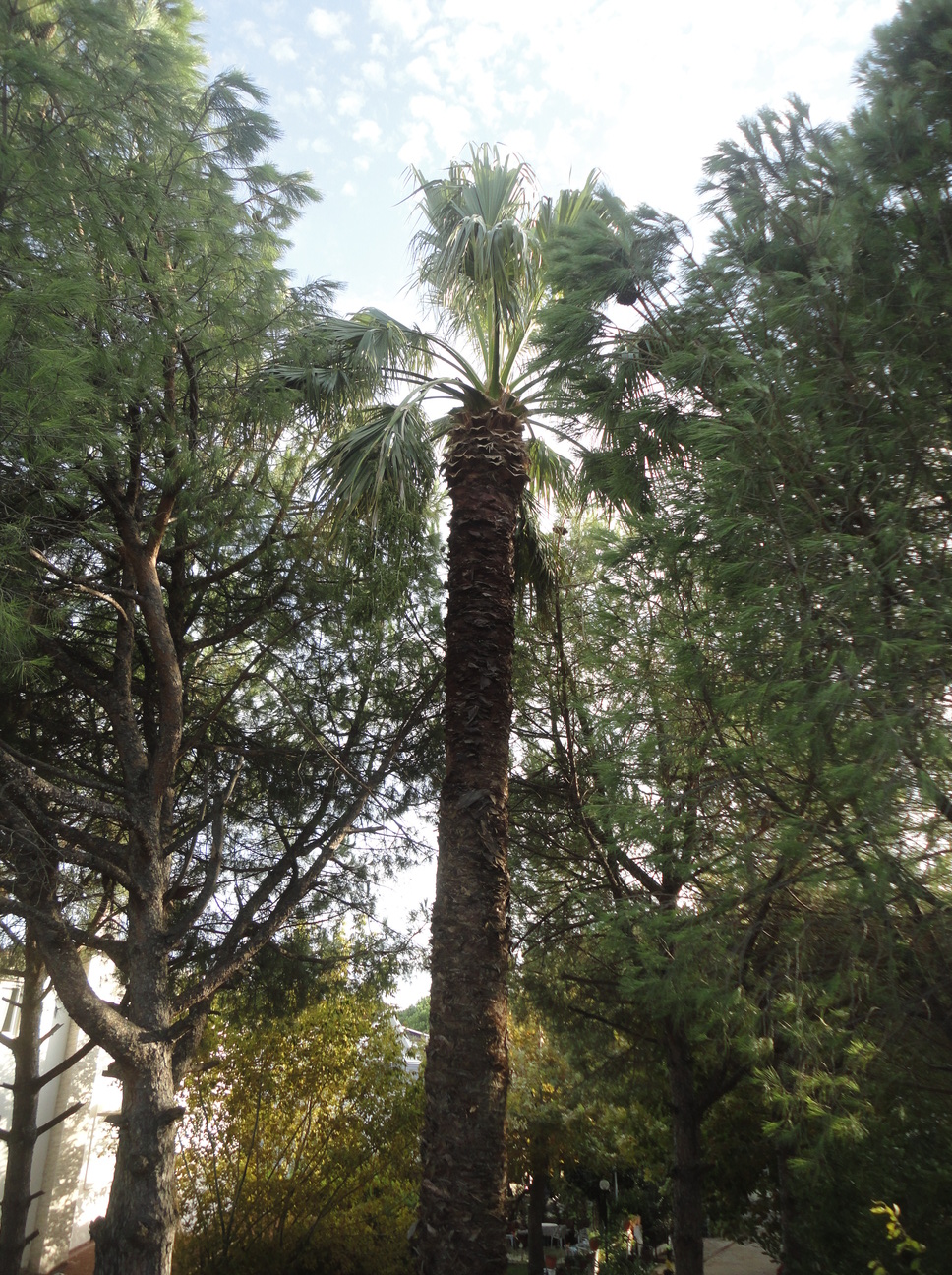
Palm trimmed
Profesörler Sitesi, Altınova, Balıkesir, Turkey
September 13, 2021

Continue reading

Hostility and Hospitality

After seventeen weekly posts of readings with my annotations, the Pensées of Pascal join two other works that I have blogged about systematically, chapter by chapter or book by book:

  • R. G. Collingwood, The New Leviathan, or Man, Society, Civilization, and Barbarism (1942);

  • Homer, the Iliad, in George Chapman’s translation.

Do three authors belong together, for any other reason than that I have spent time with each of them?

  • For Pascal, the Torah is history, but the Iliad was written too late to be that, and is just a novel (S 688 / L 436 / B 628). It has no concept of law, he says (S 691 / L 451 / B 620), but later Greeks took this and other things from the Jews. I discussed this in “Judaism for Pascal.” For example, Philo Judaeus thinks that when Heraclitus says, “We live their death and we die their life,” this is the death wrought by eating of the tree of the knowledge of good and evil in Genesis.

  • Pascal and Collingwood both come to terms with a world of contrariety. Collingwood calls it “a Heraclitean world,” alluding to how Plato has Socrates tell Hermogenes in the Cratylus (402a, Loeb translation by Harold North Fowler),

    Heracleitus says, you know, that all things move and nothing remains still, and he likens the universe to the current of a river, saying that you cannot step twice into the same stream.

    Continue reading

Some Say Poetry

In a poetry review, a remark on being a student has drawn my attention:

In My Poets, a work of autobiographical criticism with occasional ventriloquial interludes, McLane recalls two “early impasses in reading,” freshman-year encounters with Charles Olson and Frank O’Hara. She writes about not “getting it” but wanting to get it, about a desire to get it that was left wanting by code-breaking and analysis and satisfied by hearing and feeling.

This is from the second half of a “New Books” column by Christine Smallwood, in the Reviews section of Harper’s, July 2017. After quoting Smallwood’s review, I want to say something about learning and creating, in poetry and also in mathematics.

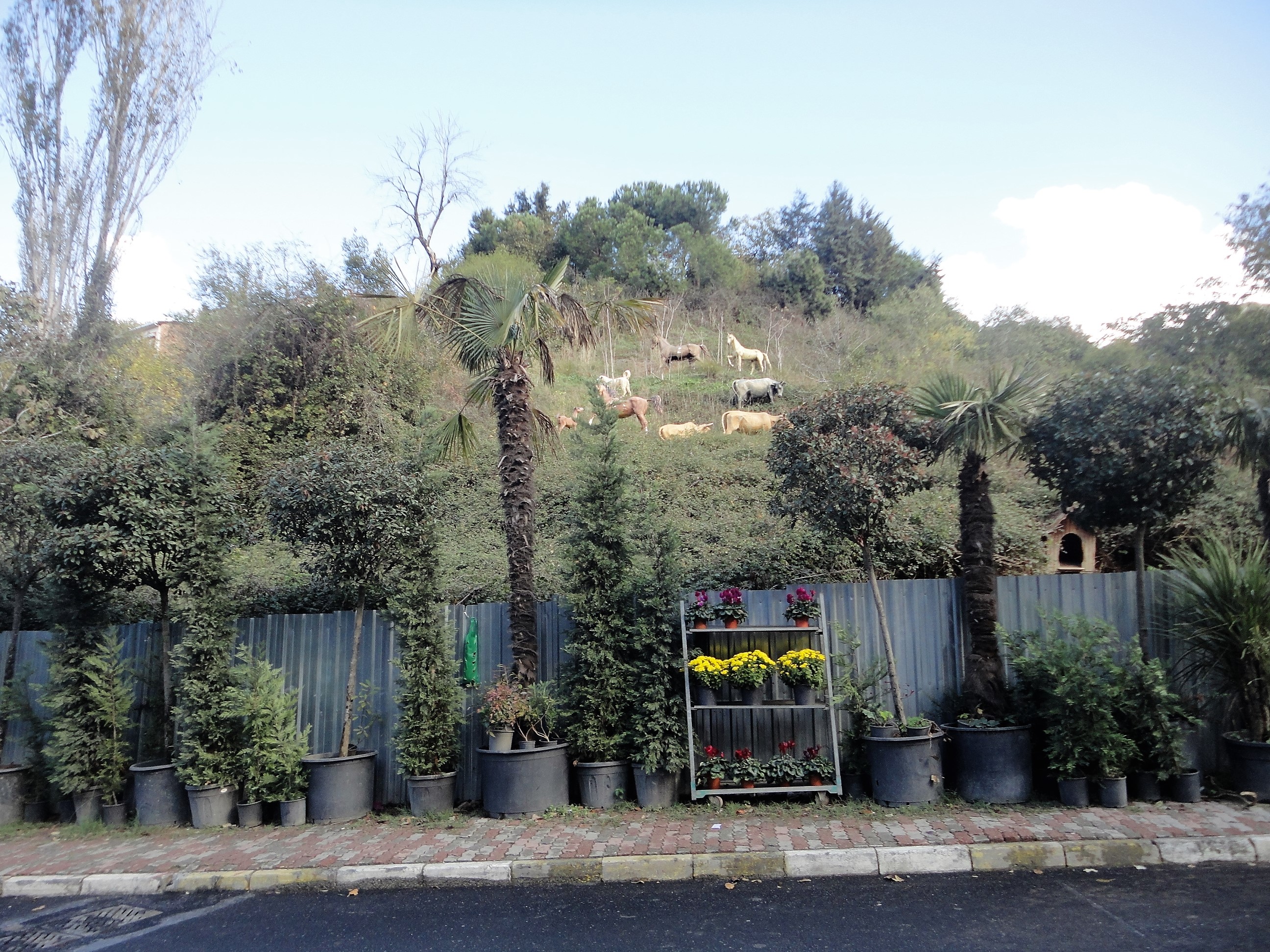
Potted palms with plaster farm animals on hillside behind
Kuzguncuk, 2017.11.05

Continue reading

Attribution of Fascism

I began writing this article on Saturday, December 10, 2016; I finished the next morning, Istanbul time. I wrote the first three paragraphs last. The planned breakfast did take place, quite pleasantly. The death toll in the bombing rose to 39. No matter how much I read drafts of my articles, I usually want to make changes after they are published. I made one such change visible in the first paragraph. After a friend left some comments, I made some other small changes. Again these are visible. Last I heard, the policy on Diaspora* is that published posts cannot be edited at all, because there should never be any question about which version of a post any resulting comments refer to. WordPress is not so strict, and in future I may just remove all signs of editing. There may not be any point in doing this in an essay that does not say everything that seemed worth saying at the time of writing. Better perhaps to leave the signs of work in progress. In any case, I shall retain access to the older versions.

Everything changes so fast, at least when one has an internet connection and a Twitter feed. As I try to wrap up this essay, I learn of a bombing outside a football stadium not too far from us here in Istanbul. Deaths are said to be in the teens, mostly of police officers. Twenty-nine persons are said to have died, all but two being police officers. Turkey has been in a state of emergency since the summer. Rescue vehicles had trouble getting through the normal traffic. The nearest hospitals are not operational.

Meanwhile, Donald Trump and his would-be appointees are called treasonous; but it is mainly liberals and lefties who are saying this. Russia was the big enemy when it was Communist; now some Republicans do not seem too concerned with its hold over Trump, while Democrats are reinventing the Red Scare.

If I hadn’t hooked up the internet connection, I would just be looking forward to a breakfast with friends later this morning, over on the Asian side of the Bosphorus. I expect this event to happen as planned, despite the bombing.

Now I just want to think a little bit about what fascism means, historically. It does seem to me that if Donald Trump has any ideology at all, it is fascism. Fascism is the doctrine that will guide his Presidency, if he is allowed to assume it. What this means is the main subject of this essay.

Books seen from above on a table: A Collection of Essays by George Orwell, on top of The Rise and Fall of the Third Reich; next to these, The Bones: A Handy, Where-to-Find-It Pocket Reference Companion to Euclid’s Elements

Continue reading