The use of a distinction between the subjective and the objective has sometimes made me suspicious. The suggestion is made here that Gödel’s Incompleteness Theorem relies on the distinction. I shall look at this more in “Gödel and AI.” Meanwhile, the major sources for the present post are the following.
- William James, Psychology: Briefer Course (1892), on “the stream of thought, of consciousness, or of subjective life” – also on
- nerves as telephone lines;
- emotions as resulting from “a physical effect on the nerves.”
- C. F. von Weizsäcker, The Relevance of Science (1964), on how “Cosmogony … is, objectively speaking, the way in which the world came into being, or it is, subjectively speaking, the teaching about this way.”
- Robert Pirsig, Zen and the Art of Motorcycle Maintenance (1974), on whether quality is objective or subjective (the answer is no) – also on the distinction between the classical and the romantic.
- R. G. Collingwood, Speculum Mentis (1924), on
- his usage whereby
- what pertains to a consciousness is called subjective;
- what the consciousness is of is called objective;
- atoning for the Fall, that is, the separation of subject from object
– also (in response to James) on how emotions don’t need a physical source.
- his usage whereby
- James Mumford, “Therapy Beyond Good and Evil: A nonjudgmental psychology is failing patients who need to hear hard truths” (perhaps the hard truths of the title are objective truths, and what the patients need to hear is that their own subjective evaluations of themselves may be wrong).
- William Egginton, “Why Kant Wouldn’t Fear ChatGPT-4” (for a computer, there is nothing beyond what it “knows” – all is subjective).
- Kurt Gödel, “On formally undecidable propositions of Principia mathematica and related systems I” (the Incompleteness Theorem relies on a distinction between a [subjective] statement and its [objective] meaning).
- Shannon Vallor, “The Thoughts The Civilized Keep” (they require labor, with a history).
Minor sources include the following.
- James Joyce, Ulysses, as presenting streams of consciousness.
- Sigrid Undset, Kristin Lavransdatter, as being more readable.
- Aristotle, Nicomachean Ethics and Physics, on how there is not deliberation about the cosmos, or the irrationality of √2, or how to build a ship.
- Jared Henderson, “How to read Aristotle’s Nicomachean Ethics.”
- C. S. Lewis, The Magician’s Nephew, where an iron bar grows into a lamp-post the way Aristotle imagines a log’s growing into a ship.
- a letter to Analog magazine on how religion is false science.
- Robert Pirsig, Lila, on the distinction between the static and the dynamic.
- Elle Hunt, “Octopus farming turns my stomach – but are some species really more worthy than others?”
- the Hebrew Bible (Psalms and Ezekiel) on eating words.
- Alexander Bevilacqua, “Saints for Supper” (a review of Jérémie Koering, Iconophages: A History of Ingesting Images).
- Jack A. Goldstone and Peter Turchin, “Welcome To The ‘Turbulent Twenties’.”
- David Allen Green, “‘Twelfth Night Till Candlemas’ – the story of a forty-year book-quest and of its remarkable ending.”
Having started last spring, my wife and I recently completed a project to read Ulysses together. I was glad to be able to put the book back on the shelf. It sits there, next to another of comparable length, Kristin Lavransdatter; this is because I order my books according to the birth of the writer (or subject), and James Joyce was born February 2, 1882; Sigrid Undset, May 5.
I read her book on my own, for and with pleasure, and it entered into my thoughts on the Nicomachean Ethics of Aristotle, expressed for example in “Impermanence” (on Book IX, chapters i–iii; the common theme was how children might forget their mothers, but not conversely; Maya Angelou recalled how many black women had nursed white children in America).


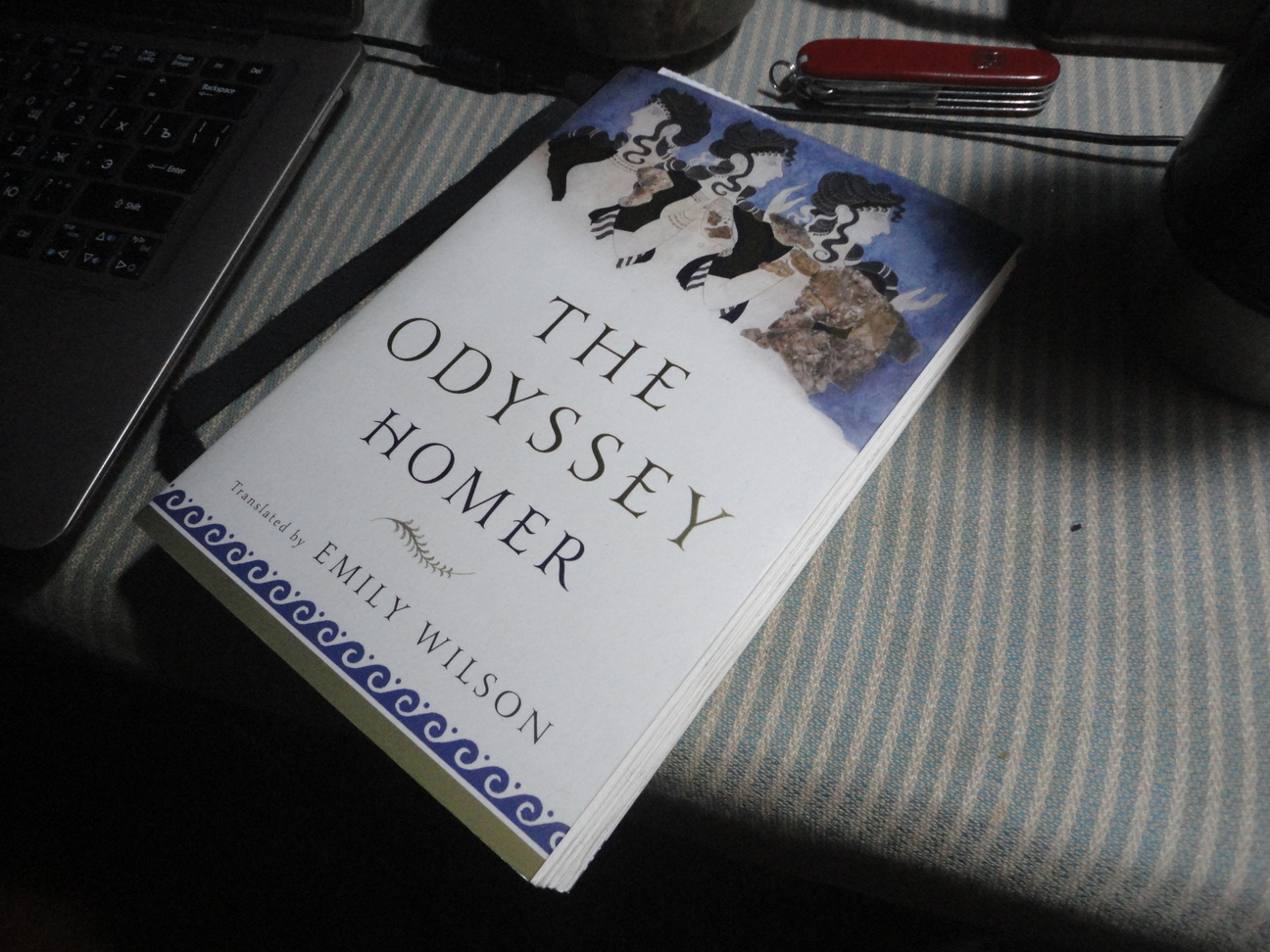
 Polytropy