Tag Archives: Xenophon

On The Human Condition of Hannah Arendt 10

Index to this series

CHAPTER V Action [3]

We come to the end of Arendt’s chapter on action. Action has two components:

  1. Getting it started (ἄρχειν).
  2. Keeping it going (πράττειν).

Anybody can do the first, but then the second is out of his (or her) exclusive control. This is a problem. You can try to avoid the problem, either by making other people your slaves, or by being a Stoic. You can also just recognize that the problem can be mitigated by the actions of promising and forgiving.

Picnic table among trees
Yıldız Parkı, April 16, 2022
Where I did some of the next reading

Continue reading

On The Human Condition of Hannah Arendt 8

Index to this series

CHAPTER V Action [1]

We shall have three readings of the chapter on action.

All sorrows can be borne if you put them into a story or tell a story about them.

Isak Dinesen

A theme of this reading is that our life is a story, but we are not the author.

Nam in omni actione principaliter intenditur ab agente, sive necessitate naturae sive voluntarie agat, propriam similitudinem explicare; unde fit quod omne agens, in quantum huiusmodi, delectatur, quia, cum omme quod est appetat suum esse, ac in agendo agentis esse modammodo amplietur, sequitur de neces­sitate delectatio. … Nihil igitur agit nisi tale existens quale patiens fieri debet.

(For in every action what is primarily intended by the doer, whether he acts from natural necessity or out of free will, is the disclosure of his own image. Hence it comes about that every doer, in so far as he does, takes delight in doing; since everything that is desires its own being, and since in action the being of the doer is somehow intensified, delight necessarily follows. … Thus, nothing acts unless [by acting] it makes patent its latent self.)


Dante

Arendt will reiterate what Dante says.

Two figures walk between buildings towards a hillside of graves, with skyscapers beyond
Zincirlikuyu Mezarlığı
March 26, 2022

Continue reading

On The Human Condition of Hannah Arendt 4

Index to this series

CHAPTER III Labor [1]

With our fourth reading, we enter the “three central chapters” of The Human Condition, for Arendt’s systematic “discussion of labor, work, and action.” We shall be here through the ninth reading. Some questions raised now will no doubt be answered later.


Ramiz Ağa Çeşmesi (fountain) & Şenlik Dede Camii (mosque)
Beşiktaş, 2022.02.28

A general concern of mine is the abstractness of the discussion. What has it to do with us? Can I say that I know what labor is, because I bake bread and mop the kitchen floor, or because I once worked on a farm, or because I used to know how to fix whatever might go wrong on my bicycle? Can Arendt say such things, and does it matter? She has a moving passage towards the end of the present reading:

There is no lasting hap­piness outside the prescribed cycle of painful exhaustion and pleas­urable regeneration, and whatever throws this cycle out of balance … ruins the elemental happiness that comes from being alive.

Continue reading

On The Human Condition of Hannah Arendt 2

Index to this series

CHAPTER II The Public and the Private Realm [1]

Contents

There are four more sections in the chapter, and these constitute the next reading: 7 the public realm: the common; 8 the private realm: property; 9 the social and the private; 10 the location of human activities.

Graffiti: “Now or never” and “Oku” (that is, “Read”) on a wall by a street with a parked car; skyscrapers in the distance

Beşiktaş, February 15, 2022
Oku = “Read” (second-person singular imperative)

History and law

A significant passage in this reading lies on page 42 (¶ 6.9):

… the significance of a historical period shows itself only in the few events that illuminate it. The application of the law of large num­bers and long periods to politics or history signifies nothing less than the wilful obliteration of their very subject matter.

My post “Law and History” took up something like this argument. Continue reading

Law and History

I learned about Peter Turchin recently through his profile in the Atlantic by Graeme Wood. I had learned about the Atlantic article from historians on Twitter such as James Ryan, who does “Turkish history and other stuff,” according to his own Twitter profile, and who tweeted in response to Wood’s article,

This is really interesting research, but, uh, it is only history in the way that a particle physicist does history.

In response to that, a thread began:

Needless to say, no historian would find this “approach” acceptable. There’s a reason we spend so much time on historiography when new historians are trained; we have complex, rich debates that have continued for longer than any field except philosophy on how to approach history.

That was by Axel Çorlu, living in the US, but “Born in Izmir, Turkey, to a Levantine (Italian/Greek/French/Armenian) family” according to his Academia page.

Continue reading

NL XLII: The First Barbarism: The Saracens

Index to this series

Executive summary: The barbarians who overran the Western Roman Empire were not barbarists in Collingwood’s technical sense. However, “in the seventh century a movement inspired by hostility towards everything Roman … and everything Christian, flared up on the south-eastern frontier of the Roman world” (42. 22). This movement was therefore barbarist. Failing to conquer Europe, either from the east at Constantinople, or from the west at Tours, the movement settled down and ceased being barbarist—by the account in Chapter XLII, “The First Barbarism: The Saracens,” and later, in Collingwood’s New Leviathan. I check this account against more recent sources; it is barbarist to think that the “movement” in question, or indeed any movement, must always be barbarist; I look at the “civilization” of the British Empire as portrayed in a story of Maugham, and I compare a character of the story to Collingwood.


Collingwood’s historical account of barbarisms is a minefield, if one wishes not to sound like a barbarist oneself. The four examples will be

  1. the Saracens,
  2. the “Albigensian Heresy” (or the Bogomils),
  3. the Turks, and
  4. the Germans.

The very formula “the X”—definite article followed by national or quasi-national adjective—this has a barbaric use in branding a people with indelible features. A retort then is “not all X,” as in “not all men.” Collingwood issues such a proviso himself:

45. 68. Please observe, Reader, that I am not talking about all Germans. I do not say that all Germans are liars. I know of some who are not; those heroes, for example, who continue in spite of everything the Nazis can do to run their secret wireless station and keep on printing Das Wahre Deutschland.

Das wahre Deutschland, from a Swiss antiquarian bookshop, Antiquariat Peter Petrej

Continue reading

On Chapman’s Homer’s Iliad, Book XIV

Index to this series | Text of Chapman’s Homer’s Iliad

When Neptune was helping the Greeks stave off certain defeat, I tried to suggest that divine intervention in the course of events might be understood as human resolve to change that course. This was in Book XIII of the Iliad, where Neptune took the form of one of the Greeks – Calchas – in order to exhort the others. They would have listened to Calchas anyway; he was a prophet. Ajax Oileus said he could tell Calchas was “really” a god; we can read this to mean Calchas was inspiring. We can say this of somebody today, without meaning to suggest any supernatural influence.

Mostly a calm sea, with heads of two swimmers; behind, a strip of pink sky with setting sun

Continue reading

On Chapman’s Homer’s Iliad, Book X

Index to this series | Text of Chapman’s Homer’s Iliad

In Book X of the Iliad, Diomedes and Ulysses go to spy on the Trojan camp at night. When they return to the Greek camp (lines 482 & 3),

Then entred they the meere maine sea, to cleanse their honord sweate
From off their feet, their thighes and neckes: and when their vehement heate …

I can enter the same sea now. After more than ten months, I return to my reading of Homer, and Chapman’s Homer, as I have returned to the place where I was doing it last year, on the Aegean coast opposite Lesbos.

Continue reading

On Chapman’s Homer’s Iliad, Book IX

Index to this series | Text of Chapman’s Homer’s Iliad

Note added August 25; edited and augmented, August 27; 2024: In my view, the key events of the Iliad are Achilles’s holding back from

  1. killing Agamemnon in Book I;
  2. fighting on Agamemnon’s side in Book IX.

The latter case of self-restraint may be a disaster for Achilles, not to mention Patroclus and the other Greeks who die as a result; but it is also somehow a result of the former case. Not killing on impulse is probably a good thing; otherwise you have the situation of Njal’s Saga, which I took up in writing “On Homer’s Iliad Book I” (November 29, 2022).

Continue reading

On Chapman’s Homer’s Iliad, Book VI

Index to this series | Text of Chapman’s Homer’s Iliad

Book VI of the Iliad may illustrate or test what I have also been reading, whose second title is Man, Society, Civilization and Barbarism. For the Greeks, the Trojan war is a fight for civilization, against the barbarism of stealing the wife of the man who has played host to you. In Book VI is the great exemplar of civilization: the meeting of Diomedes with Glaucus. Discovering that the grandfather of his Trojan enemy had once been a guest of his own grandfather, Diomedes urges that he and Glaucus must exchange gifts, be friends, and avoid meeting on the battlefield; and Glaucus agrees.


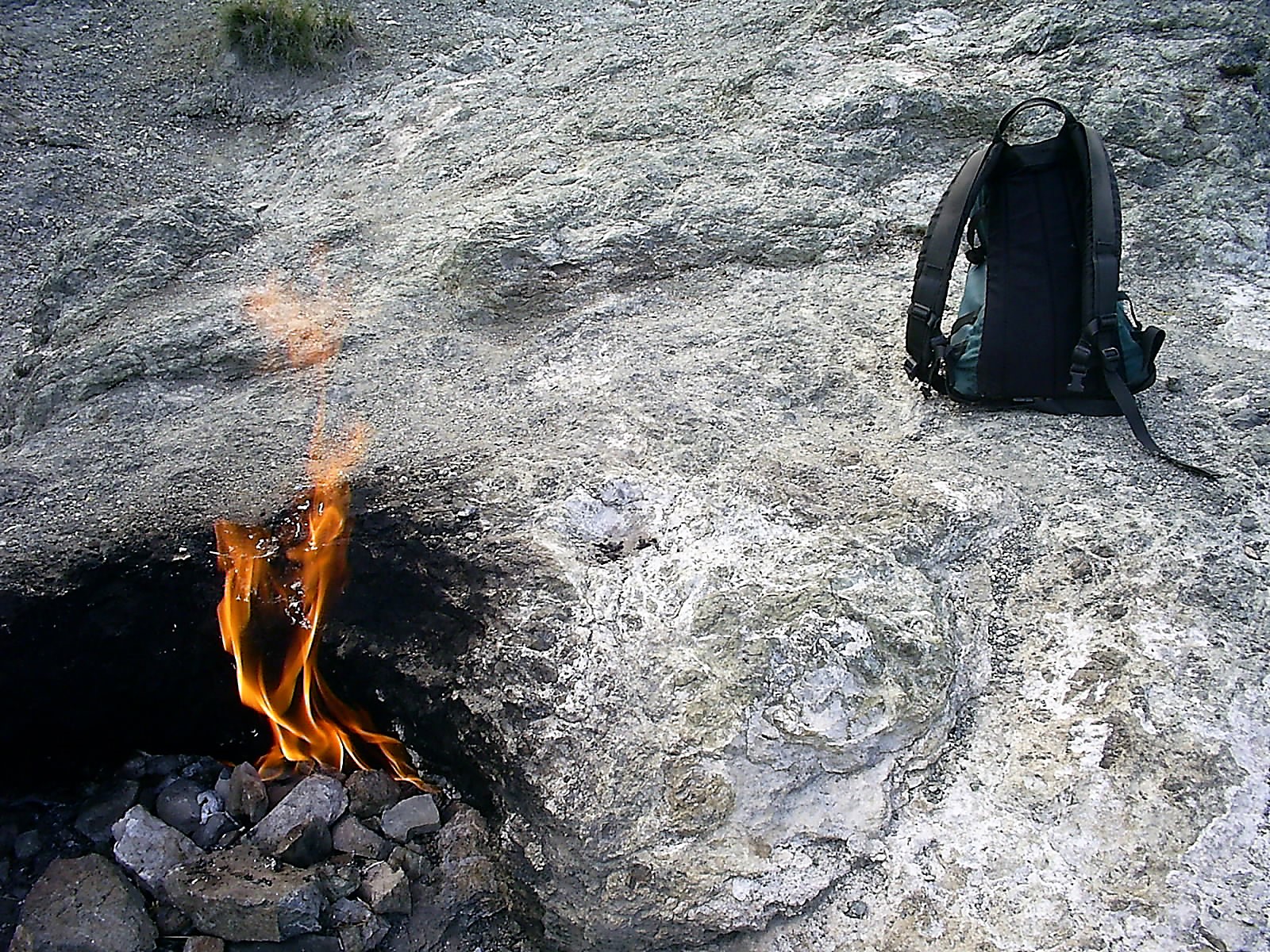
One flame of the Chimera, with my backpack, 2009

Continue reading