Category Archives: Poetry

On Homer’s Iliad Book V

Tangles of rebar from a building demolition sit, with a backhoe on top, on a narrow street paved with setts
Creative destruction
Arpa Suyu Sokağı, Şişli, Istanbul
Thursday, December 22, 2022

In Book V of the Iliad, the battlefield deaths that started in Book IV continue. Some of them are caused by Diomedes, who also stalks higher prey:

  • Giving him the power to recognize gods, Athena tells him to avoid all of them but Aphrodite, whom he then wounds.
  • When Athena gives him permission and encouragement to attack Ares, Diomedes wounds him too.

In echo of Achilles’s summoning of Thetis in Book I, the wounded gods go crying to their parents.

On Homer’s Iliad Book IV

Bosphorus and third bridge over it, seen from a height through trees beside a house
Kireçburnu, Sarıyer, Istanbul
November 30, 2022

Last time I mentioned what I had remembered most from the Iliad, after reading it in high school: the metaphor in Book VI of humans as leaves dying in the fall, to be replaced by new ones in the spring. I also remembered how often men died at the hands of their fellow men:

Continue reading

On Homer’s Iliad Book III

Trunks of three mature trees on concrete wharf; strait beyond
Yeniköy (Νιχώρι) on the Bosphorus
Sarıyer, Istanbul, December 11, 2022
The Paphlagonians must have passed by here
on their way to join the Trojans
as they did according to Iliad II.851–5
as mentioned in the Wikipedia article “Cytorus
created by me in 2010

In Book III of the Iliad, we learn about Menelaus, Paris, Hector, Helen, and Priam. Having learned about Agamemnon, Achilles, and Patroclus in the first two books, now we know all of the players in the following summary of the epic.

Continue reading

On Homer’s Iliad Book II

As I proposed last time, Achilles performs the greatest act in the Iliad by not killing Agamemnon in Book I. He then takes himself out of the action for a while. We are not going to see him again till Book IX, when he receives the embassy of Phoenix, Ajax, and Odysseus (chosen by Nestor in lines 168–9).

Benches and bare tree on wet concrete wharf by the Bosphorus under a cloudy sky
Kireçburnu, Sarıyer, Istanbul
Wednesday, November 30, 2022

Continue reading

On Homer’s Iliad Book I

In Book I of the Iliad, Achilles restrains an impulse to run a sword through Agamemnon.

That may be the greatest act in the whole epic. I say so, having recently completed a reading of Njal’s Saga, which features a lot of impulsive killing. Now I am embarking on the Iliad again, a book at a time. Here I take up Book I, some comparisons with the saga, and some connections with Plato, Augustine, and Collingwood.

I wrote here about Homer’s epic, book by book, between April, 2017, and September, 2019. I was reading Chapman’s Elizabethan translation. In my account of Book I from then, there are details that do not otherwise stand out to me now, when

  • I am reading mainly Murray’s translation in the Loeb Classical Library, and
  • comparisons with Njal’s Saga are in mind.

Bench on concrete wharf, looking out across a bay to the hills beyond; coast guard vessel in view
Sarıyer, Istanbul (European side)
Loeb Iliad, volume I
November 25, 2022

Continue reading

Sacrifice and Simulation

Executive summary. An experiment has been performed to detect whether we are living in a simulation. The experiment is to tell Abraham to sacrifice his son. Whatever he does, he breaks a law. Thus there is more to the world than can be understood by natural science.

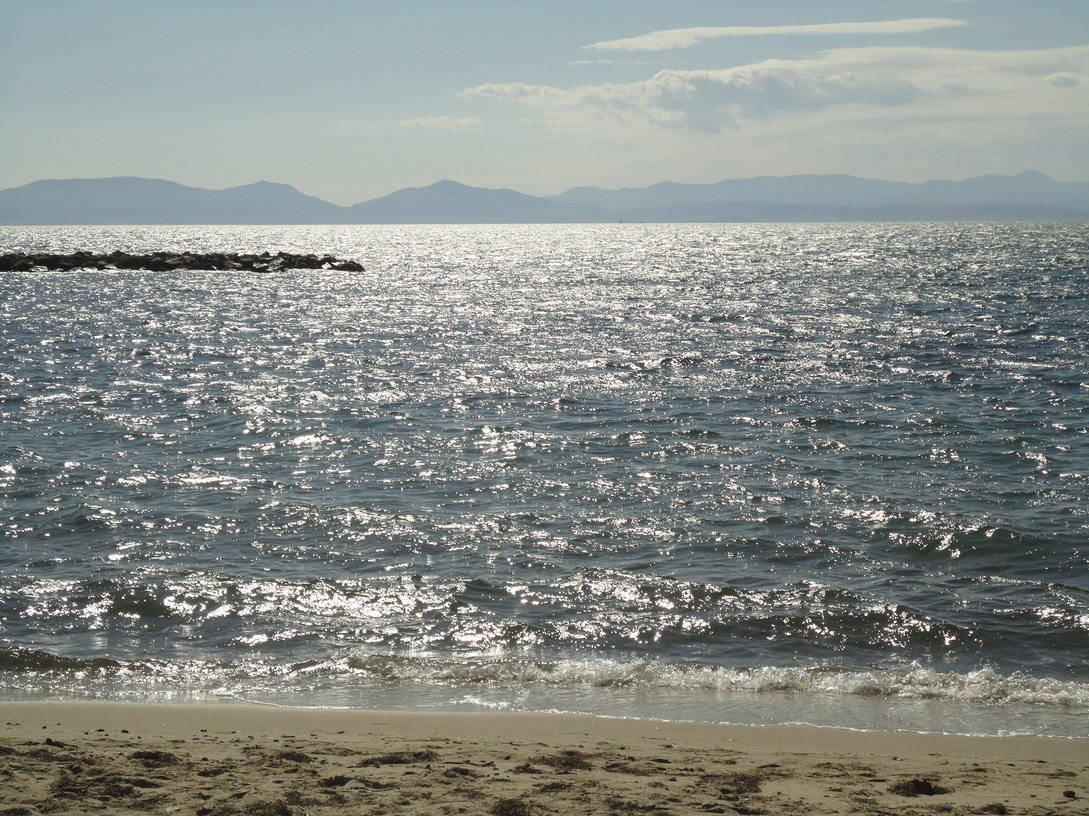
Beach, sparkling sea, mountains, clouds, sky
Altınova, Ayvalık, Balıkesir, Türkiye
Looking towards Lesbos, Greece
September 20, 2022

Continue reading

Creativity

In the Platonic dialogues, Socrates frequently mentions τέχνη (technê), which is art in the archaic sense: skill or craft. The concern of this post is how one develops a skill, and what it means to have one in the first place.

Books quoted or mentioned in the text, by Midgley, Simone Weil, Thoreau, Amy Mandelker (on Tolstoy), Oliver Byrne (on Euclid), Wittgenstein, Arendt, and Caroline Alexander (on Homer)

Continue reading

On Plato’s Republic, 14

Index to this series

In the tenth and final book of Plato’s Republic (Stephanus 595–621), with the help of Glaucon, Socrates does three things:

  1. Confirm and strengthen the ban on imitative poetry carried out in Book III.
  2. Prove the immortality of the soul.
  3. Tell the Myth of Er about how best to make use of that immortality.


Bernard Picart
Glaucus Turned into a Sea-God, 1731
“Just as those who catch sight of the sea Glaucus would no longer easily see his original nature because some of the old parts of his body have been broken off and the others have been ground down and thoroughly maimed by the waves at the same time as other things have grown on him – shells, seaweed, and rocks – so that he resembles any beast rather than what he was by nature, so, too, we see the soul in such a condition because of countless evils” – Republic 611d

Here is a finer analysis, as part of a general table of contents for this post.

  • Prologue
    • A Translation Issue. How you translate Book X depends on whether you believe Socrates has a theory that all art is imitation. I have gathered sixteen translations of a diagnostic passage that Collingwood highlights in The Principles of Art (1938).
    • Imitation Elsewhere – that is, in Books II, III, V, and VI, as well as in the Phaedrus.
  • Book X
    • Imitation
      • What It Is. It is at a third remove from reality.
      • Homer and the Tragic Poets – did you ever hear that they had
        • given a city its constitution,
        • led a successsful military campaign,
        • invented something useful,
        • been revered as private teachers, as Pythagoras was and sophists want to be?
      • The Three Arts involving a thing:
        1. Using it.
        2. Making it.
        3. Imitating it.
      • Parts of the Soul – the best part is the calculating part, which can avoid the confusions that imitations subject the worse parts to.
      • Imitation Is of the Worse – our worse aspects, not the good and decent ones.
      • Imitation Makes Us Worse by bringing out shameful feelings for others that we suppress for ourselves.
      • Philosophy and Poetry – they have an old quarrel, but philosophy is willing to listen to an argument on behalf of poetry.
    • Immortality – the soul must have this, because only its specific evils could kill it, and these are the opposites – injustice, license, cowardice, and ignorance – of the virtues identified in Book IV. They do not in fact kill the soul, at least not directly.
    • Myth of Er – a Pamphylian, son of Armenius, he died in battle, but rose again on the twelfth day, having learned that, unless condemned to hell, we are going to choose our next life, after a spell in heaven or purgatory, depending on how we have lived our current life; thus we had better be ready to choose wisely.

Continue reading

Figs

This is about figs, because the opening of “The Sixth Elegy” of the Duino Elegies of Rainer Maria Rilke is about them, and I turn out to live among them.

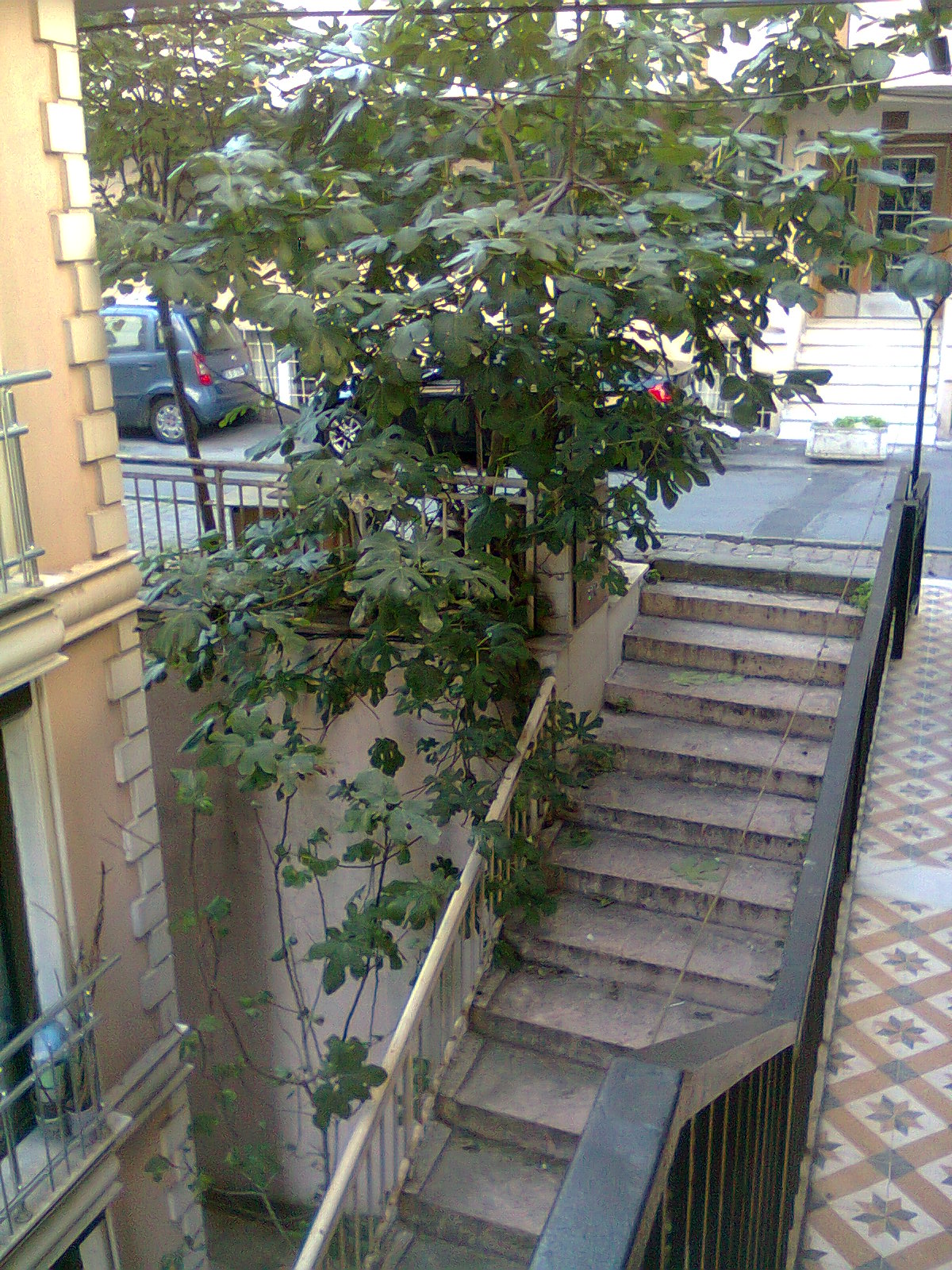
Fig trees growing like weeds on Ayşecik Sokağı
Fulya, Şişli
November 15, 2021

Continue reading

Nature

Index to this series

Can Socrates really “find a natural support for justice,” as Allan Bloom says he must? It is strictly impossible, as I say in “Bloom, Badiou, Ryle, Shorey.” Inevitably there is more that can be said, and I shall try to say some of it here.

Sand, sea, mountains, sky
Anatolian sand, Aegean sea, Lesbian mountains
Uranus over all
Profesörler Sitesi, Altınova, Balıkesir, Turkey
September 24, 2021

Continue reading