Category Archives: Principles of Art

Solipsism

Aristotle sets the example that Thomas Aquinas follows in the Summa. We are reading chapters viii and ix of Book IX of the Nicomachean Ethics. The Philosopher makes the best case against two positions that he ultimately argues for:

  1. One should be selfish.
  2. One needs friends anyway.

Highrise under construction above a green playing field
In “Sanity” I used a photo of the same skeletal building from the other side

Continue reading

Emotional Contagion (Iliad VIII)

On the day recounted in Book VIII of the Iliad,

  • on earth, the Achaeans are twice driven behind their new walls;
    • during the first rout,
      • Odysseus does not hear when Diomedes urges him to come to the aid of Nestor;
      • Hector thinks he will be able to burn the Achaean ships and kill all the men;
      • Agamemnon prays for mere survival;
    • the second time, Hector calls for fires to be lit, lest the Greeks try to escape in the night;
  • in heaven, Zeus
    • weighs out a heavier fate for the Achaeans;
    • declares that it shall be so until Achilles is roused by the death of Patroclus;
    • warns Hera and Athena not to interfere (though they try to anyway).

I wrote a fuller summary in 2017. Because I was reading it, I also talked about Huysmans, Against Nature, and the belief of the main character that the prose poem could

contain within its small compass, like beef essence, the power of a novel, while eliminating its tedious analyses and superfluous descriptions.

Now I shall find reason to bring up Herodotus, Plato, Aristotle, Thoreau, and Freud, and especially William James and Collingwood on the subject of emotion.

Morning sun, obscured by overcast skies, still shines on waters in turmoil in the Bosphorus Strait
Waters of the Bosphorus, Sarıyer, Istanbul
Wednesday morning, January 11, 2023

Continue reading

Creativity

In the Platonic dialogues, Socrates frequently mentions τέχνη (technê), which is art in the archaic sense: skill or craft. The concern of this post is how one develops a skill, and what it means to have one in the first place.

Books quoted or mentioned in the text, by Midgley, Simone Weil, Thoreau, Amy Mandelker (on Tolstoy), Oliver Byrne (on Euclid), Wittgenstein, Arendt, and Caroline Alexander (on Homer)

Continue reading

The Society of Mathematics

Mannequin in front of summation formula

This post concerns the Association for Mathematical Research, or AMR. A number of people are upset by its existence. I am not exactly one of them, but am suspicious, mainly because I do not know why a new organization would be needed, when we already have

The Twitter account of the AMR is dated to April, 2021. The website of the AMR supplies a list of founding members, but no account of when, how, or why they became founders. The site has a brief mission statement:

THE MISSION of the AMR is to SUPPORT MATHEMATICAL RESEARCH and SCHOLARSHIP

Are those other organizations not doing a good job? Continue reading

Feminist Epistemology

To this post, I am adding this introduction in July 2021. I have returned to some of the ideas of the post, and I see that I left them in a jumble. They may still be that, but I am trying to straighten up a bit.

Beyond this introduction, the post has three parts. Part III takes up more than half of the whole post and consists of my notes on

  1. Elizabeth Anderson, “Feminist Epistemology and Philosophy of Science,” Stanford Encyclopedia of Philosophy, February 13, 2020. 61 pages.

In Anderson’s article I see – as I note below – ideas that are familiar, thanks to my previous reading of philosophers such as Robin George Collingwood, Mary Midgley, and Robert Pirsig. Henry David Thoreau may not exactly be one of those philosophers, but he is somehow why I came to write this post in the first place.

Here is a table of contents for the whole post:

Continue reading

On Chapman’s Homer’s Iliad, Book XVIII

I analyze Book XVIII of the Iliad into seven scenes.

Branches against sky

Continue reading

NL XXXIV: What Civilization Means Generically

Index to this series

Turning now to Part III of Collingwood’s New Leviathan (1942), we take up civilization, a topic of utmost importance, featuring as it does, for example, in the controversial hypothesis of the “Clash of Civilizations,” and generally being something that reactionaries say they want to defend.

Civilization is something that happens to a community (34. 4). We studied communities as such in Part II, and their members individually in Part I.

Civilization is a “process of approximation to an ideal state” (34. 5). That is the gist of Chapter XXXIV, “What ‘Civilization’ Means: Generically.” There will be a lot to spell out.


We have returned to Istanbul. Below are
sunset photos from our last night on the Aegean coast

Continue reading

NL XXXI: Classical Physics and Classical Politics

Index to this series

As my beach holiday winds down, so perhaps does the current spate of blog posts. Here is one more. Setting aside Homer, I continue immediately with Collingwood, in part because, in the 2000 paperback impression of the 1992 Revised Edition of the New Leviathan that I take to the shore, I have now also read the Editor’s Introduction by David Boucher. (Back at the cottage, I have to type out the quotes from this that I make below; for quotes of Collingwood himself, I cut and paste from a scan of the 1947 corrected reprint of the 1942 First Edition.)

As I could infer from my pencil-marks, I had read Boucher’s introduction some time before; but I could remember little of it. I think it is aimed at professional philosophers, rather than at anybody who would admire Collingwood for saying, as he does in An Autobiography (page 6), when he describes getting prepared to go to Rugby School,

The ghost of a silly seventeenth-century squabble still haunts our classrooms, infecting teachers and pupils with the lunatic idea that studies must be either ‘classical’ or ‘modern’. I was equally well fitted to specialize in Greek and Latin, or in modern history and languages (I spoke and read French and German almost as easily as English), or in the natural sciences; and nothing would have afforded my mind its proper nourishment except to study equally all three.

Continue reading

NL XXX: War As the Breakdown of Policy

Index to this series

By the account of Chapter XXX, called “War as the Breakdown of Policy,” of Collingwood’s New Leviathan (1942), humans have not always made war (30. 1). Why then do we make it now? People say war is a continuation of policy (30. 14); but as Collingwood cleverly points out (30. 15), the original saying, which is due to Clausewitz (30. 69), is ambiguous: a continuation could be an extension or a breakdown (30. 16–17).


Photos taken September 6, 2018
around our cottage
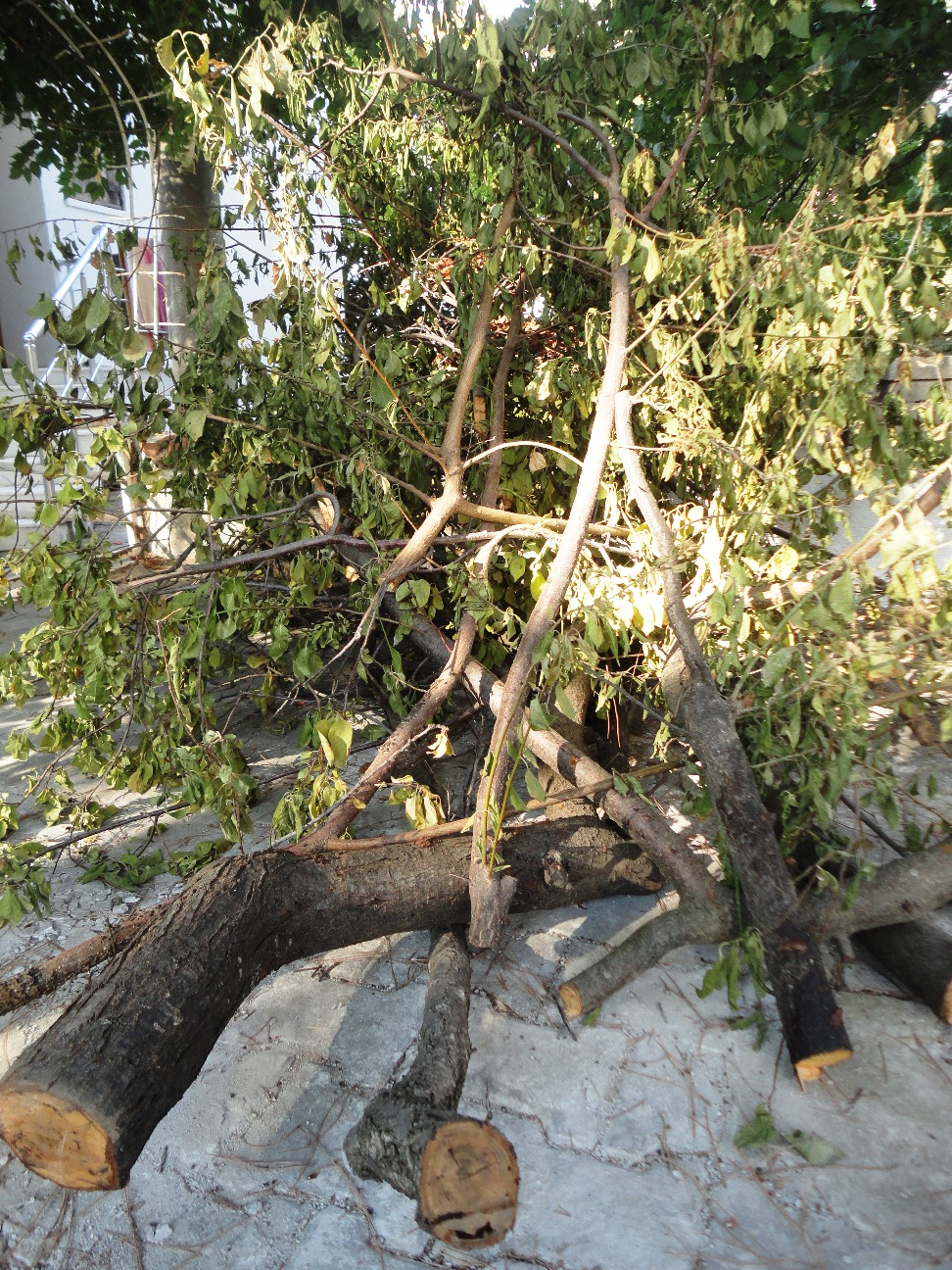
and of the wood that I cut there
in Profesörler Sitesi
Altınova, Balıkesir, Türkiye

Continue reading

A New Kind of Science

Executive summary. Some sciences are called descriptive, empirical, or natural; others, prescriptive or normative. We should recognize a third kind of science, which studies the criteria as such that a thinking being imposes on itself as it tries to achieve success. I propose linguistics as an example. Collingwood introduced the term criteriological for the third kind of science. This was in The Principles of Art (1938), though I find the germ of the concept in earlier work, even in Collingwood’s first book, Religion and Philosophy (1916), in the passage on psychology that the author would recall in An Autobiography (1939).

Collingwood’s examples of criteriological sciences are logic, ethics, aesthetics, and economics. Pirsig effectively (and independently) works out rhetoric as an example in Zen and the Art of Motorcycle Maintenance (1974). We may benefit from clarity here, given how people can have a strong reaction to being lectured by experts. For Collingwood, such a reaction is found in Nazi Germany; see the last chapter of The New Leviathan (1942). Reactions to grammar are the subject of my own two ensuing articles, “Writing and Inversion” and “Writing Rules.”


Some sciences are not recognized for what they are. The sciences themselves are not new, but a proper understanding of them may be new to some of us, including myself.

Continue reading