Category Archives: Pirsig

Reading and Talking

Reading a book as if it had “no introduction, no notes, no aids or guides, no nothing but the naked text” (as William Deresiewicz puts it): such a reading seemed to need a defense. Here is my elaborate one, which seemed in the end to fall into nine sections as summarized below.

Let me note first that searching on “ahistorical reading” led me to a textbook chapter called “What Is Ahistorical Reading?” (in Intro to Poetry, by Alan Lindsay and Candace Bergstrom). The chapter seems to say well what every high-school graduate ought to know, though unfortunately they may not in fact. If you don’t want to slog through what I wrote, read that.

1. Some Novels and Novelists.
These may be read in school or for pleasure – mine, or that of writer and blogger Hai Di Nguyen. There can be epics such as War and Peace, Moby-Dick, and Zen and the Art of Motorcycle Maintenance. George Steiner finds the last two comparable. There can be an unreliable narrator.
2. Reading Comprehension.
This may be challenged by some poetry, such as Wordsworth’s, and annotations may not help.
3. Reading Without Preconceptions.
St John’s College accustomed me to this.
4. Reading Groups.
There are many that (thanks to the Catherine Project) I have been able to join and enjoy, all pursued in the St-John’s way as I understand it.
5. Story.
Mythos or logos. We inevitably tell it in our own words (unless perhaps somebody else has fed us the words).
6. Giving What Is Wanted.
“Ask me no questions, and I’ll tell you no fibs.” (To Goldsmith’s comedy She Stoops to Conquer, the saying is traced by Grammarist, which however has “lies” for “fibs”; Wikipedia currently repeats this apparent misquotation, citing Grammarist.) People are trained now to give most of their attention to their mobiles; in school we may be trained to supply what teachers want to hear.
7. Historicism.
I continue not to understand the objection of Leo Strauss to the “historicism” of R. G. Collingwood, but I agree with such ahistorical reading as is practiced at St John’s and was defended in my day (as I recall) by Strauss’s student and my teacher, David Bolotin.
8. The Classics.
There is something to be said for being assigned to read what one might not otherwise. My example is John Donne.
9. Re-Enactment.
Collingwood came to understand history as the re-enactment of thought, but this can be misunderstood, either when reading a poet such as John Donne, or when thinking of a certain major general who happened to read poetry while getting ready for battle.
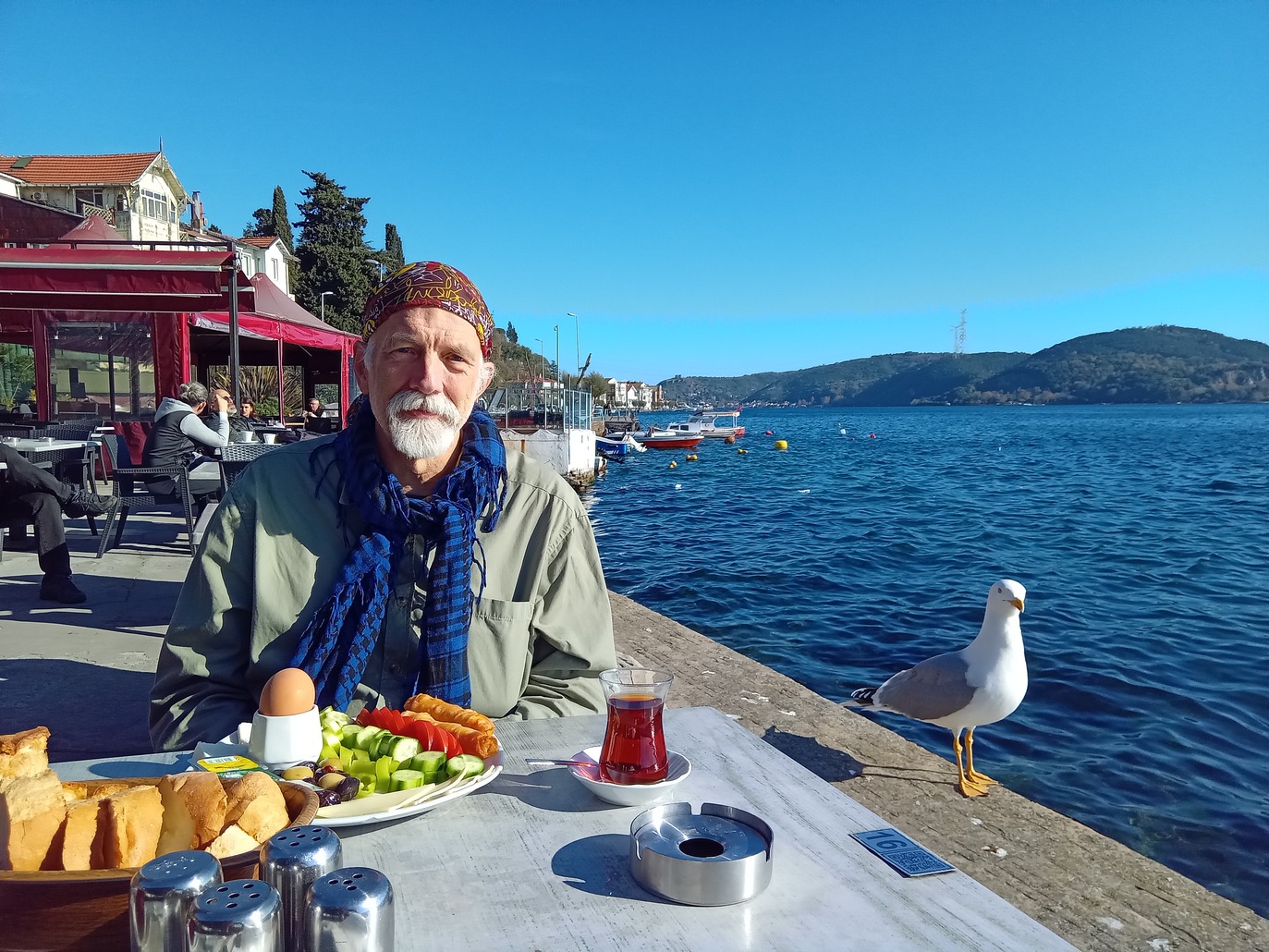
Seaside on a sunny day. Seagull, and human with tea and breakfast plate in front of him

Beyazpark Liseliler Kafe
Sarıyer, Istanbul
November 25, 2025

Continue reading

The System

After sitting behind his father on a motorcycle for a day, and riding through a thunderstorm, Chris Pirsig wants to tell and hear ghost stories. He asks whether his father believes in ghosts.

Clear blue sky above; below, a sand beach, with a strip of sea visible; on the left, a brick road parallel to the shore passes in the distance through trees

Altınova, September 10, 2025

Continue reading

Gödel and AI

To prove that no recursive theory of addition and multiplication of the counting numbers can be complete, Gödel relies on the distinction between the subjective and the objective. I suggested this in “Subjective and Objective,” while noting also that, for a computer, all is subjective.

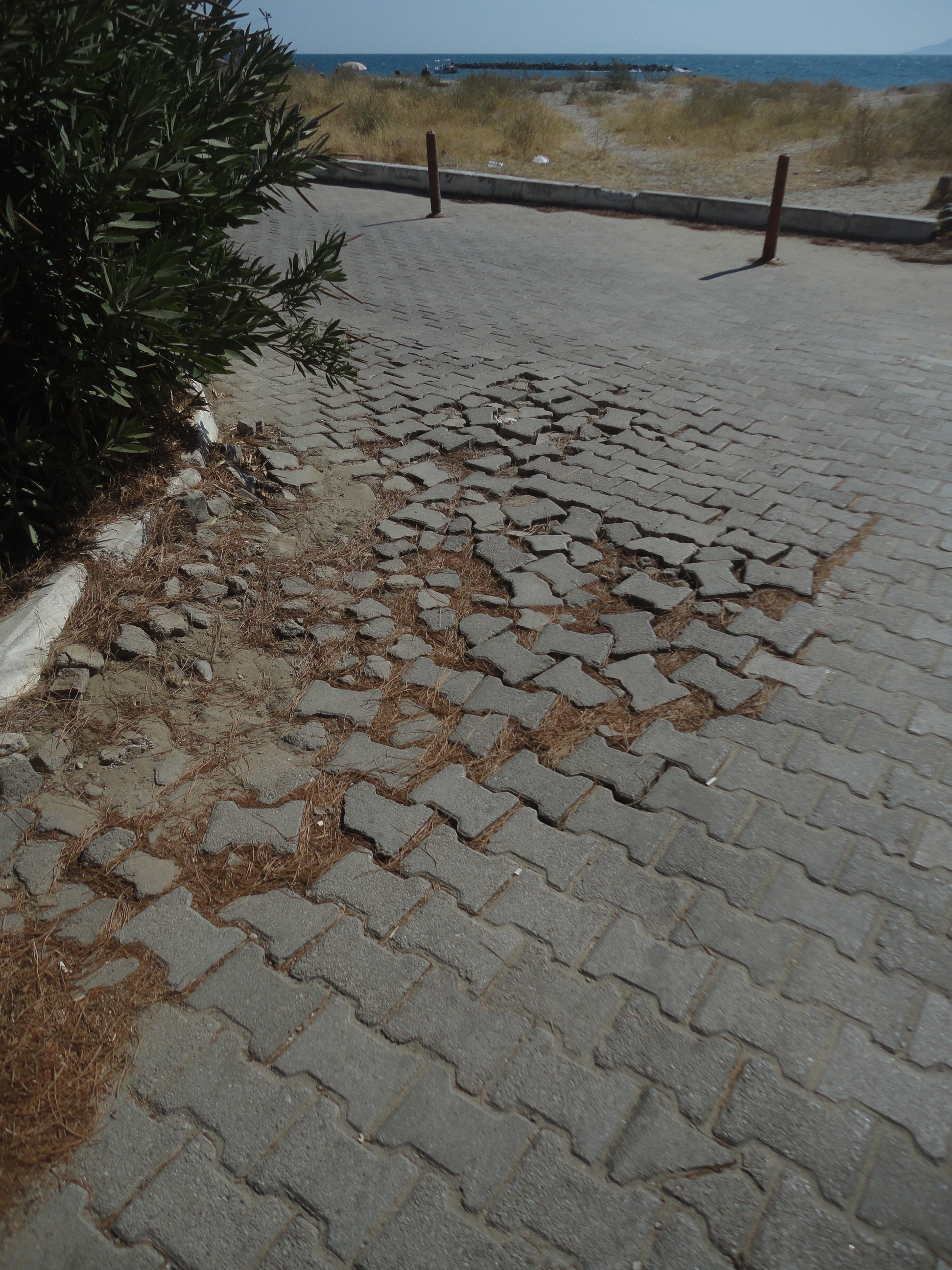
At the inner corner of a street, interlocking bricks break out of their pattern

Incomplete pavement
Altınova, Ayvalik, Balıkesir
September 9, 2025

Continue reading

Artificial Language

TL;DR: AI writing is like human writing. Of course it is, since its model is human writing. But then what AI produces is like bad human writing.

My sources include Plato, Wendell Berry, George Orwell, E. B. White, William Deresiewicz, Hadley Freeman, Andrew Kay, Kenneth G. Crawford, Hollis Robbins, Yuval Noah Harari, William Egginton, Megan Fritts, and Vi Hart.


About preparing certain seeds for human consumption in an infusion:

For sensory attributes, I’m admittedly Platonic and believe that since coffee is a fruit, it should taste something like a fruit. (And it’s not just any fruit – it’s a cherry!) My roasting philosophy comes from the same conviction. Generally, I’m after bright, juicy, fruity, syrupy goodness.

Thus Caleb Bilgen, founder of Ánimo Coffee Roasters in Asheville, North Carolina.

          ⯅          

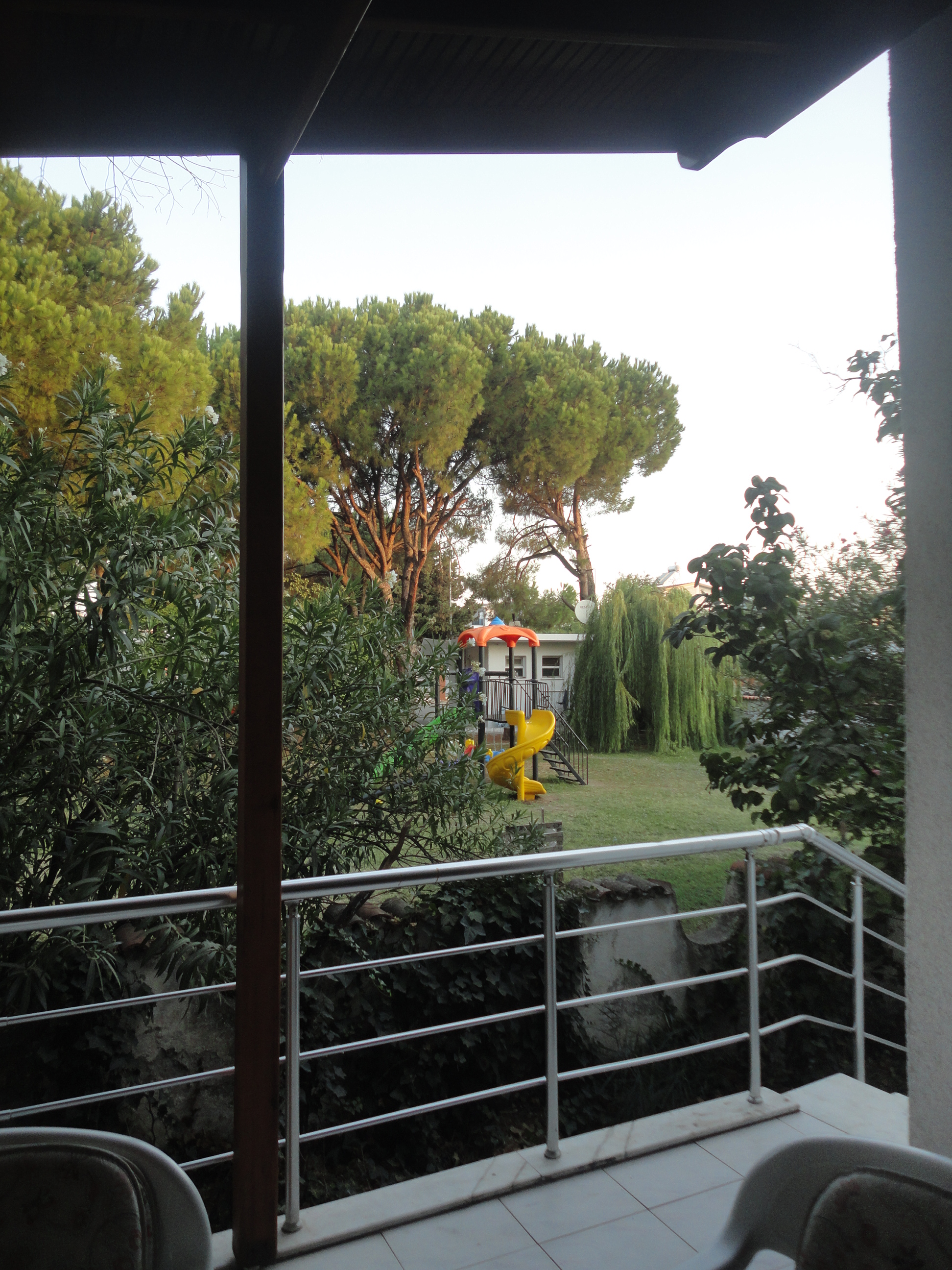
From a terrace beneath an awning, a low wall obscured by ivy, oleander, and quince; on the other side, a lawn with a jungle gym; beyond this, a weeping willow and a small white house beneath umbrella pines

What I see as the sun rises
Altınova, Ayvalik, Balıkesir
September 5, 2025

          ⯆          

Continue reading

Prairie Life

I’m going to make some comparisons here, even some likenings, mainly between

  • Robert Pirsig, Zen and the Art of Motorcycle Maintenance (1974), especially chapter 2, and
  • Wendell Berry, “Conservation is Good Work” (Sex, Economy, Freedom & Community, 1993; reprinted in Essays 1993–2017, Library of America, 2019).

Pirsig recounts a motorcycle trip west from Minnesota across the prairie. The riders pass through Yellowstone National Park, but Pirsig does not like it. At least his former self did not like it. This is in chapter 12 of ZAMM:

The guided-tour attitude of the rangers angered him. The Bronx Zoo attitudes of the tourists disgusted him even more … It seemed an enormous museum with exhibits carefully manicured to give the illusion of reality, but nicely chained off so that children would not injure them.

For Berry, such parks set the wrong standard for what should be conserved:

Right at the heart of American conservation, from the beginning, has been the preservation of spectacular places. The typical American park is in a place that is “breathtakingly” beautiful or wonderful and of little apparent economic value. Mountains, canyons, deserts, spectacular landforms, geysers, waterfalls – these are the stuff of parks. There is, significantly, no prairie national park.

I do see that Tallgrass Prairie National Preserve was created in Kansas in 1996.

A number of roses in three groups on canes sharing a root, against ground covered with pine needles; the shadow of a tree trunk divides the scene diagonally

Roses in the garden
Altınova, Ayvalik, Balıkesir
September 2, 2025

Continue reading

Omniscience

I have been working on a post that could have been the result of the following prompt:

Write on Gödel’s Incompleteness Theorem and AI, using such thinkers as

  • Yuval Noah Harari (b. 1976),
  • William Deresiewicz (b. 1964),
  • Annie Dillard (b. 1945),
  • Roger Penrose (b. 1931),
  • Robert Pirsig (1928–2017),
  • George Orwell (1903–50),
  • E.B. White (1899–1985),
  • Michael Attaleiates (c. 1022–80), and
  • Plato (fl. 4th cent. b.c.e.).

Not until I had finished a first draft did I actually know that all of those people would feature. My real prompt had been more like,

In the style of David Pierce, write on Gödel’s Incompleteness Theorem and AI, as discussed by Roger Penrose in his “Précis of The Emperor’s New Mind.

So instructed, could an LLM have come up with the connections that I did? Well, sure. Anything that has happened, could have happened, even in some other way. The real question is whether I would want AI to write my next post.

The present post consists of things I wanted to say at the beginning of that other post, after I had a first draft.

          ⯅          

Note added September 27, 2025. The next post after this one was

  • Prairie Life,” comparing Robert Pirsig and Wendell Berry, because I was reading them both.

After that came the two posts that the draft mentioned above turned into:

After those came

  • The System,” on what was bothering Pirsig; this led me to the resurgence of fascism today.

I was trying to work all of this out in the place in the photo below.

          ⯆          

Two tall bushes, lit up by the sun, rise in front of a low wall, next to a pine trunk; crowns of pines behind

Laurels in the garden
Altınova, Ayvalik, Balıkesir
September 2, 2025

Continue reading

Subjective and Objective

The use of a distinction between the subjective and the objective has sometimes made me suspicious. The suggestion is made here that Gödel’s Incompleteness Theorem relies on the distinction. I shall look at this more in “Gödel and AI.” Meanwhile, the major sources for the present post are the following.

  1. William James, Psychology: Briefer Course (1892), on “the stream of thought, of consciousness, or of subjective life” – also on
    • nerves as telephone lines;
    • emotions as resulting from “a physical effect on the nerves.”
  2. C. F. von Weizsäcker, The Relevance of Science (1964), on how “Cosmogony … is, objectively speaking, the way in which the world came into being, or it is, subjectively speaking, the teaching about this way.”
  3. Robert Pirsig, Zen and the Art of Motorcycle Maintenance (1974), on whether quality is objective or subjective (the answer is no) – also on the distinction between the classical and the romantic.
  4. R. G. Collingwood, Speculum Mentis (1924), on
    • his usage whereby
      • what pertains to a consciousness is called subjective;
      • what the consciousness is of is called objective;
    • atoning for the Fall, that is, the separation of subject from object

    – also (in response to James) on how emotions don’t need a physical source.

  5. James Mumford, “Therapy Beyond Good and Evil: A nonjudgmental psychology is failing patients who need to hear hard truths” (perhaps the hard truths of the title are objective truths, and what the patients need to hear is that their own subjective evaluations of themselves may be wrong).
  6. William Egginton, “Why Kant Wouldn’t Fear ChatGPT-4” (for a computer, there is nothing beyond what it “knows” – all is subjective).
  7. Kurt Gödel, “On formally undecidable propositions of Principia mathematica and related systems I” (the Incompleteness Theorem relies on a distinction between a [subjective] statement and its [objective] meaning).
  8. Shannon Vallor, “The Thoughts The Civilized Keep” (they require labor, with a history).

Minor sources include the following.

  1. James Joyce, Ulysses, as presenting streams of consciousness.
  2. Sigrid Undset, Kristin Lavransdatter, as being more readable.
  3. Aristotle, Nicomachean Ethics and Physics, on how there is not deliberation about the cosmos, or the irrationality of √2, or how to build a ship.
  4. Jared Henderson, “How to read Aristotle’s Nicomachean Ethics.”
  5. C. S. Lewis, The Magician’s Nephew, where an iron bar grows into a lamp-post the way Aristotle imagines a log’s growing into a ship.
  6. a letter to Analog magazine on how religion is false science.
  7. Robert Pirsig, Lila, on the distinction between the static and the dynamic.
  8. Elle Hunt, “Octopus farming turns my stomach – but are some species really more worthy than others?”
  9. the Hebrew Bible (Psalms and Ezekiel) on eating words.
  10. Alexander Bevilacqua, “Saints for Supper” (a review of Jérémie Koering, Iconophages: A History of Ingesting Images).
  11. Jack A. Goldstone and Peter Turchin, “Welcome To The ‘Turbulent Twenties’.”
  12. David Allen Green, “‘Twelfth Night Till Candlemas’ – the story of a forty-year book-quest and of its remarkable ending.”

Having started last spring, my wife and I recently completed a project to read Ulysses together. I was glad to be able to put the book back on the shelf. It sits there, next to another of comparable length, Kristin Lavransdatter; this is because I order my books according to the birth of the writer (or subject), and James Joyce was born February 2, 1882; Sigrid Undset, May 5.

I read her book on my own, for and with pleasure, and it entered into my thoughts on the Nicomachean Ethics of Aristotle, expressed for example in “Impermanence” (on Book IX, chapters i–iii; the common theme was how children might forget their mothers, but not conversely; Maya Angelou recalled how many black women had nursed white children in America).


Three haloed figures in front of a fourth with spread arms and wings; faces are mostly scratched out
Karanlık Kilise (Dark Church), Göreme Open Air Museum
Cappadocia, January 11, 2009


Continue reading

Hedonism

Although the word telezzüz is absent from one Turkish dictionary (Arkadaş Türkçe Sözlük, 2004), I find it in a couple of Turkish-English dictionaries. Its length recalls Ottoman times, when Turkish speakers freely borrowed from Persian and Arabic.

Native Turkish words can be extended to great length with grammatical endings, as in gelemeyebilirim. I once heard a taxi driver say that to a colleague who was making tea. He was saying literally, “I am able to be unable to come”; he meant, “Maybe I can’t come have tea, because I’ve got to take this guy out to the airport.” The single word for all of that was built up from the single syllable gel- “come” by addition of -eme- “be unable,” -y- (buffer), -ebil- “be able,” -ir- (marking an aorist verb), and -im “I.” By contrast, telezzüz has no such analysis, at least not in Turkish. This brands the word as foreign, at least to my understanding, the way sesquipedality in an English word connotes a borrowing from Latin or Greek.

As I have just learned, the word telezzüz is used as the name of an upscale vegetarian restaurant, over on the Asian side of Istanbul, near an Ottoman kiosk that my wife and I have visited. Perhaps one day we will dine at the restaurant, for a taste of luxury, the way we dined at Nicole, in European Istanbul, almost nine years ago. Unfortunately, for us at least, that restaurant wasn’t vegetarian.

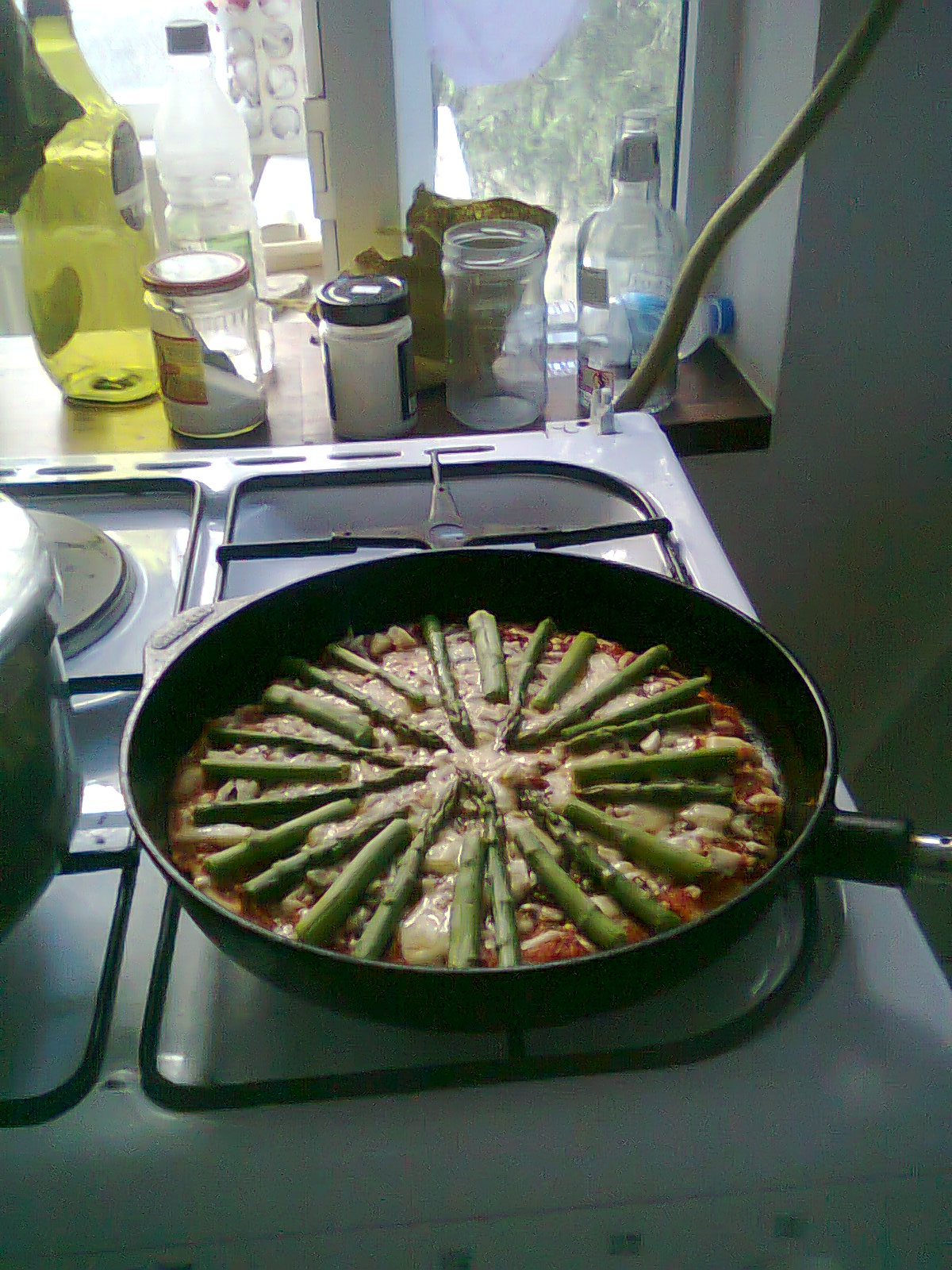
Spears of asparagus radiate from the center of a cast-iron pan on a stove; windows behind
Homemade pizza with asparagus from Elibelinde
Tuesday, May 21, 2024

Continue reading

Solipsism

Aristotle sets the example that Thomas Aquinas follows in the Summa. We are reading chapters viii and ix of Book IX of the Nicomachean Ethics. The Philosopher makes the best case against two positions that he ultimately argues for:

  1. One should be selfish.
  2. One needs friends anyway.

Highrise under construction above a green playing field
In “Sanity” I used a photo of the same skeletal building from the other side

Continue reading

Sweetness

Our subject is pleasure as such. The Greek word is ἡδονή, which is both

  • the source of hedonism and
  • the cousin of sweetness.

The shared Indo-European root of the adjectives ἡδύς and sweet is *su̯ād-, and its existence is a symbol for a lot of what Aristotle has to say, here in the final chapters, xi–xiv, of Book VII of the Nicomachean Ethics.

Birds over a marina, above them clouds lit by a rising sun
Somebody was feeding the gulls
Thursday morning, February 1, 2024
Tarabya

Things taste good because they are good. At least sweet things can be good, if used properly; but this qualification causes a lot of difficulty.

Continue reading