Tag Archives: Eva Brann

On Translation

Achilles is found singing to a lyre, in a passage of Book IX of the Iliad. Homer sets the scene in five dactylic hexameters; George Chapman translates them into four couplets of fourteeners.

I wrote a post about each book of the Iliad, in Chapman’s version of 1611. As I said at the end, I look forward to reading Emily Wilson’s version. Meanwhile, here I examine the vignette of the lyre in several existing English translations, as well as in the original.

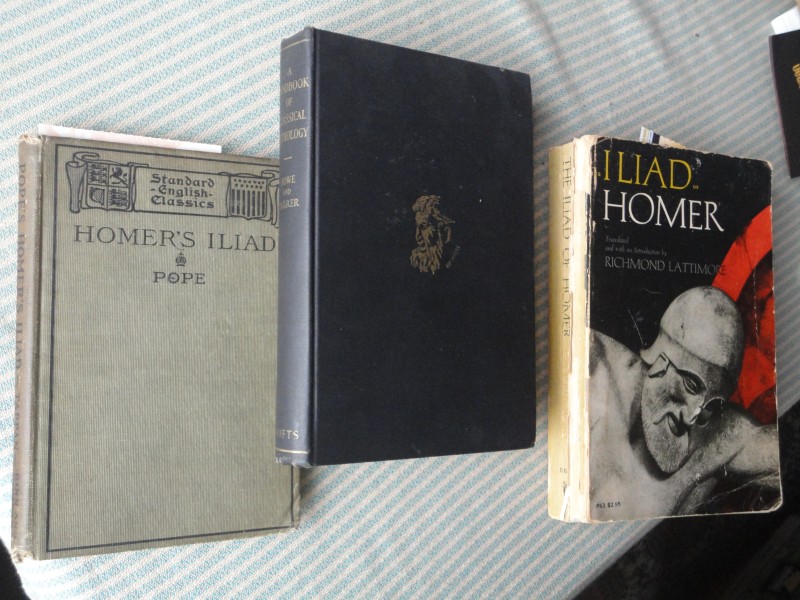
Three books mentioned in the text Continue reading

On Chapman’s Homer’s Iliad, Book XIX

Book XIX of the Iliad consists mostly of speeches.

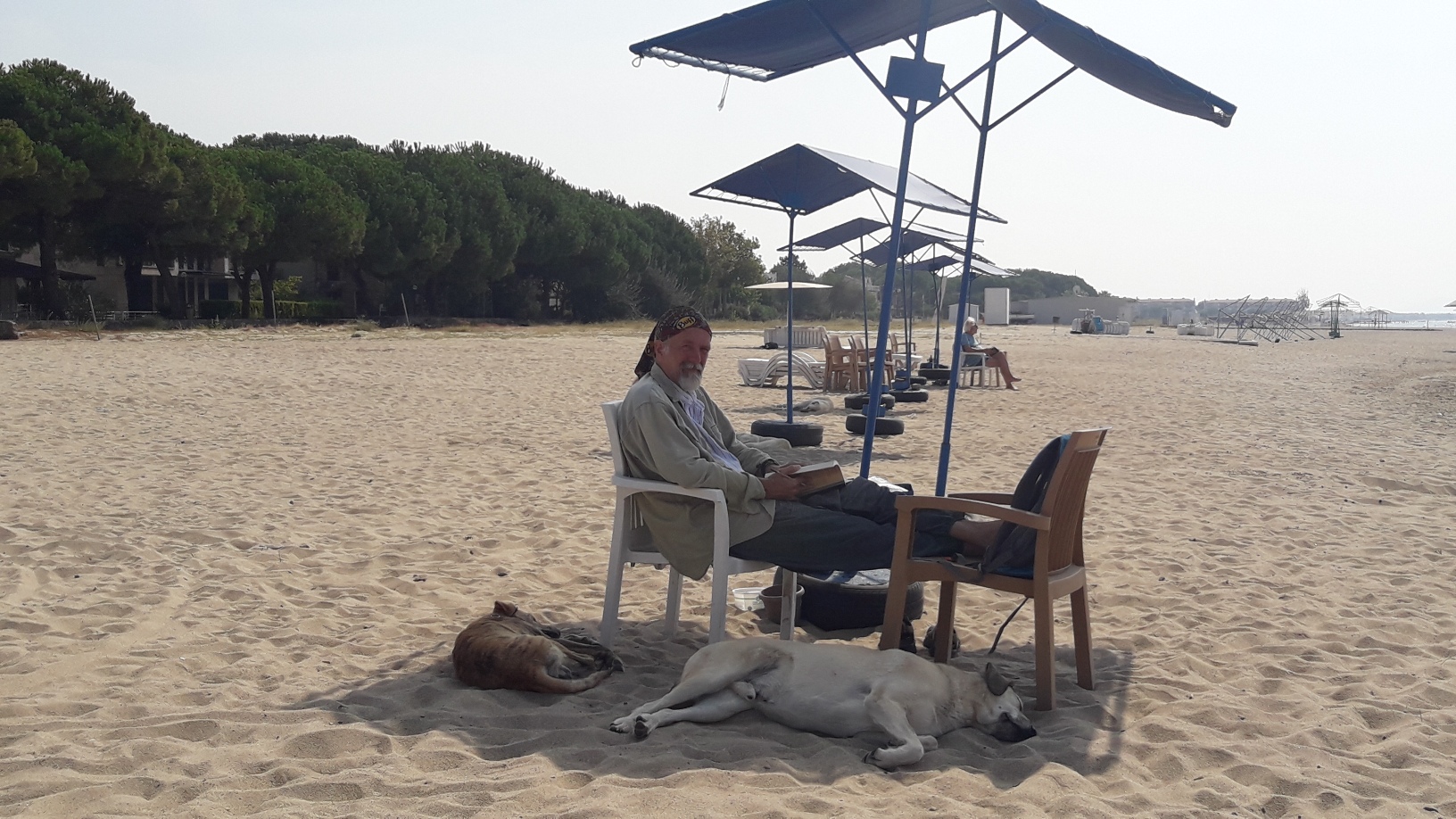
Myself on the beach with dogs, pines behind

Continue reading

We the Pears of the Wild Coyote Tree

This is a preliminary report on two recent films:

  • The Wild Pear Tree, by Nuri Bilge Ceylan;
  • We the Coyotes, by Marco La Via and Hanna Ladoul.

The report is preliminary, not because there is going to be another, but because I have seen each film only once, and I may see one of them again.

I remember that François Truffaut liked to see films at least twice. I believe I read this in The Washington Post, and I might have guessed it was in an appreciation published when Truffaut died; however, he died on October 21, 1984, during the first semester of my sophomore year at St John’s College in Santa Fe, and I would not have been reading the Post then.

While in college, I did enjoy seeing some films twice, or a second time; Truffaut’s own 400 Coups was an example, a French teacher having shown it to us in high school.

The two films that I am reviewing now concern young adults trying to find their own way in the world, in defiance of their elders. We all have to do this. In every generation, some will do it more defiantly than others. Heraclitus can be defiant, he of Ephesus and thus one of the Ionian philosophers, whose spirit I imagine to haunt the Nesin Mathematics Village. A further reason to bring up Heraclitus will be a theme that is explicit in Pear Tree, implicit (or metaphorical) in Coyotes: gold.

A book, whose cover shows a bonfire, sits on a rock dampened by waves of the sea, which laps on the sand beyond
A copy of The Logos of Heraclitus,
by Eva Brann,
on Marmara Island, July, 2012

Continue reading

On Chapman’s Homer’s Iliad, Book XIII

Index to this series | Text of Chapman’s Homer’s Iliad

Usually when your defenses are breached, you are lost. Thus when the Ottoman Turks under Mehmet I found a way through the Theodosian Walls on Tuesday morning, May 29, 1453, the city of Constantinople was theirs.

Path to a gate in a crenellated stone wall; people gathered around the plaque next to the gate
The gate where the invasion of Constantinople is supposed to have been made

Continue reading

On Chapman’s Homer’s Iliad, Book XI

Index to this series | Text of Chapman’s Homer’s Iliad

After the active night of Book X comes the dawn of a thrilling day (lines 1 & 2).

AVrora, out of restfull bed, did from bright Tython rise,
To bring each deathlesse essence light, and vse, to mortall eyes.

The deathless essence called Jove sends Discord to the Greeks. She lights on the ship of Ulysses, in the middle of the fleet, so all can hear as she belts out her “Orthian song” (lines 13 & 14).

And presently was bitter warre, more sweet a thousand times
Then any choice in hollow keeles, to greet their natiu climes.

Continue reading

Some Say Poetry

In a poetry review, a remark on being a student has drawn my attention:

In My Poets, a work of autobiographical criticism with occasional ventriloquial interludes, McLane recalls two “early impasses in reading,” freshman-year encounters with Charles Olson and Frank O’Hara. She writes about not “getting it” but wanting to get it, about a desire to get it that was left wanting by code-breaking and analysis and satisfied by hearing and feeling.

This is from the second half of a “New Books” column by Christine Smallwood, in the Reviews section of Harper’s, July 2017. After quoting Smallwood’s review, I want to say something about learning and creating, in poetry and also in mathematics.

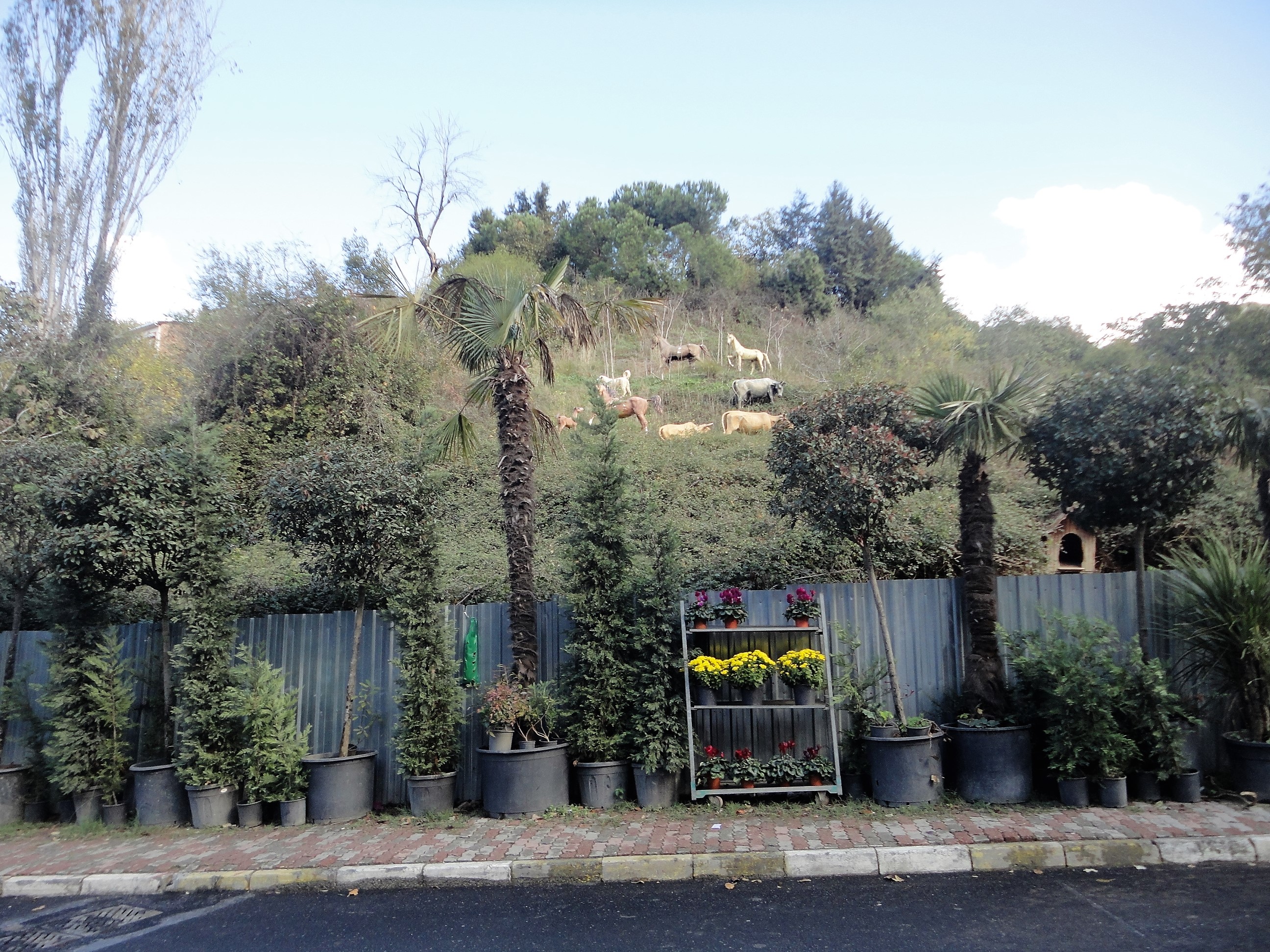
Potted palms with plaster farm animals on hillside behind
Kuzguncuk, 2017.11.05

Continue reading

On Chapman’s Homer’s Iliad, Book IX

Index to this series | Text of Chapman’s Homer’s Iliad

Note added August 25; edited and augmented, August 27; 2024: In my view, the key events of the Iliad are Achilles’s holding back from

  1. killing Agamemnon in Book I;
  2. fighting on Agamemnon’s side in Book IX.

The latter case of self-restraint may be a disaster for Achilles, not to mention Patroclus and the other Greeks who die as a result; but it is also somehow a result of the former case. Not killing on impulse is probably a good thing; otherwise you have the situation of Njal’s Saga, which I took up in writing “On Homer’s Iliad Book I” (November 29, 2022).

Continue reading

On Chapman’s Homer’s Iliad, Book V

Index to this series | Text of Chapman’s Homer’s Iliad

Book V of the Iliad is long and rich, with lots of characters like War and Peace, and stories within stories. The main story is of Tydeus’s son Diomedes, who with Pallas’s help is able to wound both Venus and Mars – I follow Chapman in using the Roman names.

  • Mars agrees with Minerva not to interfere with the war, but she immediately breaks the agreement.
  • A skilled hunter is successfully hunted down.
  • An oracle is mentioned that the Trojans should not go to sea; the master builder of Paris’s ships is slain.
  • A man who can read the future in dreams is bereft of the sons he let go to war.
  • An old man loses his only sons, the offspring of his old age.
  • Having broken the truce and shot Menelaus, Pandarus turns out to have left his horses in Lycia, because he didn’t think they would eat well in Troy.
  • The story is mentioned twice of the horses of Aeneas, offspring of the horses of Jove.
  • Pandarus thinks he cannot command the horses of Aeneas better than Aeneas.
  • Venus is not the first deity to have been injured by a mortal, and her mother Dione advises patience.
  • “He that fights with heaven hath never long to live,” or perhaps to have a faithful wife, she says.
  • She can cure a wound without balm.
  • “The race of gods is far above men creeping here below,” says Apollo to Diomedes.
  • Sarpedon discusses justice and sets an example of it.
  • “Strength is but strength of will,” says Agamemnon.
  • To have self-confidence may be good, but not to tempt fate.
  • Pallas has a theory of just war.

Continue reading

On Chapman’s Homer’s Iliad, Book III

Index | Text

The Iliad is about the feud between Achilles and Agamemnon, a feud that occurs during the Trojan War. Book III of the Iliad has nothing to do with Achilles, a little to do with Agamemnon, and everything to do with why the whole war is happening at all.

Note added August 19, 2024: The war is happening because Paris is God’s gift to women. By his own account, he is excellent in the “gifts of peace,” and these are “as little to be scorn’d, / As to be wonne with strength, wealth, state …” It is good to recognize that some things cannot be obtained by “strength” or force. Achilles recognizes this in Book I when he refrains from killing Agamemnon. However, Paris scorns not only strength, but also wealth and state. I suppose it is “state” that lets Hector and Agamemnon come to an agreement about a duel between Paris and Menelaus that will end the war. Paris breaks the agreement by running away to visit the prize of his excellence, namely Helen. Homer has Venus spirit Paris away, but I take this to be a poetic embellishment, agreeing with Eva Brann in Homeric Moments: Clues to Delight in Reading the Odyssey and the Iliad (Paul Dry Books, 2002; pages 41–3):

But the gods’ face-off effects nothing; at least nothing happens that could not happen without them. And so it is always; Zeus himself disclaims responsibility for human fate right at the beginning of the Odyssey


To be sure, as I said above, nothing is ever done that could not have been done by the humans themselves …

Photo of the tower of books used for this article

Continue reading