Tag Archives: Meno

Biblical Creation

Below is “Creation in the Old Testament,” which is Chapter 3 of The Relevance of Science by C. F. von Weizsäcker. I have highlighted key passages. I have added a note concerning Pascal, because I spent time reading him and blogging about him, and von Weizsäcker mentions him.

I am studying von Weizsäcker’s chapter, to see what the author makes of the Creator’s assessment of His own work. That assessment is the title of another post of this blog: “It Was Good.”

Hundreds of identical unfinished fairy-tale châteaux in a broad valley
Somebody set out to build Burj Al Babas here in Turkey, for buyers in the Persian Gulf, but abandoned the project

Continue reading

Sweetness

Our subject is pleasure as such. The Greek word is ἡδονή, which is both

  • the source of hedonism and
  • the cousin of sweetness.

The shared Indo-European root of the adjectives ἡδύς and sweet is *su̯ād-, and its existence is a symbol for a lot of what Aristotle has to say, here in the final chapters, xi–xiv, of Book VII of the Nicomachean Ethics.

Birds over a marina, above them clouds lit by a rising sun
Somebody was feeding the gulls
Thursday morning, February 1, 2024
Tarabya

Things taste good because they are good. At least sweet things can be good, if used properly; but this qualification causes a lot of difficulty.

Continue reading

Truth

According to the current version of a Wikipedia article,

The Nicomachean Ethics is widely considered[according to whom?] one of the most important works of philosophy.

The superscript bracketed italicized question was added by me. I thus took the liberty to edit Wikipedia, as we all may do.

Panel with quote beneath banners and trees, people and a book display beyond
Literature festival at Kireçburnu
September 22, 2023
with displays from the Austrian Consulate
in particular, a quote from Stefan Zweig
in German and Turkish
“Some people must start peace the way they start war”

Continue reading

Eudemony

When I was an adolescent, I conceived a desire to know “the definition of happiness.” This was all I wanted, when a friend asked what to give me for my birthday. He took me seriously, but unfortunately I could not take his answer seriously, because what he came up with was, “A puppy.” This friend did not understand that

  • an epitome was not a definition;
  • I was a cat person.

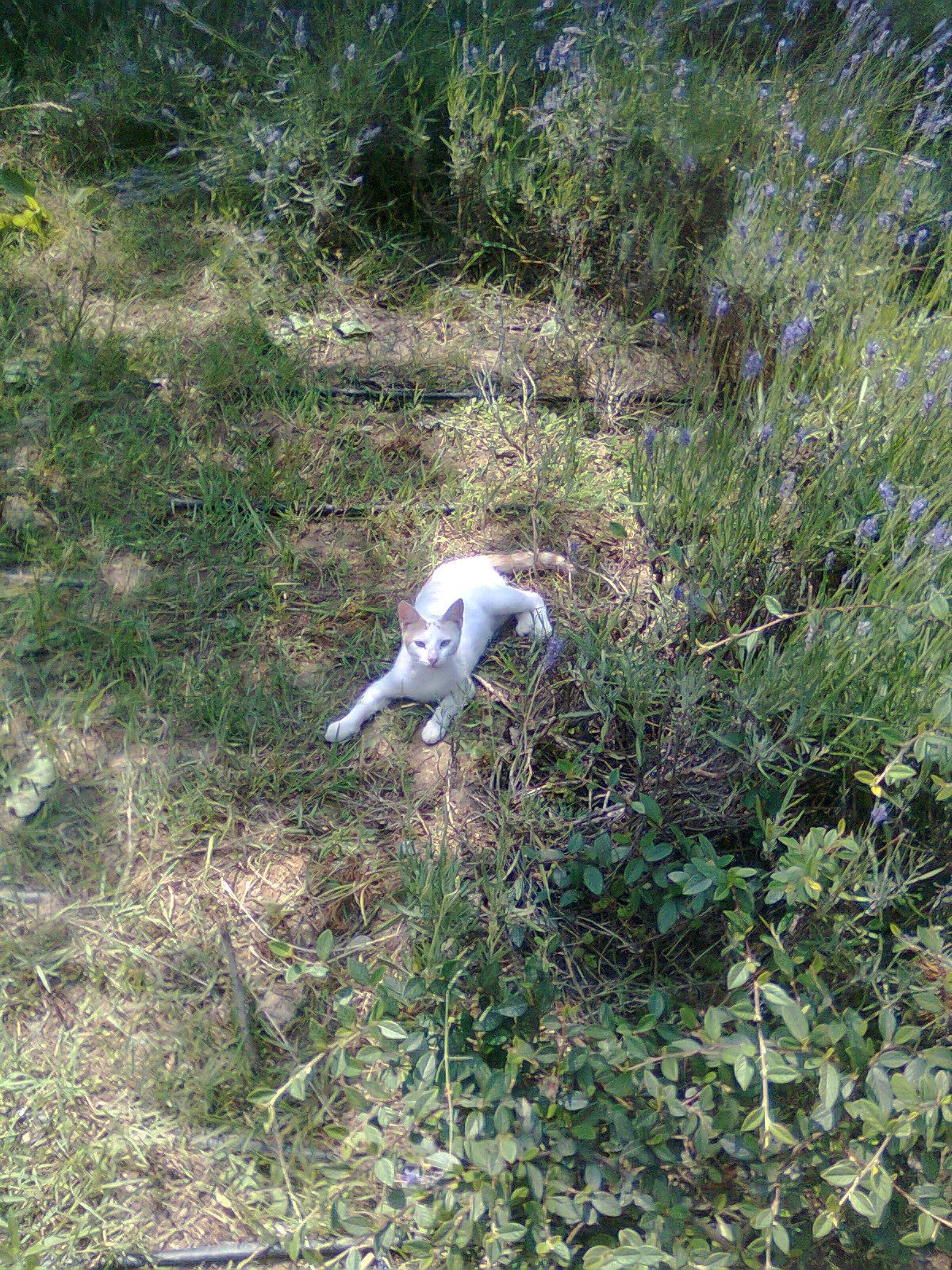
Cat roused from nap in grass next to lavender plants
Atatürk Kent Ormanı, Sarıyer, Istanbul
Friday, July 7, 2023

Continue reading

Charles Bell’s Axiomatic Drama

Here is an annotated transcription of a 1981 manuscript by Charles Greenleaf Bell (1916–2010) called “The Axiomatic Drama of Classical Physics.” A theme is what Heraclitus observed, as in fragment B49a of Diels, LXXXI of Bywater, and D65a of Laks and Most:

We step and we do not step into the same rivers,
we are and we are not.

ποταμοῖς τοῖς αὐτοῖς ἐμβαίνομέν τε καὶ οὐκ ἐμβαίνομεν,
εἶμέν τε καὶ οὐκ εἶμεν.

Bell reviews the mathematics, and the thought behind it, of

  1. free fall,
  2. the pendulum,
  3. the Carnot heat engine.

In a postlude called “The Uses of Paradox,” Bell notes:

Forty-five years ago I decided that when reason drives a sheer impasse into an activity which in fact goes on, we have to think of the polar cleavage as both real and unreal.

I like that reference to “an activity which in fact goes on.” In youth it may be hard to recognize that there are activities that go on. We do things then, but that they will get anywhere may be no more than a dream. In any case, Bell himself goes on:

… that is a job as huge and demanding as Aristotle’s, and for me at 70, just begun.

“Look,” my friends say, “Bell’s been doing the same thing since he was 25. About that time he had a vision of Paradox as paradise, and he’s been stuck there ever since.”

Bell’s picture next to Aristotle’s Physics
The back of Bell’s Five Chambered Heart with
the front of the OCT of Aristotle’s Physics

Continue reading

Creativity

In the Platonic dialogues, Socrates frequently mentions τέχνη (technê), which is art in the archaic sense: skill or craft. The concern of this post is how one develops a skill, and what it means to have one in the first place.

Books quoted or mentioned in the text, by Midgley, Simone Weil, Thoreau, Amy Mandelker (on Tolstoy), Oliver Byrne (on Euclid), Wittgenstein, Arendt, and Caroline Alexander (on Homer)

Continue reading

The Divided Line

Index to this series

We are still in the latter part of Book VI of Plato’s Republic, where Socrates undertakes to explain the education of the philosopher-kings (502c–d). They are not literally so called, as we noted last time. They are going to need to “be able to bear the greatest studies” (503e), and “the idea of the good is the greatest study” (505a). People are confused about what the good is:

  • many say it is pleasure;
  • a few, knowledge (505b).

It rather the case that

  • so the Good makes it possible to have
    • knowledge (508d), and perhaps even
    • pleasure (509a),
  • as the sun makes it possible to see (508b–d).

We looked at that much last time.

Sun through the leaves of planes
Dünya Barış Parkı 2021.10.30

Continue reading

On Plato’s Republic, 9

Index to this series

We reach now the Analogy of the Sun and the associated Divided Line.

Among pines, a palm tree with highest fronds lit by the setting sun
The highest fronds take the setting sun in Altınova
September 27, 2021

Continue reading

On Plato’s Republic, 3

Index to this series

We are reading now Book II of Plato’s Republic, Stephanus pages 357–83, covering:

  1. The conventional arguments in favor of injustice and justice, reviewed by Plato’s brothers Glaucon and Adeimantus respectively.
  2. The beginning of the construction of the city in speech, wherein the advent of justice is to be discerned; the guardians of the city are to be like dogs and to be given a traditional education, although with none of the traditional stories, since they talk about things like parricide and bad luck.

A book next to a dog lying on the beach

Dog with copy of Alain Badiou, Plato’s Republic:
A Dialogue in Sixteen Chapters, with a Prologue and an Epilogue, 2012
Profesörler Sitesi, Altınova, Balıkesir, Turkey, September 2, 2021

Continue reading

On Plato’s Republic, 1

After the Pensées of Pascal and the Canterbury Tales of Chaucer, here begins another series on readings of a classic, now the Republic of Plato. The sections (after this one) of the present post are

Continue reading