Category Archives: Art

Miracles

This is inspired by Charlotte Brontë’s Villette. After reading this 1853 novel a second time in the summer of 2018, I put some passages I liked into a LaTeX file. I added some commentary and came up with a document more than 90 A5 pages long. I recently reread it and was reminded how much I had enjoyed the novel. I thought some of my commentary could be adapted to stand alone as a blog post – this one.

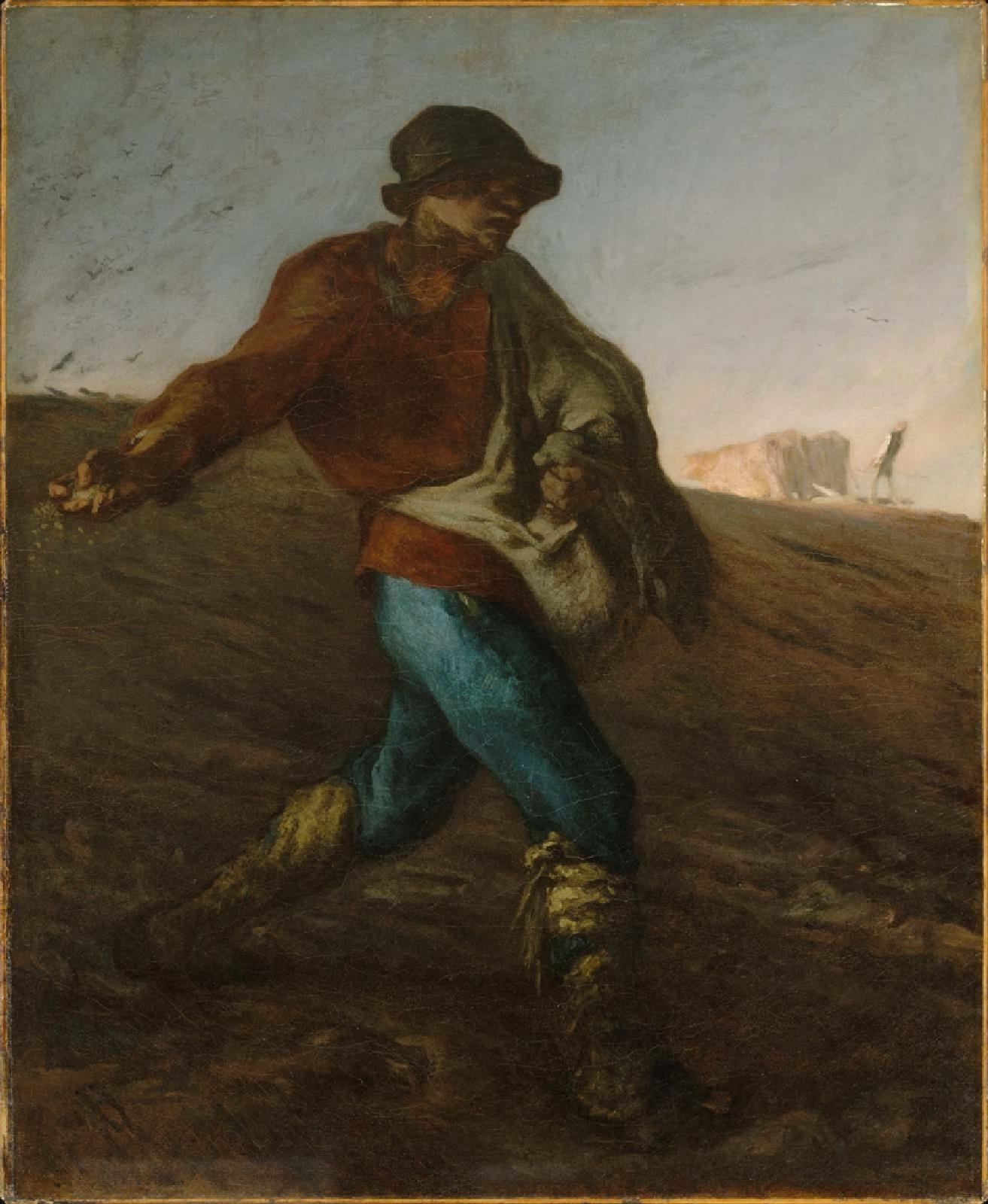
Man in a field, sack over left shoulder, casts seeds with his right hand
The Sower,” 1850
Jean-François Millet (French, 1814–1875)
Museum of Fine Arts, Boston

Continue reading

Creativity

In the Platonic dialogues, Socrates frequently mentions τέχνη (technê), which is art in the archaic sense: skill or craft. The concern of this post is how one develops a skill, and what it means to have one in the first place.

Books quoted or mentioned in the text, by Midgley, Simone Weil, Thoreau, Amy Mandelker (on Tolstoy), Oliver Byrne (on Euclid), Wittgenstein, Arendt, and Caroline Alexander (on Homer)

Continue reading

Plato and Christianity

Index to this series

This post uses work of Hannah Arendt, Augustine, R. G. Collingwood, Tom Holland, Somerset Maugham, and Ved Mehta.

Elevated highway, way above city streets

Ortaköy, December 27, 2021

In the first post of this series, I gave some reasons to read the Republic, and one of them was the problem of how our political leaders were not always the best. Plato had not solved that problem, since we still had it; but that meant nobody else had solved it either. Plato had at least taught us that people with great worldly power could nonetheless be more miserable than their subjects. In the Republic, Plato has Socrates teach that lesson

  • to Thrasymachus, in the latter part of Book I;
  • to Glaucon, who concludes at the end of Book IV that if having an unhealthy body is bad, having a vicious soul is worse;
  • in Book IX, with the account of the tyrant;
  • with the Myth of Er in Book X.

Continue reading

On Reading Plato’s Republic

Index to this series

In adolescence, when I started visiting art museums in Washington for my own pleasure, I would visit also the museum shops, hoping to be able to take home a souvenir. Eventually, my own memories were enough to take home.

That is what I remember observing about myself, perhaps around the time when my body stopped growing taller. That time may be used to demarcate adulthood, although in kindergarten, it had made no sense to me that our bodies could ever stop growing.

Cycad with seeds
Cycads outside Selenium Twins
in the valley above Ihlamur Kasırları
on the way to Beşiktaş
December 27, 2021

I have not been to a museum since the advent of Covid-19, but I often want a souvenir when I am reading now. The souvenir may be in the form of pencil marks in a book, or pen marks in a magazine, or various interventions in an electronic file. To be able to make such interventions, I save webpages, usually with a browser’s print function or with Print Friendly.

I may also respond to what I read by writing blog posts. This is why I now have eighteen of those on Plato’s Republic: one for each of the fourteen parts in which the dialogue was divided for an online discussion, and four more for when I had an abundance of ideas.

Where has all of that left me?

Continue reading

On Plato’s Republic, 14

Index to this series

In the tenth and final book of Plato’s Republic (Stephanus 595–621), with the help of Glaucon, Socrates does three things:

  1. Confirm and strengthen the ban on imitative poetry carried out in Book III.
  2. Prove the immortality of the soul.
  3. Tell the Myth of Er about how best to make use of that immortality.


Bernard Picart
Glaucus Turned into a Sea-God, 1731
“Just as those who catch sight of the sea Glaucus would no longer easily see his original nature because some of the old parts of his body have been broken off and the others have been ground down and thoroughly maimed by the waves at the same time as other things have grown on him – shells, seaweed, and rocks – so that he resembles any beast rather than what he was by nature, so, too, we see the soul in such a condition because of countless evils” – Republic 611d

Here is a finer analysis, as part of a general table of contents for this post.

  • Prologue
    • A Translation Issue. How you translate Book X depends on whether you believe Socrates has a theory that all art is imitation. I have gathered sixteen translations of a diagnostic passage that Collingwood highlights in The Principles of Art (1938).
    • Imitation Elsewhere – that is, in Books II, III, V, and VI, as well as in the Phaedrus.
  • Book X
    • Imitation
      • What It Is. It is at a third remove from reality.
      • Homer and the Tragic Poets – did you ever hear that they had
        • given a city its constitution,
        • led a successsful military campaign,
        • invented something useful,
        • been revered as private teachers, as Pythagoras was and sophists want to be?
      • The Three Arts involving a thing:
        1. Using it.
        2. Making it.
        3. Imitating it.
      • Parts of the Soul – the best part is the calculating part, which can avoid the confusions that imitations subject the worse parts to.
      • Imitation Is of the Worse – our worse aspects, not the good and decent ones.
      • Imitation Makes Us Worse by bringing out shameful feelings for others that we suppress for ourselves.
      • Philosophy and Poetry – they have an old quarrel, but philosophy is willing to listen to an argument on behalf of poetry.
    • Immortality – the soul must have this, because only its specific evils could kill it, and these are the opposites – injustice, license, cowardice, and ignorance – of the virtues identified in Book IV. They do not in fact kill the soul, at least not directly.
    • Myth of Er – a Pamphylian, son of Armenius, he died in battle, but rose again on the twelfth day, having learned that, unless condemned to hell, we are going to choose our next life, after a spell in heaven or purgatory, depending on how we have lived our current life; thus we had better be ready to choose wisely.

Continue reading

Figs

This is about figs, because the opening of “The Sixth Elegy” of the Duino Elegies of Rainer Maria Rilke is about them, and I turn out to live among them.

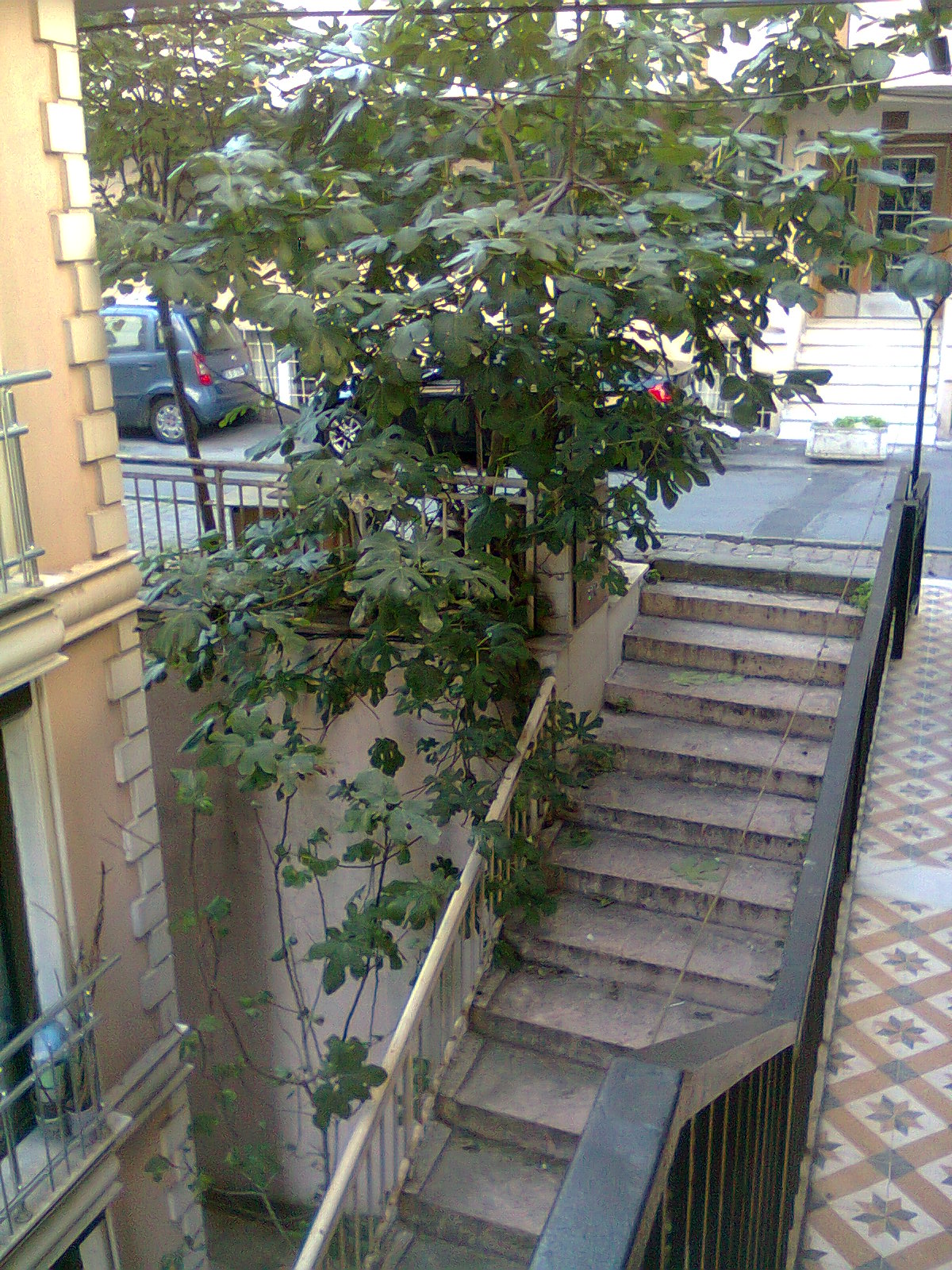
Fig trees growing like weeds on Ayşecik Sokağı
Fulya, Şişli
November 15, 2021

Continue reading

The Divided Line

Index to this series

We are still in the latter part of Book VI of Plato’s Republic, where Socrates undertakes to explain the education of the philosopher-kings (502c–d). They are not literally so called, as we noted last time. They are going to need to “be able to bear the greatest studies” (503e), and “the idea of the good is the greatest study” (505a). People are confused about what the good is:

  • many say it is pleasure;
  • a few, knowledge (505b).

It rather the case that

  • so the Good makes it possible to have
    • knowledge (508d), and perhaps even
    • pleasure (509a),
  • as the sun makes it possible to see (508b–d).

We looked at that much last time.

Sun through the leaves of planes
Dünya Barış Parkı 2021.10.30

Continue reading

On Plato’s Republic, 8

Index to this series

Plato is somehow quite challenging in the present reading, which is the first part (Stephanus 484–502d) of Book VI of the Republic. Socrates tries to work out the third wave from the previous reading. Significant features are several analogies or figures:

  • city as ship whose sailors neither know how to sail nor want to know;
  • people and sophist as beast and zoologist or zookeeper;
  • ruler as painter who compares a canvas with what the mind’s eye sees;
  • philosopher as seed that needs good soil, lest it become a noxious weed.

I concurrently discuss the Republic readings in a group formed through the Catherine Project, which now has the website just linked to. The same was true for Pascal in the winter and Chaucer in the summer.

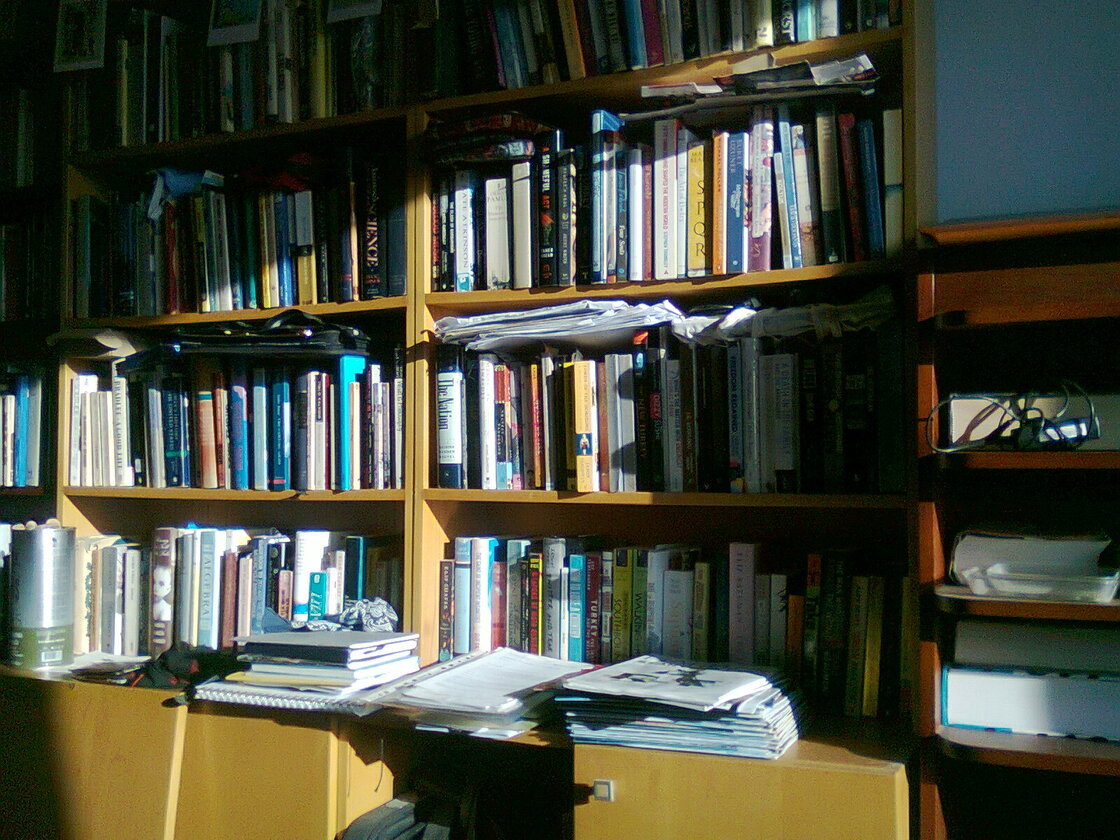
Bookshelves in morning sun
Ayşecik Sokağı, Fulya, Şişli, İstanbul, October 14, 2021.
The order of the books on the shelves of the cases being like that of words on the lines of pages of an individual book, the ordering is chronological, by birth date of author, editor, or personal subject. The youngest author for now is Sally Rooney, and Zena Hitz is on the same shelf. Plato is on the opposite wall.

Continue reading

Nature

Index to this series

Can Socrates really “find a natural support for justice,” as Allan Bloom says he must? It is strictly impossible, as I say in “Bloom, Badiou, Ryle, Shorey.” Inevitably there is more that can be said, and I shall try to say some of it here.

Sand, sea, mountains, sky
Anatolian sand, Aegean sea, Lesbian mountains
Uranus over all
Profesörler Sitesi, Altınova, Balıkesir, Turkey
September 24, 2021

Continue reading

On Plato’s Republic, 5

Index to this series

Our fifth scheduled reading in the Republic is Book IV (Stephanus pages 419–45). Socrates speaks

  • with Adeimantus, through the completion of the construction of the city in speech;
  • with Glaucon, after he insists (427d) that Socrates join in the search for justice in the city; they find it and map it back to the individual.

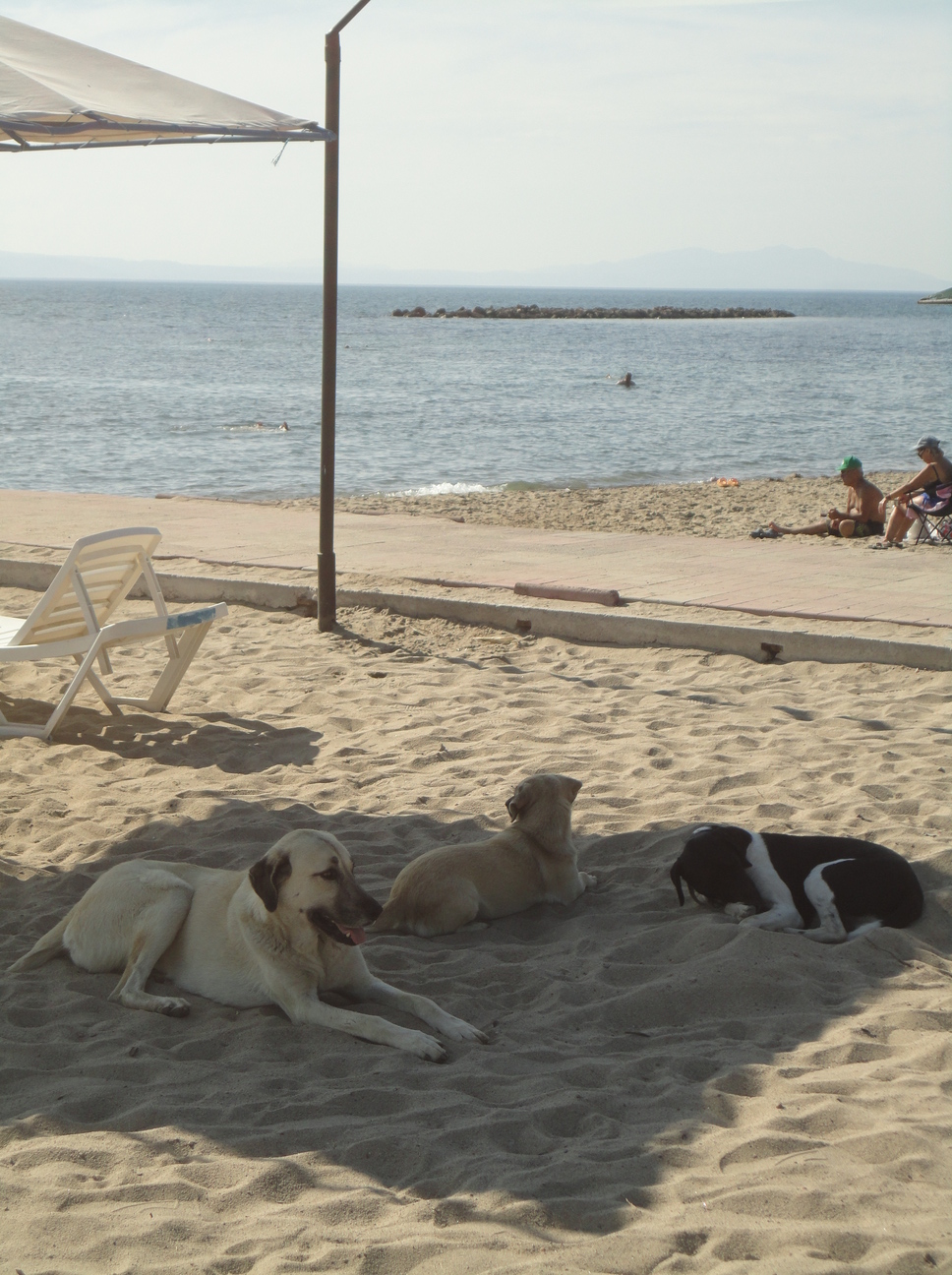
Three dogs sit in the shade of a beach umbrella
Intellect, spirit, and appetite
Profesörler Sitesi, Altınova, Balıkesir, Turkey
September 13, 2021

Continue reading