Category Archives: Art

Poetry and Mathematics

This reviews some reading and thinking of recent weeks, pertaining more or less to the title subjects, of which it may be worth noting that

  • poetry is from ποιέω “make”;
  • mathematics is from μανθάνω “learn.”

Summary added August 23, 2020: Mathematics may bring out such emotions as poetry does; but in the ideal, a work of mathematics is correct or not, in a sense that everybody will agree on. Here I review work of

  1. Lisa Morrow, writing in Meanjin as an immigrant to Istanbul, like me.
  2. Wendell Berry, in “The Peace of Wild Things,” which things “do not tax their lives with forethought / of grief,” and include the stars.
  3. Randall Jarrell, in The Animal Family.
  4. Mary Midgley, in Evolution as a Religion, on how we see animals.
  5. James Beall, astronomer, poet of the stars, tutor at my college.
  6. Edith Södergran, in “God,” as translated by Nicholas Lawrence in Cordite.
  7. Lukas Moodysson, in Fucking Åmål, where Agnes’s father notices that his daughter is reading Edith Södergran.
  8. Thomas J.J. Altizer, in The Gospel of Christian Atheism, a book that I kept from my father’s collection.
  9. Özge Samancı, in Dare to Disappoint, where the character to be disappointed is the father of the artist, and where Özlem (the artist’s friend and mine) praises the poetry of mathematics.
  10. Fiona Hile, writing, quâ editor of an issue of Cordite featuring poetry of mathematics, about the set theory of Maryanthe Malliaris and Saharon Shelah.
  11. Anupama Pilbrow, a poet writing in Meanjin about studying mathematics.
  12. Robert Pirsig, about students who ask their teacher, “Is this what you want?”
  13. R. G. Collingwood, who in Speculum Mentis analyzes Art, Religion, Science, History, and Philosophy as modes of existence.
  14. Michael Oakeshott, supposedly influenced by Collingwood, but also considered a forefather of “postmodern conservatism,” and analyzing existence into different modes from Collingwood’s, the latter according to the article in the Stanford Encyclopedia of Philosophy by Terry Nardin, who reports, “to insist on the primacy of any single mode is not only boorish but barbaric.”
  15. Allan Bloom, who suggests, in The Closing of the American Mind, that for Ronald Reagan, for the Soviet Union to be “the evil empire” and to “have different values” from the United States is the same thing.
  16. Galen Strawson, who seems to belie the possibility of different modes of being by saying, “we know exactly what consciousness is,” and also, “The nature of physical stuff is mysterious except insofar as consciousness is itself a form of physical stuff,” when (according to me) consciousness is simply not physical, not in the sense of being studied by physics.

A Twitter friend living here in Istanbul announced (on June 16) her pleasure in having a memoir published in Meanjin.
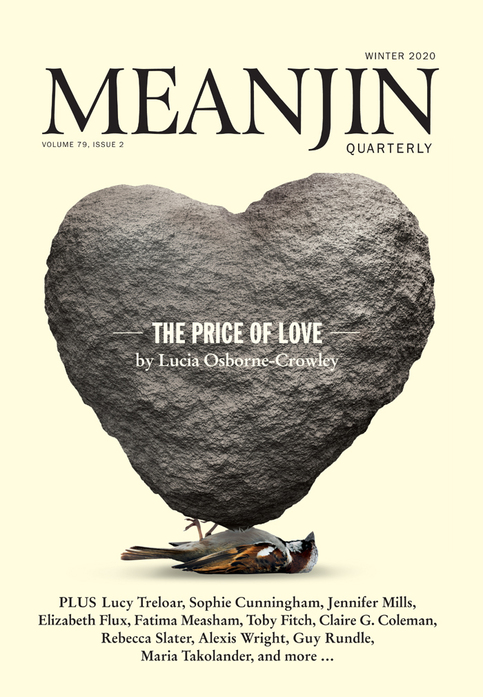
Meanjin cover, Winter 2020: a bird crushed by a stone heart

Continue reading

Return to Narnia

1

My subject is the Chronicles of Narnia of C. S. Lewis (1898–1963). I consider this heptad of books (published 1950–6) as constituting (1) literature (2) for children (3) that I continue to enjoy in my sixth decade, having started in my first.

  1. By literature, I mean a work of art whose medium is prose. Prose may also be a work of craft, intended to fulfil some purpose. This purpose could be to serve a market for fantasy or children’s books. Art as such has no purpose that can be specified in advance.

  2. Writing for children may take certain liberties that annoy adults.

  3. As with any post in this blog, I write out of my own personal interest. As a child, I read other fantasies, such as those of Lloyd Alexander, John Christopher, Ursula LeGuin, and J.R.R. Tolkien. Only the works of C. S. Lewis have stayed with me. This essay may be considered as an exploration of why, or least an example of how.

The seven books of the Chronicles of Narnia, Collier edition

Continue reading

Thoreau and Anacreon

Note added, October 5, 2023. At the end of this post, from sunny days in the first spring of the Covid pandemic, I take up Anacreon’s poem “The Thracian Filly,” translated as “To a Colt” in A Week on the Concord and Merrimack Rivers. Anacreon was from Teos, whose ruins I have visited. Thoreau may not be sensitive to the sexual connotations of the poem. First I review Thoreau’s book, noting in particular:

  • The book is written, like my blog posts, to please the author, who would rather do without money than sell stuff to get it.
  • The author’s relative indifference to human affairs in the face of nature is becoming less tenable, when a Pacific island inhabited by 40 persons and visited once a month by a boat (and once for all, probably, by a travel writer) is losing its palms to an invasive beetle.

Other books discussed or mentioned (and in my physical library) are

  • Bean, Aegean Turkey;
  • Collingwood, The First Mate’s Log;
  • Lawson, The Drinkers’ Guide to the Middle East;
  • Schalansky, Pocket Atlas of Remote Islands;
  • Thoreau, Walden;
  • Trypanis (ed.), The Penguin Book of Greek Verse;
  • Walls, Henry David Thoreau: A Life.

Gray clouds over blue sky over white clouds over buildings

Continue reading

Reading shallow and deep

Executive summary (added July 28, 2020): I read an article praising so-called deep reading, one of whose exponents is Henry Kissinger. The world is apparently being corrupted by people who do not read deeply; and this includes ourselves, if we allow ourselves to be distracted by social media. I myself find the article corrupted by references to neuroscience, and I am sorry that the writer, Adam Garfinkle, does not tell us about his own experience of reading. His article comes recommended by George Will, whose tenure at the Washington Post can be blamed on my grandfather. I reminisce about him and about my own deep or at least long reading, in college and more recently. I take a hedonistic view of this reading.

Seeing a tweet condemning the superficiality of Twitter, I could not pass up the challenge. I read the linked essay, “What we lost when we stopped reading” (The Washington Post, April 17, 2020). That was by George Will, summarizing and recommending a longer essay, by Adam Garfinkle, “The Erosion of Deep Literacy” (National Affairs, number 43, spring 2020). I read that, yesterday evening and this morning (April 21, 2020).

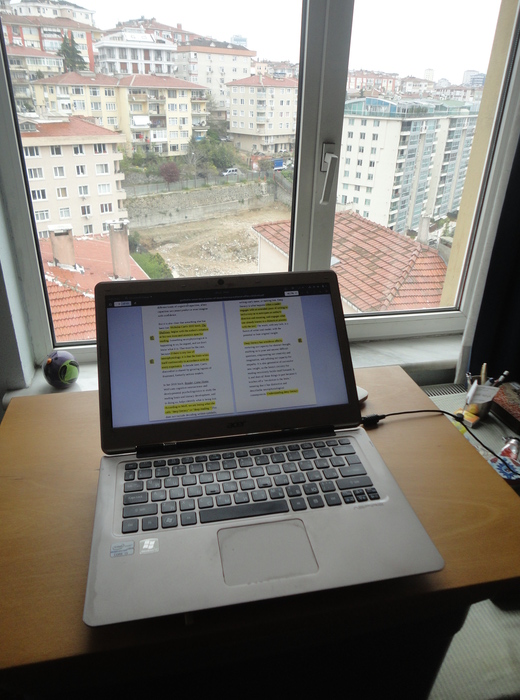
My computer showing two pages of text in front of a window

Continue reading

Donne’s Undertaking

To ease the strain of pandemic restrictions, I was recently called on to recommend a poem. I chose “The Undertaking” of John Donne. I want to say here why. Briefly:

  1. The poem (which I transcribe below) has a sound that impressed me when I first read it, more than thirty years ago.
  2. The poem alludes to ideals:
    • of recognizing what is good for its own sake, and
    • of climbing a rung or two on Diotima’s ladder of love.
  3. The sound of Donne’s poem may seduce one into thinking the ideals worthy.

          ⯅          

I also indulge myself here in reminiscences not obviously relevant to “The Undertaking.” They do conclude with my sitting down to read Donne for myself. (Note added November 3, 2025.)

          ⯆          

Diotima’s ladder, or stairway, is recounted by Socrates in Plato’s Symposium (211c, here in the translation of Jowett, which is the one I read at school, though it may not be the most faithful; the bullets and insertions from the Greek text are mine):

And the true order of going, or being led by another, to the things of love (τὰ ἐρωτικά), is to begin from the beauties of earth and mount upwards for the sake of that other beauty, using these as steps (οἳ ἐπαναβαθμοί) only, and from

  • one going on to
  • two, and from two to
  • all fair forms (τὰ καλὰ σώματα), and from fair forms to
  • fair practices (τὰ καλὰ ἐπιτηδεύματα), and from fair practices to
  • fair notions (τὰ καλὰ μαθήματα), until from fair notions he arrives at
  • the notion of absolute beauty, and at last knows what the essence of beauty is (ὃ ἔστι καλόν).

Analytic Geometry and Donne’s complete poetry
Two books that were my mother’s

Continue reading

Mood

Executive summary. The English grammatical moods – indicative, imperative, subjunctive – were not understood till the nineteenth century, according to an 1882 doctoral dissertation, On the Use of the Subjunctive Mood in Anglo-Saxon. Considering illustrative passages that happen to be from Plato, Alfred Douglas, Evelyn Waugh, and especially John Donne; looking ultimately at John McWhorter’s 2015 essay, “English is not normal”; I review the subjunctive mood, grammar in general, and my own lack of understanding till I was in college.

The copyright page has, with the preceding pages and cover, fallen away from the rest of the book with use
Copyright and contents pages of the Concise Oxford Dictionary, 6th edition

Continue reading

On the Odyssey, Book II

Having been put to bed by Eurycleia at the end of Book I of the Odyssey, Telemachus gets up in the morning and has the people summoned to council, at the beginning of Book II.

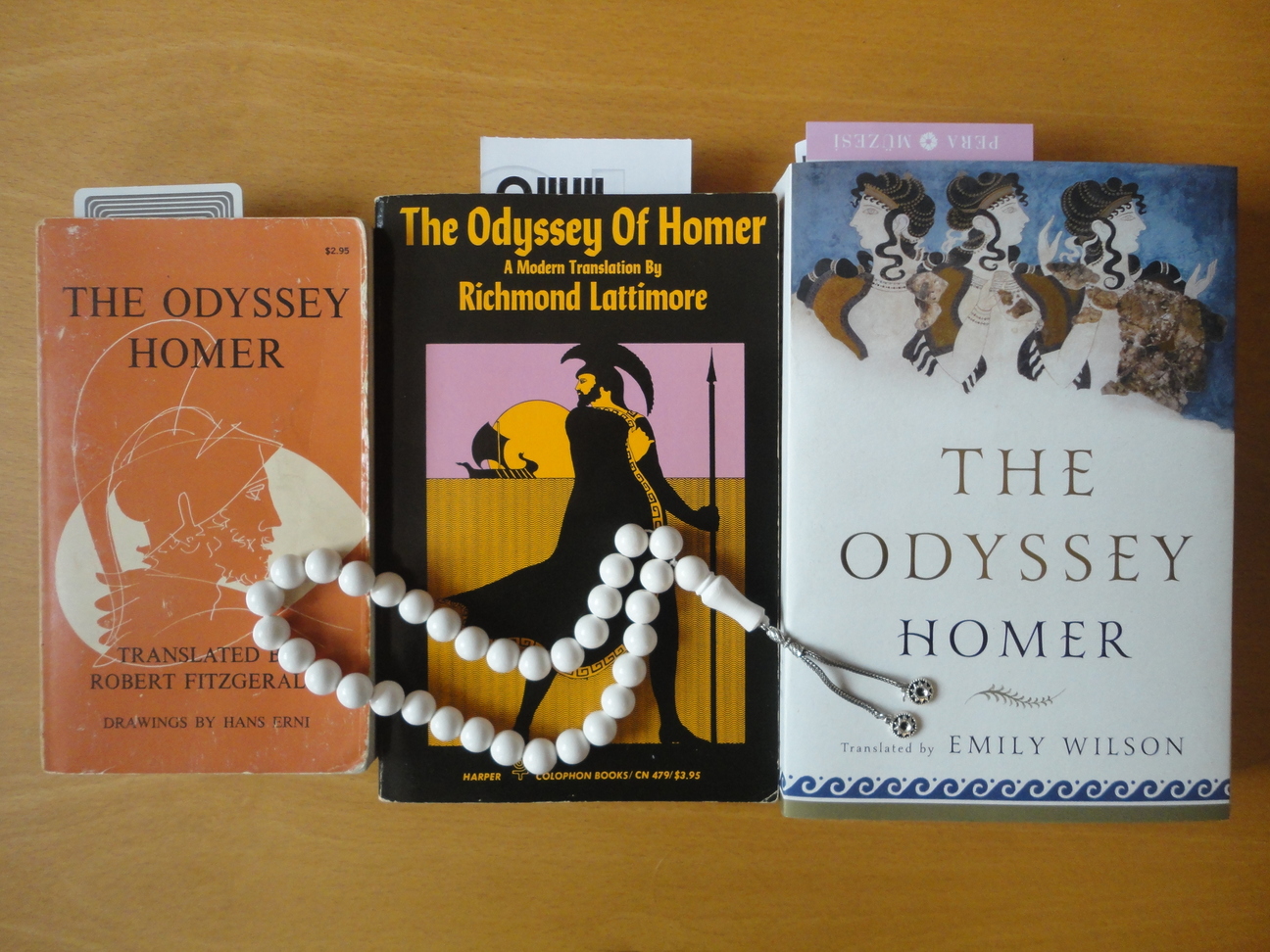
Three books with beads

There is no mention of a breakfast. Perhaps none is eaten. On the other hand, Telemachus probably relieves his bladder at least, and there is no mention of that either.

Telemachus straps on a ξίφος, but arrives at the assembly with a χάλκεον ἔγχος in hand. Wilson calls it a sword in either case; for Fitzgerald and Lattimore, the first weapon is a sword, but the second a spear and a bronze spear, respectively. Cunliffe’s lexicon supports the men; however, for Liddell and Scott, an ἔγχος can also be a sword, at least in Sophocles. For Beekes, ξίφος is Pre-Greek, and ἔγχος may be so. Continue reading

On the Odyssey, Book I

  • In reading his rendition of the Iliad, having enjoyed hearing Chapman speak out loud and bold;

  • having enjoyed writing here about each book, particularly the last ten books in ten days on an Aegean beach in September of this year (2019);

  • having taken the name of this blog from the first line of the Odyssey;

  • having obtained, from Homer Books here in Istanbul, Emily Wilson’s recent translation (New York: Norton, 2018);

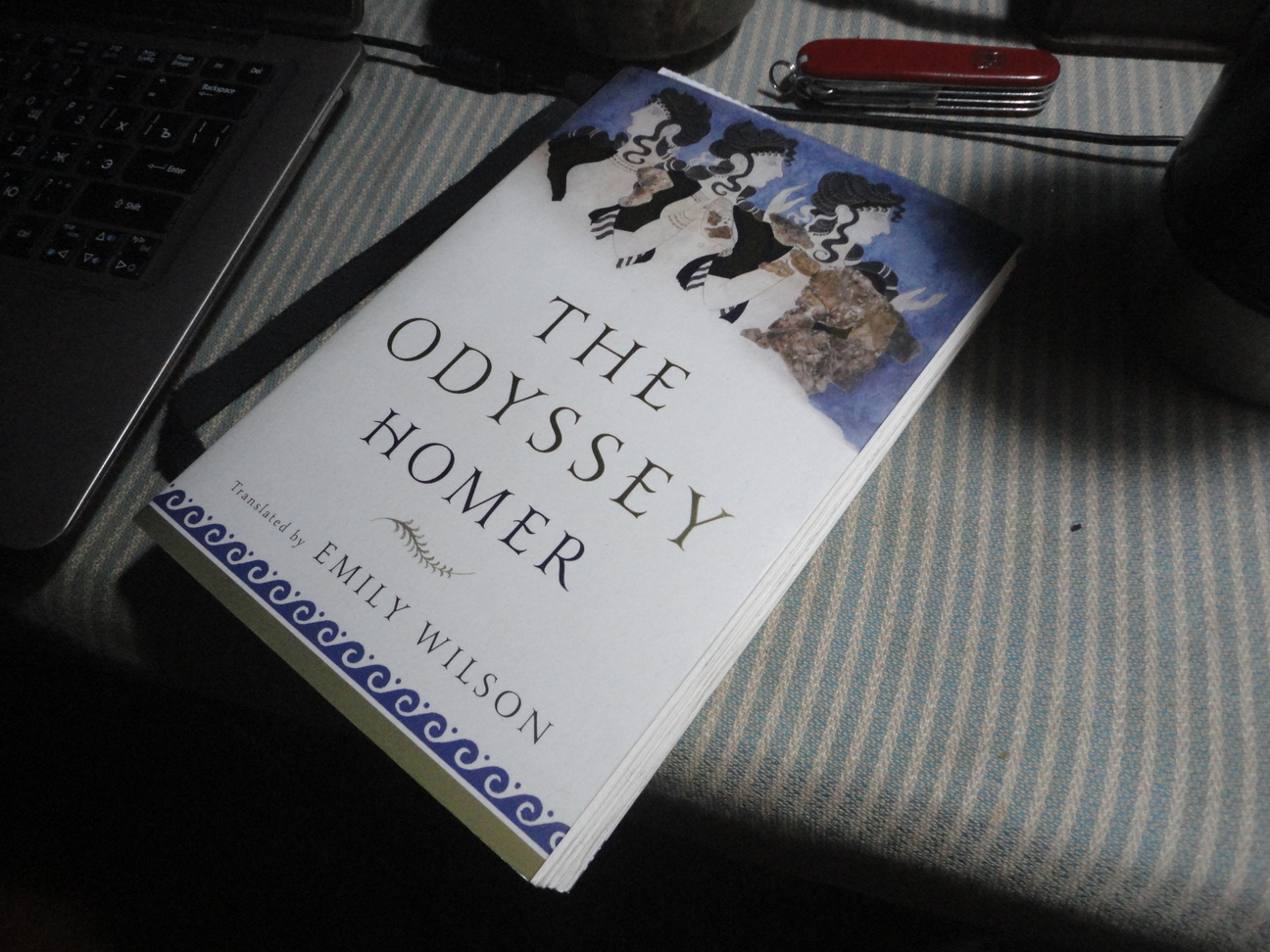
  • Book on table, Wilson's Odyssey Continue reading

Anthropology of Mathematics

This essay was long when originally published; now, on November 30, 2019, I have made it longer, in an attempt to clarify some points.

The essay begins with two brief quotations, from Collingwood and Pirsig respectively, about what it takes to know people.

  • The Pirsig quote is from Lila, which is somewhat interesting as a novel, but naive about metaphysics; it might have benefited from an understanding of Collingwood’s Essay on Metaphysics.

  • A recent article by Ray Monk in Prospect seems to justify my interest in Collingwood; eventually I have a look at the article.

Ideas that come up along the way include the following.

  1. For C. S. Lewis, the reality of moral truth shows there is something beyond the scope of natural science.

  2. I say the same for mathematical truth.

  3. Truths we learn as children are open to question. In their educational childhoods, mathematicians have often learned wrongly the techniques of induction and recursion.

  4. The philosophical thesis of physicalism is of doubtful value.

  5. Mathematicians and philosophers who ape them (as in a particular definition of physicalism) use “iff” needlessly.

  6. A pair of mathematicians who use “iff” needlessly seem also to misunderstand induction and recursion.

  7. Their work is nonetheless admirable, like the famous expression of universal equality by the slave-driving Thomas Jefferson.

  8. Mathematical truth is discovered and confirmed by thought.

  9. Truth is a product of every kind of science; it is not an object of natural science.

  10. The distinction between thinking and feeling is a theme of Collingwood.

  11. In particular, thought is self-critical: it judges whether itself is going well.

  12. Students of mathematics must learn their right to judge what is correct, along with their responsibility to reach agreement with others about what is correct. I say this.

  13. Students of English must learn not only to judge their own work, but even that they can judge it. Pirsig says this.

  14. For Monk, Collingwood’s demise has meant Ryle’s rise: unfortunately so since, for one thing, Ryle has no interest in the past.

  15. In a metaphor developed by Matthew Arnold, Collingwood and Pirsig are two of my touchstones.

  16. Thoreau is another. He affects indifference to the past, but his real views are more subtle.

  17. According to Monk, Collingwood could have been a professional violinist; Ryle had “no ear for tunes.”

  18. For Collingwood, Victoria’s memorial to Albert was hideous; for Pirsig, Victorian America was the same.

  19. Again according to Monk, some persons might mistake Collingwood for Wittgenstein.

  20. My method of gathering together ideas, as outlined above, resembles Pirsig’s method, described in Lila, of collecting ideas on index cards.

  21. Our problems are not vague, but precise.


When Donald Trump won the 2016 U.S. Presidential election, which opinion polls had said he would lose, I wrote a post here called “How To Learn about People.” I thought for example that just calling people up and asking whom they would vote for was not a great way to learn about them, even if all you wanted to know was whom they would vote for. Why should people tell you the truth?

Saturn eclipse mosaic from Cassini

Continue reading

On Translation

Achilles is found singing to a lyre, in a passage of Book IX of the Iliad. Homer sets the scene in five dactylic hexameters; George Chapman translates them into four couplets of fourteeners.

I wrote a post about each book of the Iliad, in Chapman’s version of 1611. As I said at the end, I look forward to reading Emily Wilson’s version. Meanwhile, here I examine the vignette of the lyre in several existing English translations, as well as in the original.

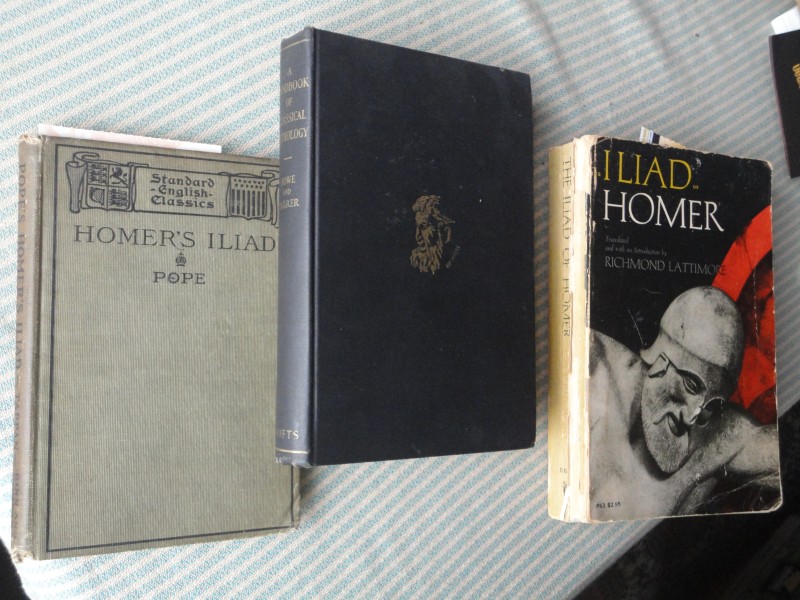
Three books mentioned in the text Continue reading