Category Archives: Language

Craft and Craftiness

Craft is what in Greek is τέχνη: skill. One can refer to technical skill, for emphasis, or to allude to the Greek word; however, perhaps there is no skill that is not technical, and nothing technical that is not related to a skill. In that case, “technical” is just an adjective form of “skill,” and the phrase “technical skill” is a kind of polyptoton. (See footnote 1.)

In the translation by David Grene of the Philoctetes of Sophocles, “craft” is used in the pejorative sense of craftiness. The Greek is δόλος, not τέχνη; however, the latter too can have the same pejorative sense.

Books referred to here: (1) Sophocles II; (2) Sophoclis Fabulae; (3) Sophocles’ Dramas; (4) Goethe’s Faust; (5) A Dictionary of Modern English Usage, second edition; (6) Modern English Usage. In each row of three, the first book is paperback; the second, hardback with jacket; the third, hardback without jacket, but tilted so the spine can be read

Continue reading

Artificial Language

TL;DR: AI writing is like human writing. Of course it is, since its model is human writing. But then what AI produces is like bad human writing.

My sources include Plato, Wendell Berry, George Orwell, E. B. White, William Deresiewicz, Hadley Freeman, Andrew Kay, Kenneth G. Crawford, Hollis Robbins, Yuval Noah Harari, William Egginton, Megan Fritts, and Vi Hart.


About preparing certain seeds for human consumption in an infusion:

For sensory attributes, I’m admittedly Platonic and believe that since coffee is a fruit, it should taste something like a fruit. (And it’s not just any fruit – it’s a cherry!) My roasting philosophy comes from the same conviction. Generally, I’m after bright, juicy, fruity, syrupy goodness.

Thus Caleb Bilgen, founder of Ánimo Coffee Roasters in Asheville, North Carolina.

          ⯅          

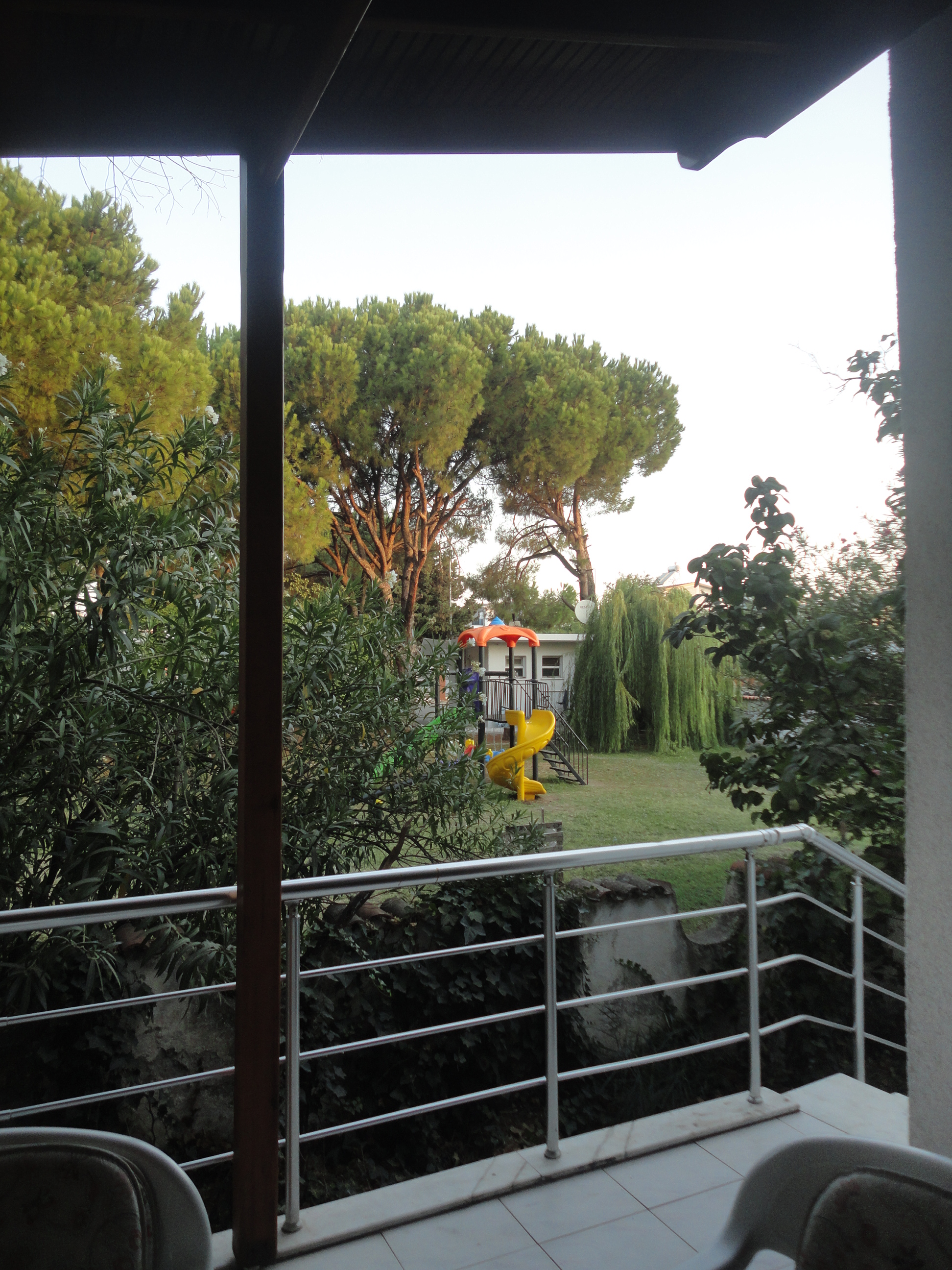
From a terrace beneath an awning, a low wall obscured by ivy, oleander, and quince; on the other side, a lawn with a jungle gym; beyond this, a weeping willow and a small white house beneath umbrella pines

What I see as the sun rises
Altınova, Ayvalik, Balıkesir
September 5, 2025

          ⯆          

Continue reading

Gödel, Grammar, and Mathematics

Preface

This attempt at exposition of Gödel’s Incompleteness Theorem was inspired or provoked by somebody else’s attempt at the same thing, in a blog post that a friend directed me to. I wanted in response to set the theorem in the context of mathematics rather than computer science.

Continue reading

Automatia

One day during the Trojan War, Apollo and Athena decide to give the combatants a break. The general conflict is to be replaced with a one-on-one. The Olympians induce Helenus to tell his brother Hector to take on whichever of the Greeks is up for it.

Twilight beach scene
Day or night?
Sunset over Lesbos
From the Anatolian mainland
Tuesday, August 1, 2023

Continue reading

Mood

Executive summary. The English grammatical moods – indicative, imperative, subjunctive – were not understood till the nineteenth century, according to an 1882 doctoral dissertation, On the Use of the Subjunctive Mood in Anglo-Saxon. Considering illustrative passages that happen to be from Plato, Alfred Douglas, Evelyn Waugh, and especially John Donne; looking ultimately at John McWhorter’s 2015 essay, “English is not normal”; I review the subjunctive mood, grammar in general, and my own lack of understanding till I was in college.

The copyright page has, with the preceding pages and cover, fallen away from the rest of the book with use
Copyright and contents pages of the Concise Oxford Dictionary, 6th edition

Continue reading

On Translation

Achilles is found singing to a lyre, in a passage of Book IX of the Iliad. Homer sets the scene in five dactylic hexameters; George Chapman translates them into four couplets of fourteeners.

I wrote a post about each book of the Iliad, in Chapman’s version of 1611. As I said at the end, I look forward to reading Emily Wilson’s version. Meanwhile, here I examine the vignette of the lyre in several existing English translations, as well as in the original.

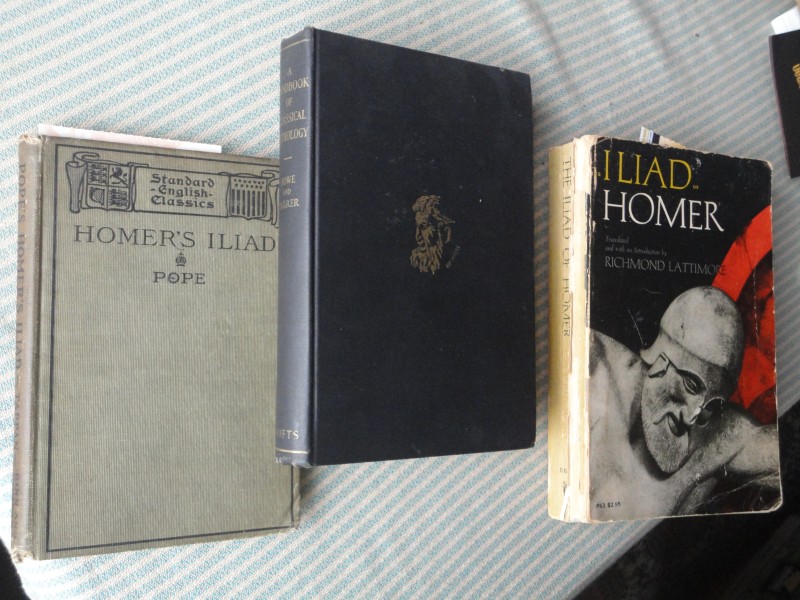
Three books mentioned in the text Continue reading

On Chapman’s Homer’s Iliad, Book XVIII

I analyze Book XVIII of the Iliad into seven scenes.

Branches against sky

Continue reading

Math, Maugham, and Man

Note added, August 28, 2023. The main purpose of this post of September 1, 2019, seems to have been to assemble some information about the etymologies of “man” and “woman,” because of ongoing controversy about what the words even mean today. I started to take up the controversy itself on December 30 of that year, in “Sex and Gender.” Meanwhile, this post suggests, or points out:

  • a generic “person” may still be male in people’s minds;
  • becoming a woman may be like becoming Jewish;
  • there are no gendered pronouns in Turkish;
  • the series freshman, sophomore, junior, senior is like pinkie, ring finger, middle finger;
  • Greek does not have such an interesting series for the fingers;
  • Greek mathematics includes Thales’s Theorem and Pappus’s Hexagon Theorem.

There does not seem to be any connection between the mathematics and the etymology here, except that I was studying both at the same time. I must have been reading The Razor’s Edge too, where Maugham

  • places himself in a tradition founded by Herodotus;
  • uses “he/him” for for somebody who can be a woman as well as a man.

More themes I took up:

  • what it means to be natural;
  • that I don’t consider myself ADHD;
  • the etymology of “squirrel”;
  • the Etymological Fallacy.

A dog lying in the shade of a beach umbrella looks at us; behind him are a woman and a man sitting facing away from us, towards the sea
Woman, man, and dog
Friday, August 18, 2023
Altınova, Balıkesir, Türkiye

Continue reading

Piety

The post below is a way to record a passage in the Euthyphro where Socrates says something true and important about mathematics.

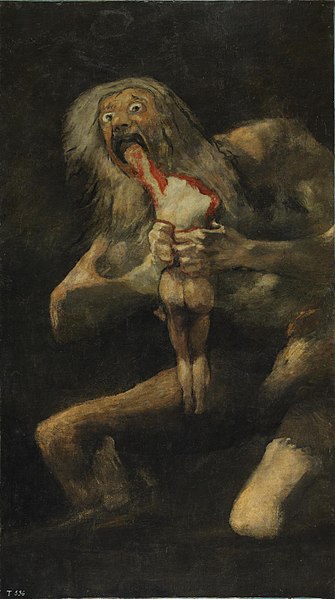
Crude depiction of bug-eyed figure grasping the torso of, and putting into his mouth the arm of, a smaller figure
Goya, [Cronus] Devouring His Son
(see below)

The passage is on a list of Platonic passages that I recently found, having written it in a notebook on May 23, 2018. The other passages are in the Republic; here they are, for the record, with some indication of why they are worth noting (translations are Shorey’s, originally from 1930 and 1935 in the old Loeb edition):

Continue reading

NL XLV: The Germans

Index to this series

At the end of Collingwood’s New Leviathan (1942), we reach a chapter whose theme is that of my more recent articles on grammar.

By August Macke – The Yorck Project (2002) 10.000 Meisterwerke der Malerei (DVD-ROM), distributed by DIRECTMEDIA Publishing GmbH. ISBN: 3936122202., Public Domain, Link

As history, Collingwood’s last chapter is difficult, for the reasons that trouble Herbert Read at the beginning of his Concise History of Modern Painting (revised 1968, augmented 1974). Read opens his first chapter with a passage from Collingwood’s Speculum Mentis (1924):

Continue reading