Category Archives: Midgley

Equality

Amity is equality, as Rackham translates it:

ΦΙΛΟΤΗΣ ΙΣΟΤΗΣ.

That’s what they say, anyway (§ v.5). Aristotle only refines it (§ viii.5):

ἡ δ᾽ ἰσότης καὶ ὁμοιότης φιλότης.
equality and similarity is amity.

Of eight readings on amity, or friendship, or love, or philia, we are in our second, comprising chapters v–viii of Book VIII of the Nicomachean Ethics.

Sun through mist above, reflection in water below, boats in between
Tarabya Marina
Sunday, March 10, 2024

Continue reading

Excuses

This post features the first five chapters of Book III of the Nicomachean Ethics of Aristotle. Those chapters take up the following subjects.

  • Chapter I. The voluntary and involuntary (ἑκούσιος and ἀκούσιος).
  • Chapter II. Choice (also called intention, preference, and rational or deliberate choice: προαίρεσις).
  • Chapter III. The deliberated (βουλευτός).
  • Chapter IV. The wished-for (βουλητός).
  • Chapter V. Vice (κακία) as being voluntary.

Mostly bare earth with a few weeds, some trash, a tree with two trunks, and a billboard; cars and low-rise buildings behind, on a sunny day
Public space in Maslak, Sarıyer
“One of the main business districts of Istanbul”
September 19, 2023

Continue reading

Creativity

In the Platonic dialogues, Socrates frequently mentions τέχνη (technê), which is art in the archaic sense: skill or craft. The concern of this post is how one develops a skill, and what it means to have one in the first place.

Books quoted or mentioned in the text, by Midgley, Simone Weil, Thoreau, Amy Mandelker (on Tolstoy), Oliver Byrne (on Euclid), Wittgenstein, Arendt, and Caroline Alexander (on Homer)

Continue reading

Nature

Index to this series

Can Socrates really “find a natural support for justice,” as Allan Bloom says he must? It is strictly impossible, as I say in “Bloom, Badiou, Ryle, Shorey.” Inevitably there is more that can be said, and I shall try to say some of it here.

Sand, sea, mountains, sky
Anatolian sand, Aegean sea, Lesbian mountains
Uranus over all
Profesörler Sitesi, Altınova, Balıkesir, Turkey
September 24, 2021

Continue reading

Feminist Epistemology

To this post, I am adding this introduction in July 2021. I have returned to some of the ideas of the post, and I see that I left them in a jumble. They may still be that, but I am trying to straighten up a bit.

Beyond this introduction, the post has three parts. Part III takes up more than half of the whole post and consists of my notes on

  1. Elizabeth Anderson, “Feminist Epistemology and Philosophy of Science,” Stanford Encyclopedia of Philosophy, February 13, 2020. 61 pages.

In Anderson’s article I see – as I note below – ideas that are familiar, thanks to my previous reading of philosophers such as Robin George Collingwood, Mary Midgley, and Robert Pirsig. Henry David Thoreau may not exactly be one of those philosophers, but he is somehow why I came to write this post in the first place.

Here is a table of contents for the whole post:

Continue reading

Re-enactment

Two whiteboards, one above the other, with geometrical diagrams and equations
My whiteboards from Tuesday, November 3, 2015,
concerning Pappus of Alexandria,
in the course “Geometriler


Executive summary (added October 6, 2018). Historian Niall Ferguson praises Collingwood as a philosopher of history, while showing no sign of understanding Collingwood’s actual philosophy. This provokes me. My comments are in the following sections.

Continue reading

Some Say Poetry

In a poetry review, a remark on being a student has drawn my attention:

In My Poets, a work of autobiographical criticism with occasional ventriloquial interludes, McLane recalls two “early impasses in reading,” freshman-year encounters with Charles Olson and Frank O’Hara. She writes about not “getting it” but wanting to get it, about a desire to get it that was left wanting by code-breaking and analysis and satisfied by hearing and feeling.

This is from the second half of a “New Books” column by Christine Smallwood, in the Reviews section of Harper’s, July 2017. After quoting Smallwood’s review, I want to say something about learning and creating, in poetry and also in mathematics.

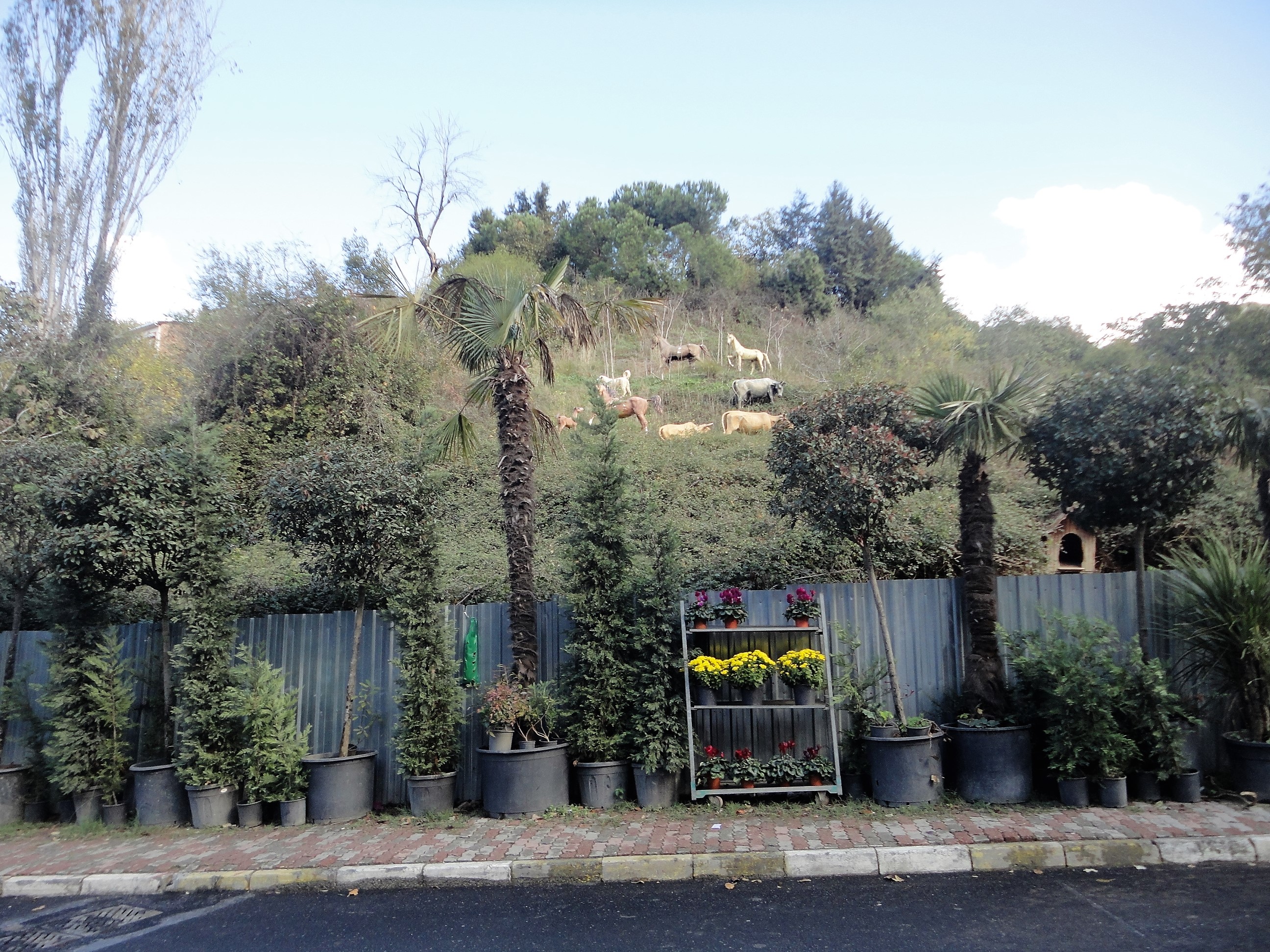
Potted palms with plaster farm animals on hillside behind
Kuzguncuk, 2017.11.05

Continue reading

NL XIX: Two Senses of the Word “Society”

Executive summary (below) | Index to this series

After a break of half a year, I return to reading Collingwood’s New Leviathan. Being on holiday at an Aegean beach gives me the opportunity. While here, I may also return to Chapman’s Homer’s Iliad. Last winter I finished Part I of the New Leviathan, the part called “Man.” Here I continue with the first chapter of “Society.” I have reason to look at what Mary Midgley and Albert Einstein say about science. Collingwood’s investigation suggests a way of thinking about prejudice and discrimination.

Part II of the New Leviathan is “Society,” and the first two chapters of this, XIX and XX, concern the distinction between society proper and two more general notions. In Chapter XX, the more general notion will be community. In Chapter XIX, the more general notion has not got its own proper name, and so Collingwood denotes it by writing “society,” in quotation marks.

A “society” of chairs at the beach (Altınova 2017.08.31)

Continue reading

Victor Vasarely

Tophane-i Amire
Tophane-i Amire, 2017.03.25

Last week I wrote about the Turkish Impressionist Feyhaman Duran, born in 1886. Now my subject is the Hungarian-French Op Artist born twenty years later as Győző Vásárhelyi. His “Rétrospective en Turquie” is at the Tophane-i Amire Culture and Art Center in an Ottoman cannon foundry.

Vasarely show Continue reading

Thinking & Feeling

This essay is written as a distraction from current events, though I make some reference to them. I am prompted by questions of analogy provoked by

  1. the similes of Homer and
  2. a recent theater review in Harper’s that mentions the parables of Jesus.

With sea in the background, on the sand of a beach sits Chapman’s Homer: The Iliad, the cover featuring a 16th-century Flemish tapestry (framed by a circle), Scene from Roman History, showing a number of men, the one in the middle armored; a horse is in the foreground

Continue reading