Points of an Ellipse

This is about an image that is intended

  • to be decorative,
  • to establish the mathematical construction, with ruler and compass, of points of an ellipse.

Diagram with colored regions whose borders are discussed in the text

Continue reading

Verity (Iliad Book X)

The Trojans are watching, lest the Achaeans sail away in the night. Achilles is staying in his own camp. As we open Book X of the Iliad, Agamemnon cannot sleep. He worries, not just about the Trojans, but about whether his own men are properly worried.

A swimming man leaves a wake in a calm sea, whose gravelly bottom is seen in the foreground
One of two men I found swimming near Kireçburnu
Sarıyer, Istanbul
Sunday, New Year’s Day, 2023

Continue reading

Loneliness (Iliad Book IX)

I could have called this post “Democracy versus Autocracy.”

Four pigeons on a street face away from one another. The body of a cat on all fours is directed at them, but the cat’s head is turned away
Four pigeons and a cat
Tarabya Bayır Caddesi / Yücelevler Sokağı
(We live in the development behind the retaining wall)
Tarabya, Sarıyer, Istanbul
Wednesday morning, January 4, 2023

Continue reading

Emotional Contagion (Iliad VIII)

On the day recounted in Book VIII of the Iliad,

  • on earth, the Achaeans are twice driven behind their new walls;
    • during the first rout,
      • Odysseus does not hear when Diomedes urges him to come to the aid of Nestor;
      • Hector thinks he will be able to burn the Achaean ships and kill all the men;
      • Agamemnon prays for mere survival;
    • the second time, Hector calls for fires to be lit, lest the Greeks try to escape in the night;
  • in heaven, Zeus
    • weighs out a heavier fate for the Achaeans;
    • declares that it shall be so until Achilles is roused by the death of Patroclus;
    • warns Hera and Athena not to interfere (though they try to anyway).

I wrote a fuller summary in 2017. Because I was reading it, I also talked about Huysmans, Against Nature, and the belief of the main character that the prose poem could

contain within its small compass, like beef essence, the power of a novel, while eliminating its tedious analyses and superfluous descriptions.

Now I shall find reason to bring up Herodotus, Plato, Aristotle, Thoreau, and Freud, and especially William James and Collingwood on the subject of emotion.
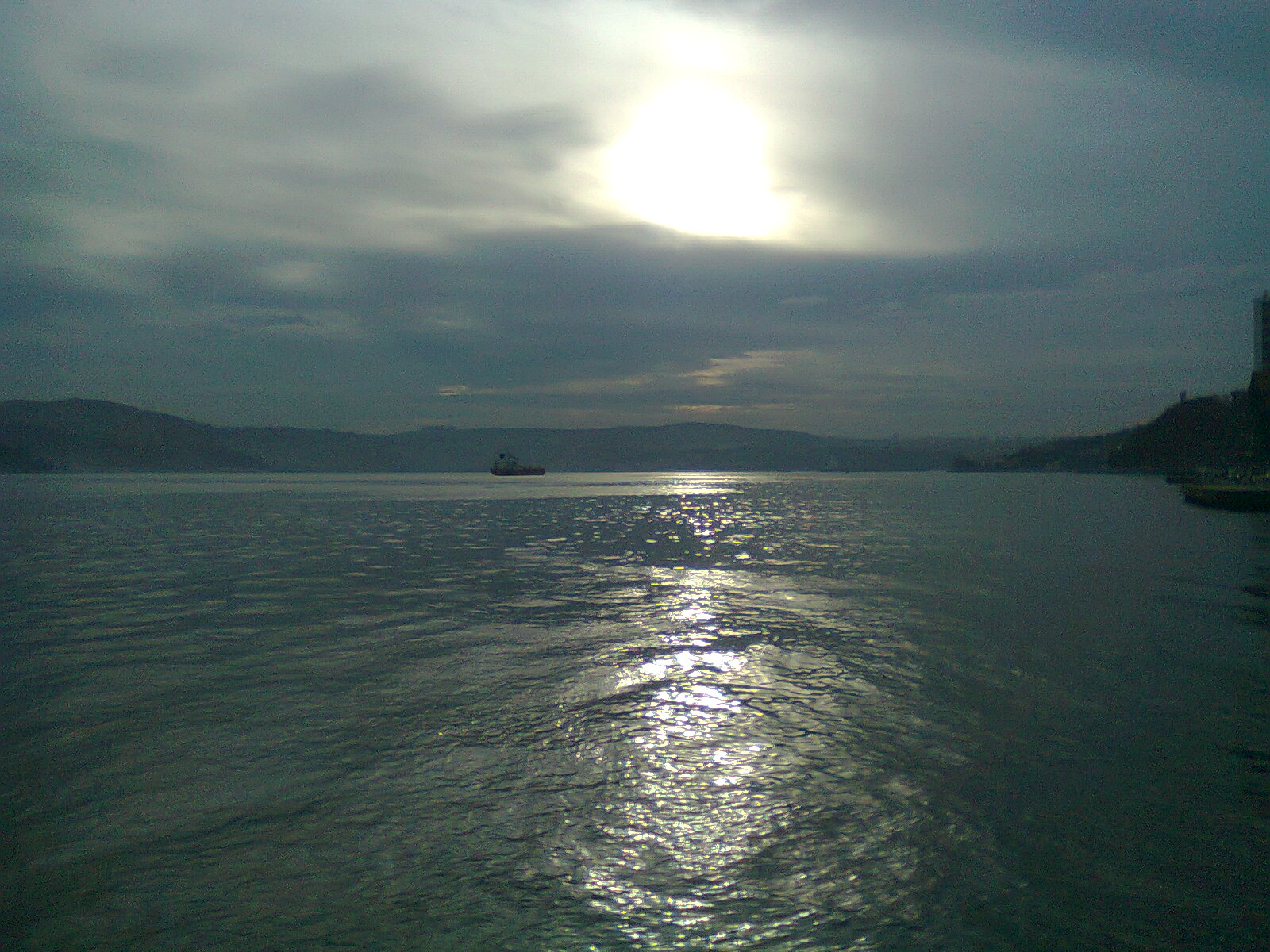
Morning sun, obscured by overcast skies, still shines on waters in turmoil in the Bosphorus Strait
Waters of the Bosphorus, Sarıyer, Istanbul
Wednesday morning, January 11, 2023
Continue reading

On Homer’s Iliad Book VII

Book VII of the Iliad shows us the paradox of men at war who can still work together.

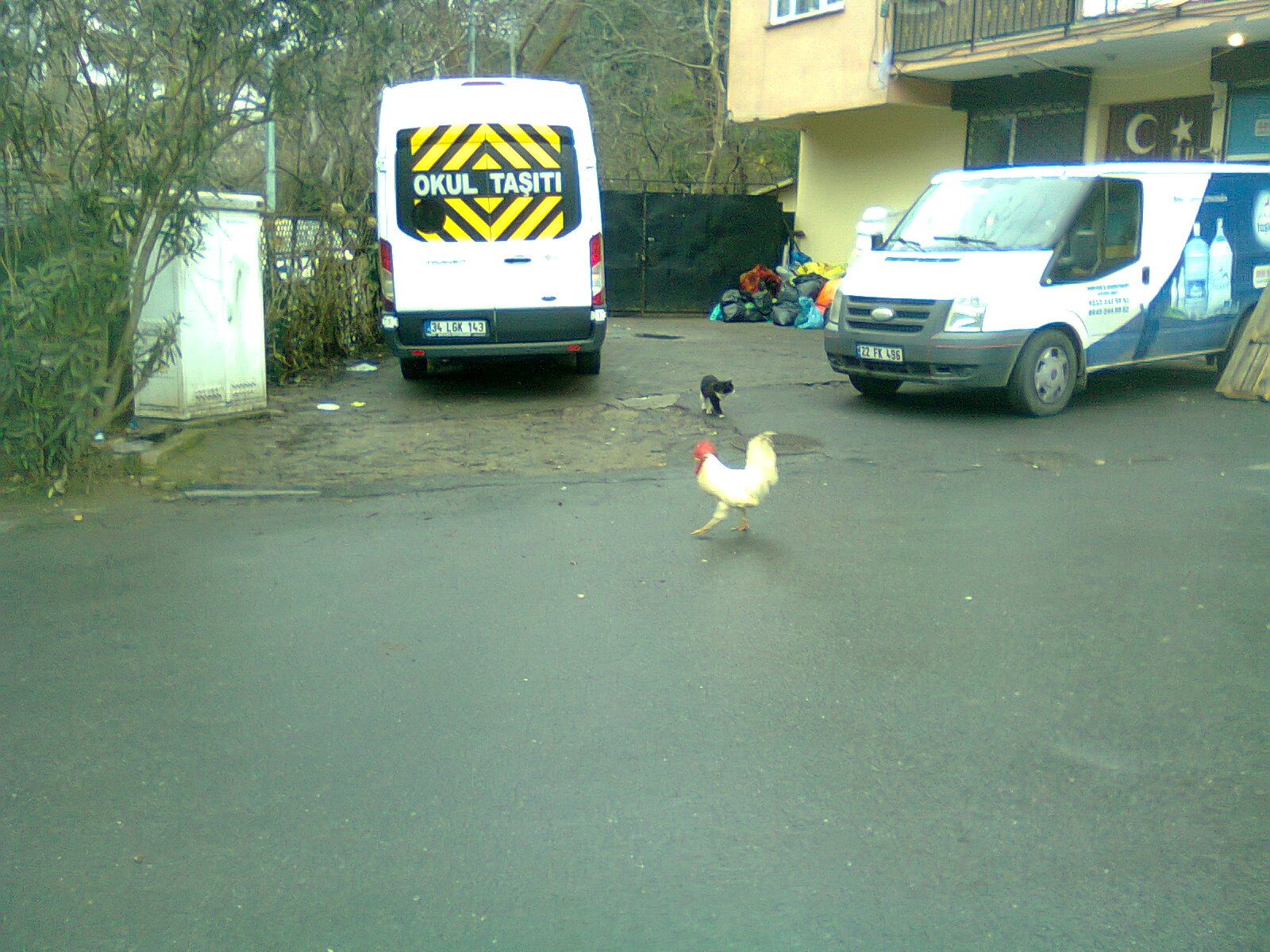
Street scene: a rooster walks down the road while, on his right side, a cat faces him. A minibus, car, and building are in the background, along with some greenery
Cock and cat on a village street
near a stream channelled between concrete walls
Tarabya, Sarıyer, Istanbul
Wednesday, January 11, 2023

Continue reading

Biological History

Sailboats and sun, seen through a mist and reflected in calm water
Tarabya Marina, Sarıyer, Istanbul
January 1, 2023

Continue reading

On Homer’s Iliad Book VI

View from a height (with tree branch in upper right corner): on the ground below, a settlement; beyond it, a bend in a strait (the Bosphorus), the waters plied by a ship; beyond that, the two sides of the straight, opening to a sea (the Black Sea)
Kireçburnu, Sarıyer, Istanbul
Friday, December 30, 2022

On the last Wednesday of 2022, I first noted the existence of Andrew Tate. I was reading a blog post dated the previous day, December 27. The post was “Time Out,” by Neville Morley, who recalled,

there was a flurry last month when the loathsome Andrew Tate declared the pointlessness of all books and book-learning and was widely denounced on the Twitter.

Maybe I had noticed some of the flurry, while paying it little mind. Continue reading

On Homer’s Iliad Book V

Tangles of rebar from a building demolition sit, with a backhoe on top, on a narrow street paved with setts
Creative destruction
Arpa Suyu Sokağı, Şişli, Istanbul
Thursday, December 22, 2022

In Book V of the Iliad, the battlefield deaths that started in Book IV continue. Some of them are caused by Diomedes, who also stalks higher prey:

  • Giving him the power to recognize gods, Athena tells him to avoid all of them but Aphrodite, whom he then wounds.
  • When Athena gives him permission and encouragement to attack Ares, Diomedes wounds him too.

In echo of Achilles’s summoning of Thetis in Book I, the wounded gods go crying to their parents.

Parenthood and Sex

Each of us has two biological parents. In my case, those parents are not my real parents, namely the ones who raised me. Nonetheless, according to the theory that everybody seems to accept, including myself, each of us has grown up from a zygote, which was formed by the union of two gametes. Moreover, one of those gametes was an egg cell; the other, a sperm cell. The gametes came from gonads: an ovary and testis, respectively. Ovaries are possessed by females of our species; testes, by males. Being female or male is called sex.

We are also distinguished, when children, as being boys or girls. Boys grow up to be men; girls, women.

It is usually assumed that men are male and women are female. Some of us may insist that this is always so, by definition of the words in question. In that case, I will argue,

  • the definitions can admit of exceptions, at least in principle;
  • an exception cannot be granted, merely at the request of the person who asks for it.

Continue reading

On Homer’s Iliad Book IV

Bosphorus and third bridge over it, seen from a height through trees beside a house
Kireçburnu, Sarıyer, Istanbul
November 30, 2022

Last time I mentioned what I had remembered most from the Iliad, after reading it in high school: the metaphor in Book VI of humans as leaves dying in the fall, to be replaced by new ones in the spring. I also remembered how often men died at the hands of their fellow men:

Continue reading