Category Archives: Art

Facts (NL IX, ‘Retrospect,’ first 6 paragraphs)

Index to this series

A certain person says,

I am not better than you or more virtuous than you. If you see me on the right path, help me. If you see me on the wrong path, advise me and halt me. And obey me as far as I obey God.

How should one hear these words: as an eminently reasonable expression of benevolent humility such as any of us might honorably make? Well, no matter how qualified, the command obey me might be a warning sign. The words are in fact from a recently published video, as quoted in the Guardian Weekly (Vol 190 No 5, 11–17 July 2014, p. 4). The speaker is the man whose nom de guerre is Abu Bakr al-Baghdadi, on whose head the Department of State of the United States of America placed a ten-million-dollar bounty in 2011. He now styles himself Ibrahim, Caliph of the Islamic State, a new entity that is supposed to restore the lost Muslim glory of past centuries. This restoration is to be achieved through war. War requires military discipline, with punishments meted out for infractions like insubordination, not to mention the slaughter of those perceived as enemies. So al-Baghdadi’s request to be advised and halted if seen to be in the wrong must be interpreted rather carefully.

It is difficult to know how to interpret somebody’s words. With that I pass to the transitional chapter in the first part, “Man,” of Collingwood’s New Leviathan.

Continue reading

Two women

On the left, Vincent van Gogh, Mousmé, 1888, National Gallery of Art, Washington. On the right, Stephen Chambers, Woman (Green Background), 2006, private collection, London; currently on display at the Pera Museum, Istanbul, where I saw it on Saturday, June 21, 2014, and made the (slightly tilted) photograph on the right below.

A10433.jpg

The van Gogh image, I downloaded from the National Gallery website. I cropped and resized the Chambers image to be the same height as the van Gogh; then I juxtaposed the two with convert +append van-gogh-la-mousme.jpg chambers-woman.jpg two-women.jpg

I did not know of the artist Stephen Chambers before. The green background of his Woman, and her expression, caused me to think of van Gogh’s Mousmé. The Mousmé’s head is round, but her dotted skirt is as flat as the blouse of the Woman.

June in the New World

This is about our first visit to the US since the death of my mother. The visit culminated in a memorial observance on a wooded hillside at my cousin’s place in West Virginia. Before going there, Ayşe and I stayed with friends in the Cleveland Park neighborhood of Washington. We made some visits to my mother’s currently unoccupied house in Alexandria. Unfortunately we had little time for much else; at least we could not plan on anything else. I have no intention of recounting the whole trip, but will have some things to say about the photos below. Continue reading

NL VII: “Appetite”

Index to this series

How can we compare two states of mind? This is the question of Chapter VII of The New Leviathan. The answer is contained in the chapter’s title. “Appetite” is a name, both for the chapter and for the fundamental instance of comparing a here-and-now feeling with a “there-and-then” feeling. We compare these two feelings because we are unsatisfied with the former, but prefer the latter.

It would seem then that appetite is at the root of memory. Thus we are among the ideas of the opening verses of The Waste Land of T. S. Eliot, who attended Collingwood’s lectures on Aristotle’s De Anima at Oxford (and was just a year older):

Continue reading

NL VI: “Language,” again

Index to this series

This is about language: language the concept, and “Language,” the sixth chapter of Collingwood’s New Leviathan. We shall consider language in a very basic way, not as a means of communicating what we know, but as the way we come to know things in the first place.
Continue reading

NL V: “The Ambiguity of Feeling”

Index to this series

Feeling differs from thought. Thought is founded in feeling; thought is erected on feeling; thought needs feeling. Thought needs feelings that are strong enough to support it. But thought itself is not strong (or weak); it has (or can have) other properties, like precision and definiteness. Thought can be remembered and shared in a way that feeling cannot.

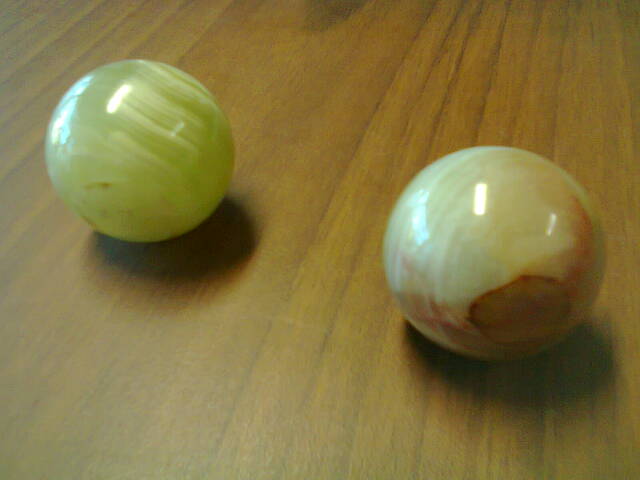
Two shiny spheres, more or less translucent, streaked with green and brown respectively, sitting on a flat surface of fake woodgrain

Onyx balls from a tourist shop in Cappadocia

Continue reading

Self-similarity again

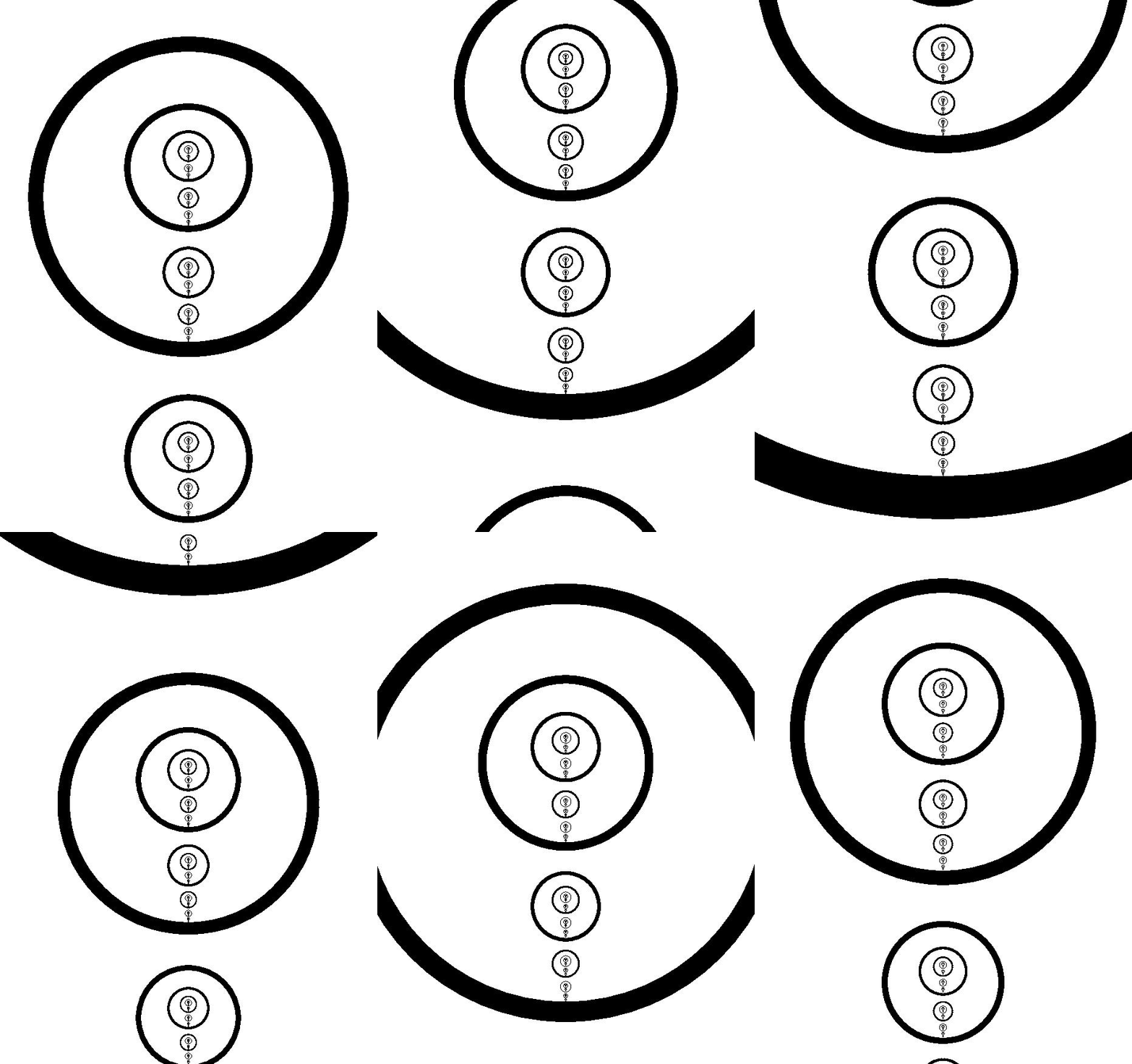
Here is an image that I made when preparing the article Self-similarity nine months ago. The image appeared as a draft in the list of all of my articles on this blog. Here it is officially:

Copyright

Below is a provocative passage from the conclusion of R. G. Collingwood, The Principles of Art (page 325). Oxford first published the book in 1938, and its 1958 paperback edition is still in print. I assume the book continues to be printed without a copyright notice; at any rate, my own paperback copy, from the nineteenth printing, purchased in 1988, has no copyright notice.

I typed up the passage below and put it on my departmental website years ago. I have placed the passage here, because of an article that I chanced upon through the Arts & Letters Daily site. The article itself is on the Poetry Foundation website, is by Ruth Graham, and is called “Word Theft: Why did 2013 become the year of the plagiarists?”

I gather from the article that some contemporary poets have been found to have plagiarized from other contemporary poets; and what is especially annoying about the plagiarism is that the plagiarists are not actually improving what they are appropriating. In this case, they are not following Collingwood’s recommendation, though possibly they are ineptly trying:

To begin by developing a general point already made in the preceding chapter: we must get rid of the conception of artistic ownership. In this sphere, whatever may be true of others, la propriété c’est le vol. We try to secure a livelihood for our artists (and God knows they need it) by copyright laws protecting them against plagiarism; but the reason why our artists are in such a poor way is because of that very individualism which these laws enforce. If an artist may say nothing except what he has invented by his own sole efforts, it stands to reason he will be poor in ideas. If he could take what he wants wherever he could find it, as Euripides and Dante and Michelangelo and Shakespeare and Bach were free, his larder would always be full, and his cookery might be worth tasting.

This is a simple matter, and one in which artists can act for themselves without asking help (which I am afraid they would ask in vain) from lawyers and legislators. Let every artist make a vow, and here among artists I include all such as write or speak on scientific or learned subjects, never to prosecute or lend himself to a prosecution under the law of copyright. Let any artist who appeals to that law be cut by his friends, asked to resign from his clubs, and cold-shouldered by any society in which right-thinking artists have influence. It would not be many years before the law was a dead letter, and the strangle-hold of artistic individualism in this one respect a thing of the past.

This, however, will not be enough unless the freedom so won is used. Let all such artists as understand one another, therefore, plagiarize each other’s work like men. Let each borrow his friends’ best ideas, and try to improve on them. If A thinks himself a better poet than B, let him stop hinting it in the pages of an essay; let him re-write B’s poems and publish his own improved version. If X is dissatisfied with Y’s this-year Academy picture, let him paint one caricaturing it; not a sketch in Punch, but a full-sized picture for next year’s Academy. I will not rely upon the hanging committee’s sense of humour to the extent of guaranteeing that they would exhibit it; but if they did, we should get brighter Academy exhibitions. Or if he cannot improve on his friends’ ideas, at least let him borrow them; it will do him good to try fitting them into works of his own, and it will be an advertisement for the creditor. An absurd suggestion? Well, I am only proposing that modern artists should treat each other as Greek dramatists or Renaissance painters or Elizabethan poets did. If any one thinks that the law of copyright has fostered better art than those barbarous times could produce, I will not try to convert them.

Collingwood’s book suggests the author’s admiration for T. S. Eliot, and the two contemporary thinkers seem to share an opinion about copying. Eliot’s verbalization of the idea is apparently the more memorable one and is quoted by Ms Graham in the article on the Poetry Foundation website:

T. S. Eliot, who relied on other sources for much of “The Waste Land” (plagiarism or allusion?), famously wrote, “Immature poets imitate; mature poets steal.” Less often quoted is the next line, “Bad poets deface what they take.” This is what seems to gall many victims of plagiarists: to see their poems reprinted in weaker versions than the original.

The Tradition of Western Philosophy

Note added October 16, 2018: Here I compare two projects of re-examining the philosophical tradition named in my title. The projects are those of

  • R. G. Collingwood in An Essay on Philosophical Method (Oxford, 1933);

  • Stringfellow Barr and Scott Buchanan at St John’s College in Annapolis, Maryland, beginning in 1937.

I review

  • how I ended up as a student at St John’s;

  • how Collingwood has been read (or not read) by myself and others, notably Simon Blackburn;

  • how Collingwood’s Essay is based on the hypothesis of the “overlap of classes.”

Continue reading

More pairings

Following up on my last article, here I continue to bring together images from different times and places, albeit with no particular conclusion to draw.

Continue reading