Tag Archives: Timaeus

Fifty-Three Notes

As I understand Western music, there’s a diatonic scale, whose notes correspond to seven consecutive white keys of a piano. The eighth white key (from the left) is an octave above the first. The terminology makes some sense, since an octopus has eight arms, and an octagon has eight sides.

Between two white piano-keys that are an octave apart, there are five black keys. When their notes are added to the diatonic scale, the chromatic scale results.

Perhaps I was given some such understanding in school. It was never quite satisfactory. In part to remedy this problem, I have drafted a paper, “Numbers and Notes in Plato and Euclid,” for which this blog post is now a repository. (The pdf file just linked to has 103 pages, but they are small, size B6; the date is September 22, 2026.)

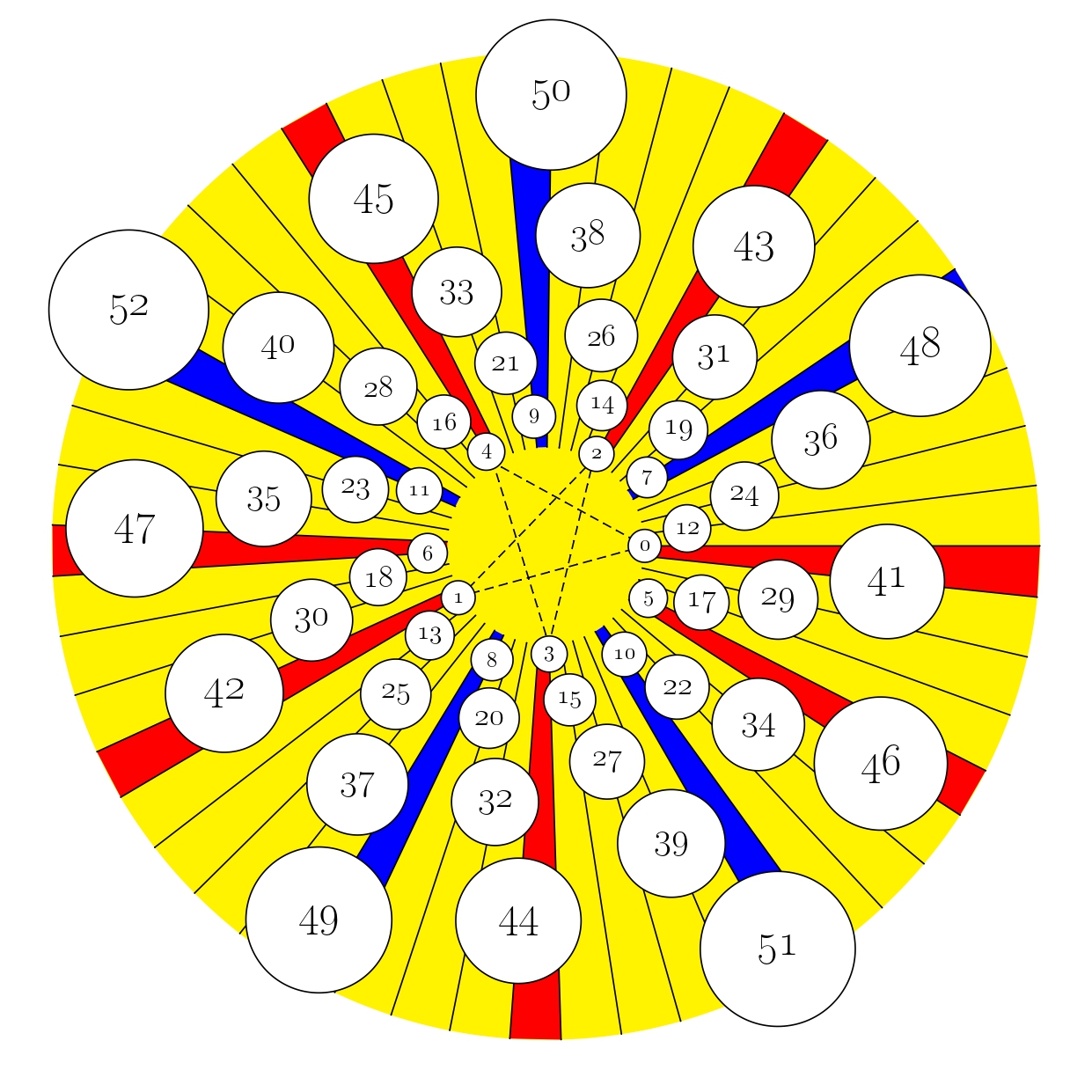
The draft paper may explain itself, sufficiently well. Its most interesting element may be a black-and-white version of the following diagram, which I am also going to say more about in this post.
Artificial Language

TL;DR: AI writing is like human writing. Of course it is, since its model is human writing. But then what AI produces is like bad human writing.

My sources include Plato, Wendell Berry, George Orwell, E. B. White, William Deresiewicz, Hadley Freeman, Andrew Kay, Kenneth G. Crawford, Hollis Robbins, Yuval Noah Harari, William Egginton, Megan Fritts, and Vi Hart.


About preparing certain seeds for human consumption in an infusion:

For sensory attributes, I’m admittedly Platonic and believe that since coffee is a fruit, it should taste something like a fruit. (And it’s not just any fruit – it’s a cherry!) My roasting philosophy comes from the same conviction. Generally, I’m after bright, juicy, fruity, syrupy goodness.

Thus Caleb Bilgen, founder of Ánimo Coffee Roasters in Asheville, North Carolina.

          ⯅          

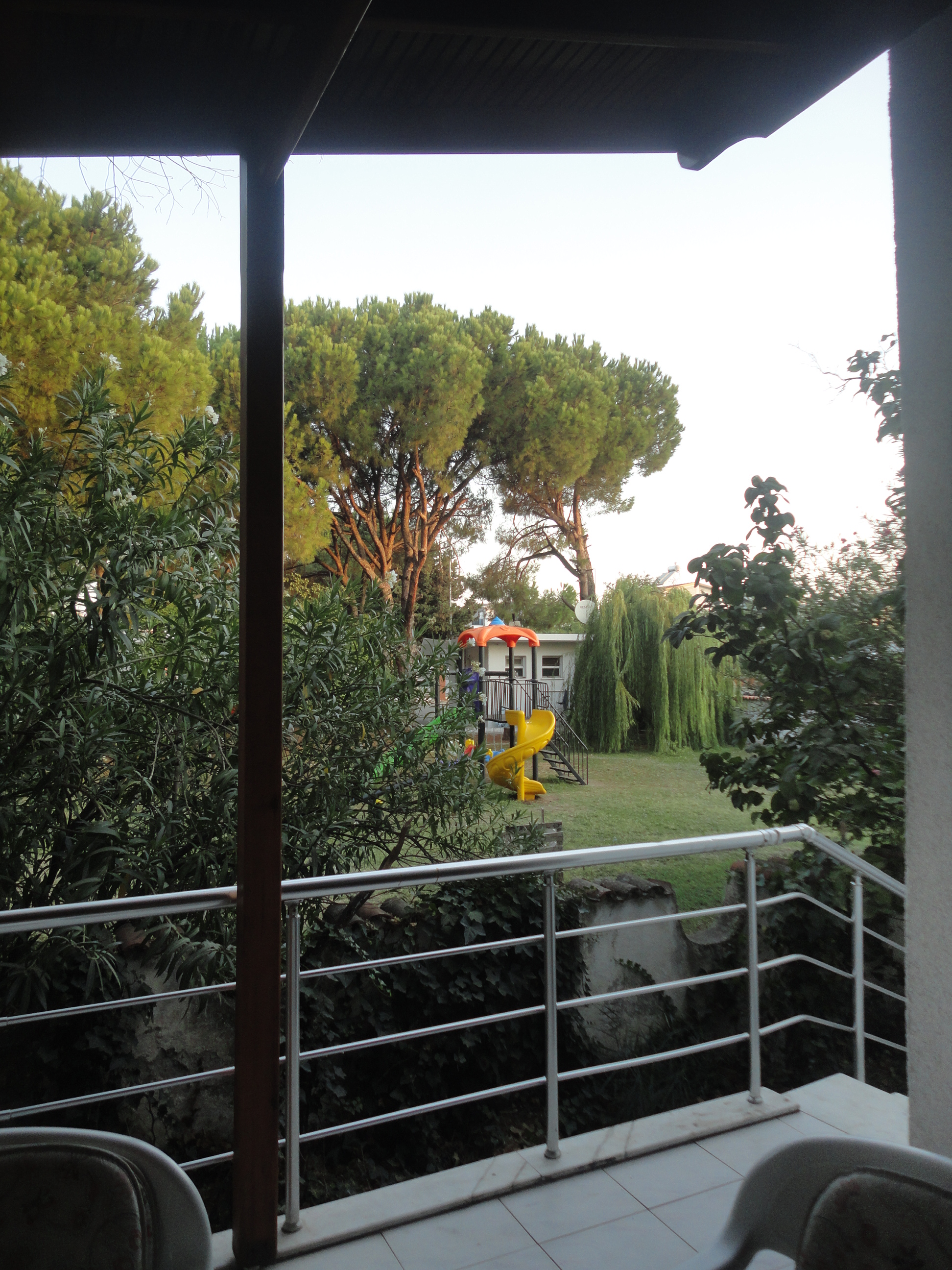
From a terrace beneath an awning, a low wall obscured by ivy, oleander, and quince; on the other side, a lawn with a jungle gym; beyond this, a weeping willow and a small white house beneath umbrella pines

What I see as the sun rises
Altınova, Ayvalik, Balıkesir
September 5, 2025

          ⯆          

Continue reading

Astronomy Anomaly

Aristotle was the subject of the last three posts on this blog:

Perception Deception
The Philosopher asserts in De Anima that the eyes cannot be in error about color; Josef Albers contradicts this.
Imitation Limitation
In the Poetics, Aristotle seems to use mimêsis as a differentia of poiêsis among the technai. Arts not poetry are nonetheless imitative, but perhaps artists are to be distinguished for imitating themselves.
Purity Obscurity
Does catharsis clean the emotions, or wash them away?

Two more posts might have taken up the latter half of the Poetics, but they never materialized.

I turn now to the work held under the arm of Aristotle’s teacher, at the center of Raphael’s School of Athens.


Small book atop a pile of rubble on a beach, sea beyond

Altınova, Balıkesir, Monday, June 16, 2025

Continue reading

Order from Chaos

From The Relevance of Science by C. F. von Weizsäcker, here is Chapter 2, “Cosmogonical Myths.” The subject is stories of how we got here – stories from Babylon, Greece, and Scandinavia, stories more “primitive” than the Biblical account.


Terra cotta figure gazing upward, holding right hand to head, left hand to penis (now broken off)
Although a nearby freestanding sign likened it to Rodin’s sculpture, this figure in the National Archeological Museum, Athens, was six millenia older. The English label below the figure read,

The ‘Thinker’. Large solid clay figurine of a seated man from the area of Karditsa in Thessaly. Final Neolithic period (4500–3300 BC)

The museum website has a better picture. Later in the day of our visit, which was Tuesday, July 11, 2017, we travelled to Delphi for the meeting that occasioned “Hypomnesis.” More photos from the trip ended up in the post “On Knowing Ourselves.”


Continue reading

Religious Science

Below is Chapter 1, “Science and the Modern World,” of The Relevance of Science by C. F. von Weizsäcker.

The last post of this blog was of my annotated version of Chapter 3, “Creation in the Old Testament.”

As the author reports in his Preface, The whole book consists of the first of two series of Gifford Lectures at Glasgow, 1959–61.

Stage seen from audience
I had the opportunity myself to lecture in Tabriz, on August 28, 2012. This was in Iran, so the wall behind me held a portrait of the late Ayatollah Khomeini, along with some kind of icon of science. We were at a national mathematics conference, but I included some of my artwork in the slides of my talk (called “Model-theory of differential fields”)

Continue reading

Charles Bell’s Axiomatic Drama

Here is an annotated transcription of a 1981 manuscript by Charles Greenleaf Bell (1916–2010) called “The Axiomatic Drama of Classical Physics.” A theme is what Heraclitus observed, as in fragment B49a of Diels, LXXXI of Bywater, and D65a of Laks and Most:

We step and we do not step into the same rivers,
we are and we are not.

ποταμοῖς τοῖς αὐτοῖς ἐμβαίνομέν τε καὶ οὐκ ἐμβαίνομεν,
εἶμέν τε καὶ οὐκ εἶμεν.

Bell reviews the mathematics, and the thought behind it, of

  1. free fall,
  2. the pendulum,
  3. the Carnot heat engine.

In a postlude called “The Uses of Paradox,” Bell notes:

Forty-five years ago I decided that when reason drives a sheer impasse into an activity which in fact goes on, we have to think of the polar cleavage as both real and unreal.

I like that reference to “an activity which in fact goes on.” In youth it may be hard to recognize that there are activities that go on. We do things then, but that they will get anywhere may be no more than a dream. In any case, Bell himself goes on:

… that is a job as huge and demanding as Aristotle’s, and for me at 70, just begun.

“Look,” my friends say, “Bell’s been doing the same thing since he was 25. About that time he had a vision of Paradox as paradise, and he’s been stuck there ever since.”

Bell’s picture next to Aristotle’s Physics
The back of Bell’s Five Chambered Heart with
the front of the OCT of Aristotle’s Physics

Continue reading

Chaucer, CT, Prologue

Below is a text (in black) of the Prologue of the Canterbury Tales of Geoffrey Chaucer, with

  • my comments in blue (as now),
  • my highlighting in yellow.

The Prologue tells the frame story of a pilgrimage from London to the shrine of the “holy blissful martyr” at Canterbury; along the way, the pilgrims will tell the tales that make up the rest of the collection.

Chaucer was born around 1340; the dramatic date of his Prologue may be 1387. The martyr in Canterbury is Thomas Becket, assassinated in the cathedral there in 1170 by agents of King Henry II of England.

The Black Death was 1346–53.

Reasons to read Chaucer include testing Collingwood’s assertion in the Prologue of Speculum Mentis (1924),

Chaucer and Dante are no shallow optimists, but their tragedies are discords perpetually resolved in the harmony of a celestial music. The fundamental thing in Chaucer is the ‘mery tale’ of human life as a heartening and lovely pageant … The medieval mind feels itself surrounded, beyond the sphere of trial and danger, by a great peace, an infinite happiness.

Those clauses are from this paragraph, elaborating on medieval happiness:

Continue reading